



Key Highlights
- Bullion declined 0.5% to $4,395.78 amid pressure from higher Treasury yields and crude oil prices
- Iranian military threats sparked oil price increases and heightened inflation concerns
- Market expectations show 65% probability of Fed maintaining current rates in September
- Q1 2026 central bank gold acquisitions totaled 244 tonnes, strongest quarter since Q4 2024
- ANZ projects gold prices could climb to $5,200 per ounce before year-end
The precious metal experienced downward pressure on Tuesday as market participants contended with two challenging forces: ascending U.S. Treasury yields and strengthening oil markets. These dual pressures drove bullion down 0.5% to settle at $4,395.78 per ounce during morning trade.
Futures contracts for gold similarly declined 0.5% to $4,451.07. Meanwhile, silver experienced a sharper 0.8% decrease to $65.24 per ounce, while platinum recorded a 0.7% loss, settling at $1,760.90.
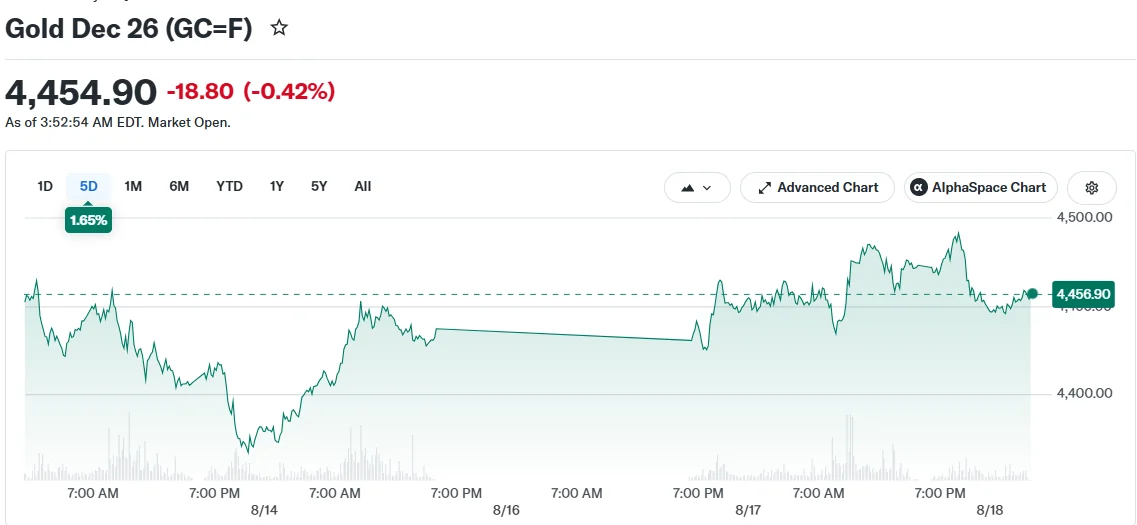
The U.S. Dollar Index registered a modest 0.1% increase to 99.67, contributing additional downward pressure on commodities priced in the greenback.
Rising Bond Returns Challenge Gold’s Appeal
The 10-year U.S. Treasury yield continued its upward trajectory on Tuesday. As bond yields advance, the comparative cost of maintaining positions in gold, an asset that produces no interest or dividends, increases accordingly.
This relationship has consistently limited bullion’s upside momentum throughout recent trading sessions. Market participants frequently shift capital toward interest-bearing instruments when fixed-income returns become more attractive.

Crude Oil Surge Intensifies Inflation Speculation
Oil prices advanced following statements from Iran indicating readiness to assume a “fully offensive” military stance should diplomatic negotiations with the United States collapse. U.S. officials simultaneously dismissed the possibility of extending a temporary truce.
These developments sustained tension across energy markets. Elevated crude prices can amplify inflation projections, thereby increasing the likelihood that the Federal Reserve maintains restrictive interest rate policies for an extended period.
While gold traditionally functions as protection against currency debasement, elevated borrowing costs typically diminish its attractiveness due to its non-yielding nature.
Traders have significantly reduced expectations for a September Federal Reserve rate increase following last month’s unexpected employment contraction, softer-than-anticipated consumer price data, and disappointing retail sales figures. Current market pricing suggests approximately a 65% chance the central bank leaves rates unchanged at its next meeting.
Market participants await Wednesday’s publication of the Federal Reserve’s July meeting minutes. Additionally, Federal Reserve Chair Kevin Warsh’s upcoming address at the Jackson Hole Economic Symposium will be scrutinized for insights into future monetary policy direction.
Institutional Demand Continues Providing Foundation
Notwithstanding Tuesday’s retreat, the yellow metal has advanced more than 10% during the current month. This sustained recovery has been underpinned by robust institutional purchases, particularly from Chinese authorities.
Worldwide central bank gold acquisitions totaled 244 tonnes during the first quarter of 2026, representing the strongest three-month period since the final quarter of 2024. China’s reserves expanded by 8 tonnes in April alone, marking the nation’s largest single-month addition since December 2024.
Bullion successfully recaptured its 100-day moving average last week for the first instance since April, though it has subsequently retreated close to that technical threshold.
Critical overhead resistance occupies the $4,440 to $4,450 zone, with the 200-day moving average positioned near $4,503 representing the subsequent significant obstacle. A decisive move above both technical levels would establish a pathway toward the $5,000 psychological milestone.
ANZ analysts project bullion will achieve $5,200 per ounce before the conclusion of 2026, attributing the forecast to central bank portfolio diversification driven by worsening geopolitical tensions and strained international relationships.
Get 3 Free Stock Ebooks
Discover top-performing stocks in AI, Crypto, and Technology with expert analysis.
- Top 10 AI Stocks - Leading AI companies
- Top 10 Crypto Stocks - Blockchain leaders
- Top 10 Tech Stocks - Tech giants


