


Key Highlights
- Gold declined 0.5% on Friday, settling near $4,030 per ounce, yet remains poised for a weekly gain
- Houthi attacks on Saudi oil tankers in the Red Sea intensified regional geopolitical tensions
- Robust U.S. employment figures drove 10-year Treasury yields to levels not seen since January 2025
- Market participants are assigning a 34% probability to a Federal Reserve rate increase next week
- Technical analysts indicate gold must surpass $4,202 to confirm a sustainable upward trend
Gold experienced a modest pullback on Friday yet remains on course to register a positive week, snapping a two-week slide. The precious metal retreated 0.5% during early trading hours, hovering around $4,030 per ounce.
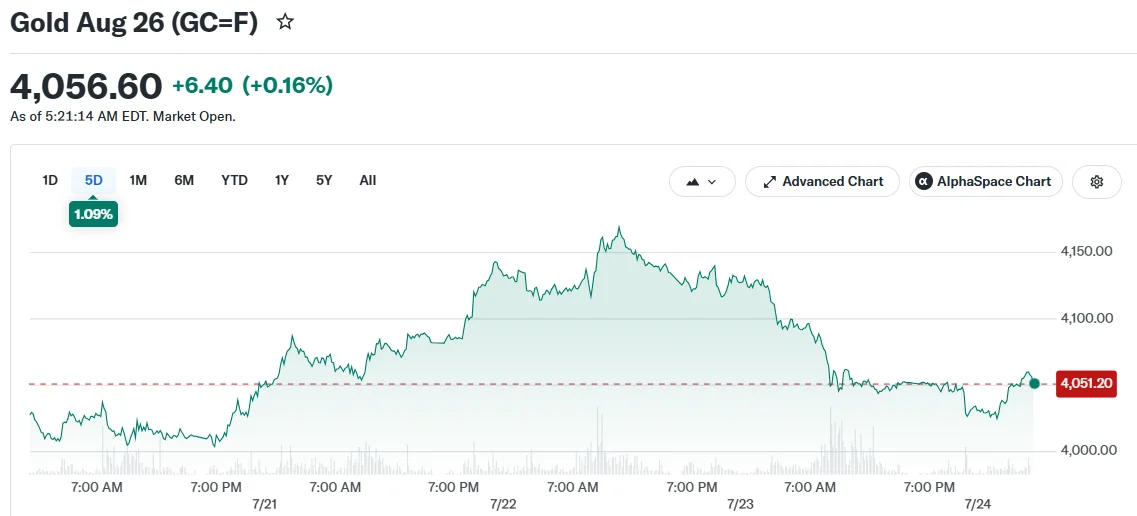
Looking at the broader weekly picture, gold has climbed approximately 0.8% since Monday. This represents the metal’s first positive weekly performance in three consecutive weeks.
Much of the week’s upward momentum stemmed from escalating Middle East hostilities. Iran-backed Houthi forces from Yemen launched coordinated strikes against two Saudi Arabian oil tankers navigating the Red Sea waters.
In response to these attacks, President Donald Trump issued stern warnings holding Iran accountable for any future Houthi assaults on commercial vessels. He additionally signaled readiness for enhanced military operations targeting Tehran.
According to reporting from The New York Times, Iranian officials declined a ceasefire agreement backed by Washington. This development diminished expectations for an imminent diplomatic resolution to regional hostilities.

Interest Rate Speculation Weighs on Sentiment
The ongoing Middle East crisis propelled oil prices upward, compounding pre-existing inflationary pressures. These concerns intensified following this week’s release of exceptionally strong U.S. employment statistics.
Weekly jobless claims dropped unexpectedly to 187,000, marking the lowest reading in multiple decades. This data pushed the 10-year Treasury yield to its most elevated level since the beginning of 2025.
Rising bond yields typically exert downward pressure on gold, as the precious metal generates no income. When fixed-income securities deliver superior returns, investment capital tends to flow away from gold holdings.
Current market pricing reflects approximately a 34% likelihood that the Federal Reserve will implement a 25-basis-point rate increase during next week’s policy meeting. This probability has risen considerably following the impressive employment data.
Nomura’s research team anticipates the Fed will maintain current interest rate levels. Their analysis suggests Fed Chair Kevin Warsh is unlikely to provide definitive forward guidance during the July gathering, particularly since no revised economic forecasts will be released.
Chart Analysis Suggests Caution Remains
Tony Sycamore, a senior market strategist at IG, attributed Friday’s decline to multiple headwinds including elevated Treasury yields, U.S. dollar strength, and diminished appetite for riskier assets.
The U.S. Dollar Index maintained positions near 101.45, continuing to weigh on gold valuations. A robust dollar raises the cost of gold for international buyers transacting in alternative currencies.
According to Sycamore’s technical assessment, gold appears to be establishing a support foundation above the late-June floor of $3,942. This price level represents critical near-term support for the metal.
A decisive breakout above $4,202 would validate bullish momentum and potentially pave the way toward $4,495, which aligns closely with the 200-day moving average.
Thomas Ryan from Capital Economics suggested that should inflation prove sticky, the Federal Reserve might initiate monetary tightening with a 25-basis-point increase as early as September. Market pricing now fully reflects this scenario following crude oil’s rally past the $90 per barrel threshold.
Get 3 Free Stock Ebooks
Discover top-performing stocks in AI, Crypto, and Technology with expert analysis.
- Top 10 AI Stocks - Leading AI companies
- Top 10 Crypto Stocks - Blockchain leaders
- Top 10 Tech Stocks - Tech giants


