



TLDR
- Precious metal prices reach seven-week peak, with spot gold at $4,270.29 and futures contracts at $4,329.15 per ounce
- Potential Strait of Hormuz agreement between Iran and Oman is cooling inflation concerns
- Crude oil prices have declined over 9% in the last week, diminishing Federal Reserve tightening pressure
- Traders now see 43% odds the Fed maintains current rates in September, compared to 37% seven days earlier
- Declining US dollar makes the precious metal more affordable for international purchasers, providing additional tailwinds
The yellow metal is maintaining its position near a seven-week peak as increasing confidence in a Strait of Hormuz reopening deal could push energy costs down and ease Federal Reserve pressure to implement interest rate increases.
Spot gold advanced 0.6% to reach $4,270.29 per ounce during Thursday’s trading session. Gold futures contracts gained 0.5% to settle at $4,329.15 per ounce.
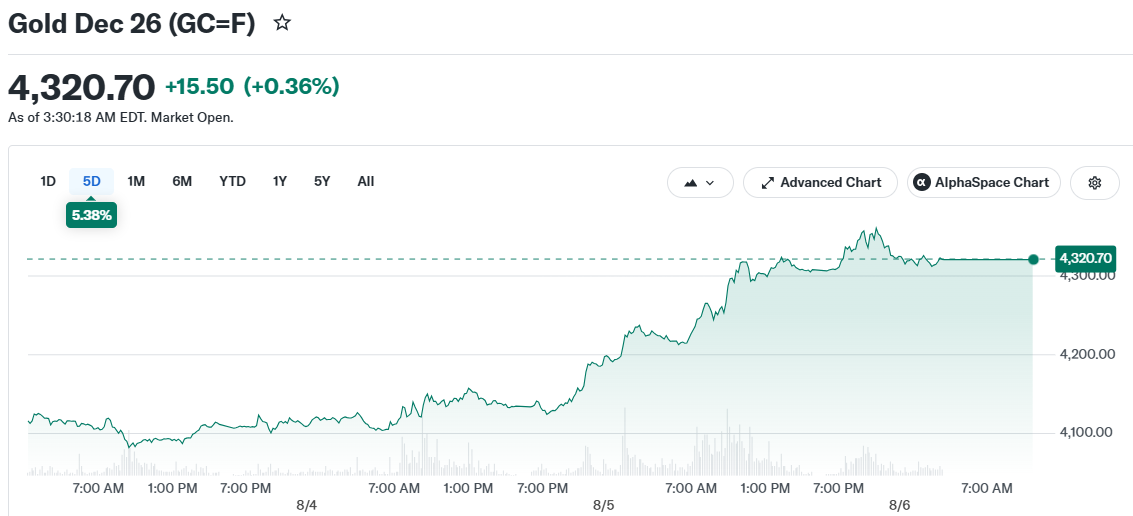
New York-traded gold futures also registered a 0.2% increase to $4,314 per troy ounce during early market hours, pushing the precious metal’s weekly gains close to 4%.
Middle East Diplomatic Progress Cools Inflation Worries
Emerging reports indicate a potential arrangement between Iran and Oman would transfer authority over vessel traffic entering the Gulf via the Strait of Hormuz to Iran. American officials have indicated this week that an agreement may be imminent.
Certain market observers remain skeptical, highlighting a recent history of escalating tensions followed by diplomatic retreats in the area. However, expectations of improved energy transportation have already contributed to declining oil valuations.

Oil has dropped over 9% during the previous seven days. Brent crude is currently changing hands under $80 per barrel.
Declining energy costs typically suppress inflation projections, which subsequently weakens the argument for monetary policy tightening. Elevated interest rates generally harm gold valuations since they enhance the attractiveness of interest-generating investments.
ING analysts stated in their research note that “lower oil prices, a weaker dollar and potentially a more dovish-than-expected rates environment should remain supportive for bullion.”
Monetary Policy Outlook Evolves
Financial markets are currently assigning approximately 43% probability that the Federal Reserve will maintain its current interest rate level during the September policy meeting. This represents an increase from the roughly 37% probability calculated one week prior, based on CME FedWatch data.
ING further noted that “expectations for Federal Reserve tightening have eased, improving the outlook for non-yielding assets such as gold.”
A retreating US dollar is providing additional support for the precious metal. Dollar weakness makes gold more attractive for international buyers using alternative currencies, potentially increasing global demand.
Market participants are closely monitoring Friday’s nonfarm payrolls release for additional insights into Federal Reserve policy direction.
On Wednesday, the ADP National Employment Report revealed that private-sector job creation decelerated in July. This economic data strengthened arguments for the Fed to pause its rate-hiking campaign.
Friday’s employment figures are anticipated to provide more definitive evidence regarding US labor market conditions and may influence both precious metal valuations and monetary policy forecasts.
The precious metal has gained approximately 4% during the current week, with market participants monitoring both Middle Eastern geopolitical developments and domestic economic indicators for trading signals.
Get 3 Free Stock Ebooks
Discover top-performing stocks in AI, Crypto, and Technology with expert analysis.
- Top 10 AI Stocks - Leading AI companies
- Top 10 Crypto Stocks - Blockchain leaders
- Top 10 Tech Stocks - Tech giants


