


TLDR
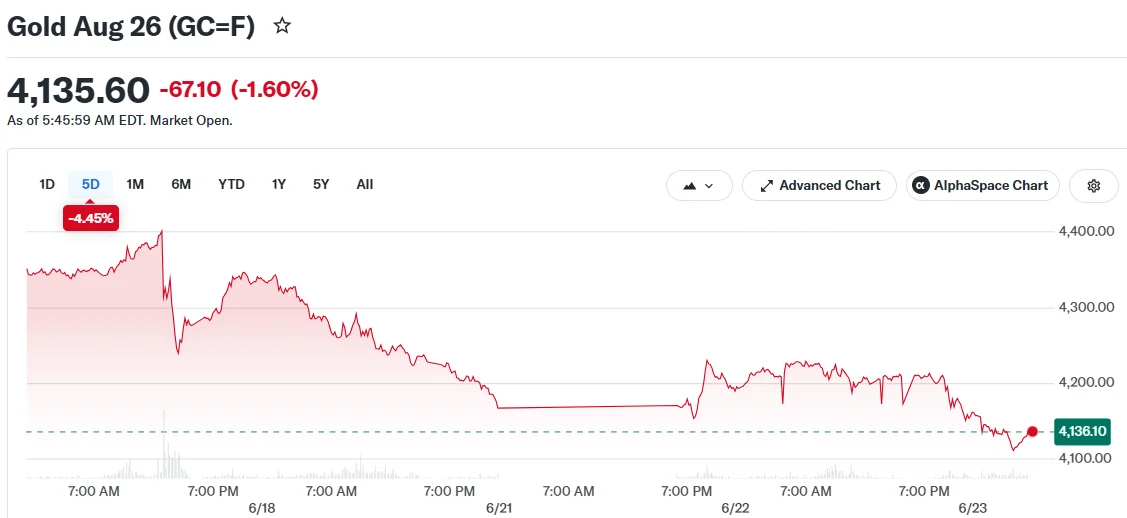
- Spot gold declined 1.8% to $4,117.61 per ounce Tuesday amid dollar strength near 13-month peaks.
- Market participants now assign approximately 90% odds to a Federal Reserve rate increase in December.
- Momentum from U.S.-Iran diplomatic developments faded as monetary policy concerns dominated sentiment.
- Silver plunged 4.3%, platinum retreated 2.6%, and copper prices weakened in tandem with gold.
- Market focus shifts to Thursday’s PCE inflation report for clues on the Fed’s next move.
Precious metals experienced significant pressure on Tuesday as gold prices tumbled nearly 2%, dragged lower by dollar strength and mounting expectations that the Federal Reserve will implement a rate increase before year-end.
Spot gold retreated 1.8% to settle at $4,117.61 per ounce. U.S. gold futures declined 1.6% to $4,135.10. New York futures trading showed a 1.7% drop to $4,129.10 during early sessions.
The U.S. Dollar Index maintained its position close to the 13-month peak established last week. When the greenback strengthens, gold becomes costlier for international buyers holding foreign currencies, typically dampening purchasing activity.
The previous trading session had seen gold advance 0.7%, buoyed by positive sentiment surrounding diplomatic engagement between Washington and Tehran. However, those gains evaporated swiftly as interest rate considerations reclaimed center stage.
December Rate Hike Expectations Pressure Precious Metals
The Federal Reserve’s recent policy meeting—the inaugural session led by newly appointed Chair Kevin Warsh—concluded with rates held steady at 3.50%–3.75%. However, updated economic projections revealed increasing consensus among committee members for at least one rate adjustment before 2025 concludes.

Futures markets currently indicate approximately 90% likelihood of a December rate hike. Some market participants anticipate multiple increases as the central bank maintains its inflation-fighting stance.
Elevated interest rates typically pressure gold because the precious metal generates no yield. As rates climb, income-producing investments become comparatively more appealing to investors.
Research analysts at Kotak Neo observed that although declining energy costs might provide tailwinds for gold, elevated U.S. interest rates continue to represent a significant challenge for the metal’s performance.
Diplomatic Developments and Energy Market Implications
Ongoing diplomatic initiatives between the United States and Iran remained in the spotlight. Washington extended a 60-day sanctions exemption covering certain Iranian oil exports following preliminary negotiations in Switzerland. American officials characterized the initial dialogue as productive.
The Iran-related tensions earlier this year propelled oil prices substantially higher, intensifying inflation pressures. This development heightened concerns that monetary authorities, particularly the Federal Reserve, would maintain restrictive policy stances for an extended period.
While gold traditionally serves as a protection against inflation and geopolitical uncertainty, market participants have recently prioritized monetary policy trajectories over conflict-related considerations.
Broad-Based Weakness Across Metal Markets
The downturn extended beyond gold to encompass other precious and industrial metals. Silver plummeted 4.3% to $62.29 per ounce. Platinum decreased 2.6% to $1,639.60 per ounce.
Copper prices also weakened across markets. London Metal Exchange benchmark copper futures slipped 1.2% to $13,486.33 per ton. U.S. copper futures dropped 2.3% to $6.22 per pound.
Market attention now turns to Thursday’s U.S. Personal Consumption Expenditures inflation report. The PCE index represents the Federal Reserve’s preferred inflation gauge. This data release, combined with S&P PMI figures and forthcoming Fed official commentary, will likely influence market expectations heading into the December policy meeting.
Get 3 Free Stock Ebooks
Discover top-performing stocks in AI, Crypto, and Technology with expert analysis.
- Top 10 AI Stocks - Leading AI companies
- Top 10 Crypto Stocks - Blockchain leaders
- Top 10 Tech Stocks - Tech giants


