


Key Takeaways
- The German container carrier recorded a Q1 net loss of $256 million, reversing from a $469 million profit in the prior-year period.
- Liner shipping revenue declined 18% year-over-year to $4.92 billion from $5.32 billion.
- Shipping disruptions at the Strait of Hormuz required costly detours, inflating fuel expenses and operational costs.
- Container volumes decreased 0.7% while average freight rates contracted 9.5% during the quarter.
- The company reaffirmed its annual EBITDA forecast ranging from $1.1 billion to $3.1 billion, though warned of significant uncertainty.
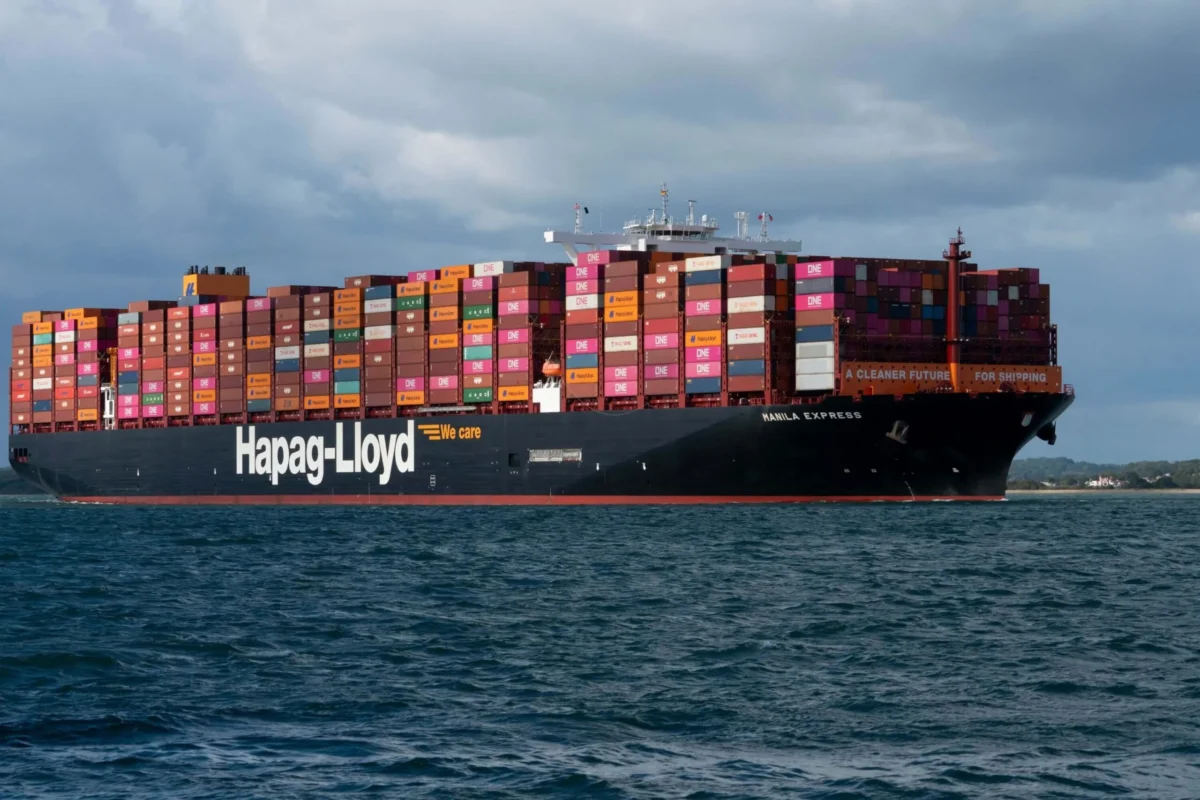
The Hamburg-based shipping company Hapag-Lloyd delivered disappointing first-quarter results for 2026, posting a net loss of $256 million compared to a $469 million profit during the same three months last year. Interestingly, shares climbed approximately 2.65% in morning trading despite the negative earnings.
The company generated $4.92 billion in revenue for the quarter, representing a decline from the previous year’s $5.32 billion. However, this figure exceeded Wall Street expectations, which had projected revenues closer to $3.9 billion.
Earnings before interest, taxes, depreciation, and amortization totaled 422 million euros during the period, a significant drop from the 1.05 billion euros recorded in Q1 2025. Even so, the result marginally surpassed analyst consensus estimates of approximately 407 million euros.
Chief Executive Rolf Habben Jansen characterized the first quarter as “unsatisfactory,” citing adverse weather conditions that disrupted global supply chains along with continued downward pressure on shipping rates.

Weather wasn’t the only challenge. Following an escalation of tensions in the Middle East toward the end of February, the container line suspended operations through the Strait of Hormuz and Gulf of Oman. Vessels were redirected onto alternative, lengthier routes, which significantly increased both transit times and operational expenses.
Container transport volumes slipped 0.7% throughout the quarter. Meanwhile, average freight rates tumbled 9.5%, reflecting softer global demand conditions.
Overall transportation expenses fell 6%, partially aided by the weakening of the U.S. dollar relative to the euro. However, adjusting for currency fluctuations reveals that costs actually climbed 4.6%, equivalent to roughly 147 million euros — primarily attributable to the extended routing necessitated by Middle East instability and prolonged voyage durations.
Severe weather systems affecting Europe and North America compounded operational difficulties, triggering port congestion and broader supply chain bottlenecks.
Regional Conflict Pressures Profitability
The crisis surrounding the Strait of Hormuz intensified throughout March, severely disrupting commercial shipping lanes during the quarter’s final weeks. This development introduced additional cost burdens that the organization couldn’t fully mitigate.
Hapag-Lloyd indicated that improved average freight rates moving forward should help counterbalance escalating operational costs. Nevertheless, management emphasized “considerable uncertainty” regarding both rate trajectory and conflict duration throughout the remainder of 2026.
Annual Outlook Maintained Despite Headwinds
Notwithstanding the challenging first quarter, the shipping line maintained its full-year EBITDA guidance between $1.1 billion and $3.1 billion, with EBIT projected to range from a loss of 1.3 billion euros to a gain of 400 million euros.
This represents an unusually broad forecast range — an intentional choice by management. Company officials acknowledged that persistent freight rate volatility combined with the unpredictable nature of Middle East hostilities make precise annual projections extremely challenging.
As the world’s fifth-largest container shipping operator by capacity, Hapag-Lloyd’s performance serves as a bellwether for broader industry conditions facing the global maritime transport sector.
The organization continues closely tracking developments in the Middle East region, making real-time routing decisions based on evolving security assessments and operational requirements.
Get 3 Free Stock Ebooks
Discover top-performing stocks in AI, Crypto, and Technology with expert analysis.
- Top 10 AI Stocks - Leading AI companies
- Top 10 Crypto Stocks - Blockchain leaders
- Top 10 Tech Stocks - Tech giants


