


TLDR
- The KOSPI index in South Korea tumbled more than 6% on Friday, reaching an intraday bottom of 6,650.41 points
- Major chipmakers Samsung Electronics and SK Hynix plummeted 6% to 10%, driving the market decline
- Concerns over AI capital expenditure sustainability grew after Alphabet reported negative quarterly free cash flow
- Initial U.S. tariff announcement of 12.5% on South Korean exports created market turmoil before a 15% ceiling was verified
- Automotive giant Hyundai Motor declined 8% following disappointing Q2 results
South Korea’s benchmark KOSPI index experienced a significant downturn on Friday, plummeting more than 6% throughout trading. The steep decline was primarily attributed to substantial losses among semiconductor manufacturers and mounting anxieties regarding artificial intelligence capital expenditure and U.S.-imposed trade duties.
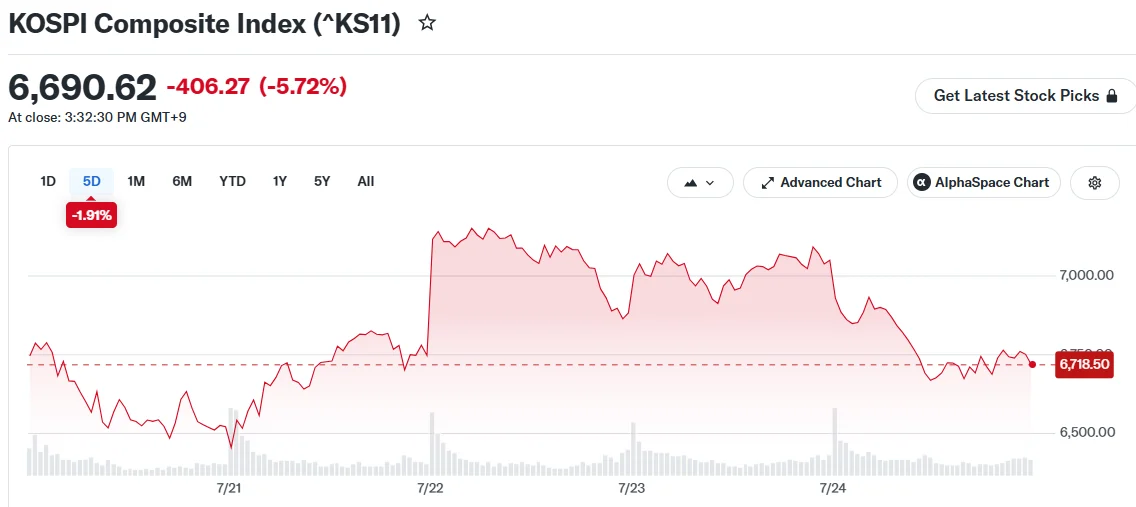
The benchmark touched an intraday trough of 6,650.41 points before staging a modest rebound to 6,751.49 following confirmation from Seoul that the United States would respect a previously negotiated trade agreement limiting tariffs to 15%.
The sell-off formed part of a wider regional downturn across Asia-Pacific markets. Japan’s Nikkei 225 declined 3%, while Hong Kong’s Hang Seng index retreated more than 1%, and China’s Shanghai Composite shed 0.87%. Rising military tensions between the United States and Iran contributed additional pressure throughout the region.
Semiconductor Sector Bears Brunt of Selloff
Samsung Electronics and SK Hynix emerged as the primary culprits behind the KOSPI’s steep decline. Shares of both technology giants plunged between 6% and 10% during Friday’s session.
The sharp losses came on the heels of a challenging overnight trading period for American technology equities. Financial reports from Alphabet and Tesla revealed substantial capital outlays for artificial intelligence infrastructure, prompting investors to question the long-term viability of such aggressive spending patterns.

Alphabet’s quarterly disclosure proved especially troubling for market participants. The technology behemoth reported its first-ever negative quarterly free cash flow while simultaneously increasing its capital expenditure projections for the fiscal year.
This development alarmed investors who have been anticipating tangible returns from AI-related investments. The mounting concern centers on whether AI expenditures are now eroding the profit margins of major technology corporations instead of enhancing them.
Both Samsung and SK Hynix had enjoyed robust performance driven by AI-fueled demand for memory semiconductor products throughout the previous year. However, this same growth trajectory left them particularly vulnerable when investor sentiment reversed.
Leveraged exchange-traded funds focused on Korean technology stocks further exacerbated the market volatility, magnifying the day’s price movements.
Automotive Losses and Tariff Uncertainty Compound Difficulties
Hyundai Motor shares tumbled 8% following the release of second-quarter financial results that failed to meet analyst expectations. The automotive manufacturer has been grappling with U.S. trade tariffs as a persistent challenge in recent quarters, and the latest tariff developments further clouded its outlook.
The United States unveiled a 12.5% tariff targeting South Korea alongside several other nations. This announcement initially hammered export-dependent industries before Seoul obtained verification of the 15% tariff ceiling later during the trading day.
The KOSPI ultimately settled at 6,690.62, registering a 5.72% decline for the session.
Get 3 Free Stock Ebooks
Discover top-performing stocks in AI, Crypto, and Technology with expert analysis.
- Top 10 AI Stocks - Leading AI companies
- Top 10 Crypto Stocks - Blockchain leaders
- Top 10 Tech Stocks - Tech giants


