



Key Takeaways
- Thursday’s pre-market session saw Dow futures climb 0.3% while Nasdaq 100 futures declined 0.3%
- A significant rotation away from technology stocks continues as investors worry about excessive AI capital expenditures and elevated valuations
- AMD (AMD), Sandisk, and Western Digital experienced steep drops following negative market reactions to their quarterly results
- Nvidia (NVDA) surged more than 3% following SpaceX’s announcement of exclusive partnership for chip procurement
- A provisional shipping corridor agreement between Iran and Oman for the Strait of Hormuz helped stabilize crude oil around $80 per barrel
Thursday morning’s futures trading revealed continued divergence across major US equity indices. The Dow Jones Industrial Average futures advanced 168 points, representing a 0.3% gain, while Nasdaq 100 futures retreated 0.3%. S&P 500 futures registered a modest 0.2% increase.
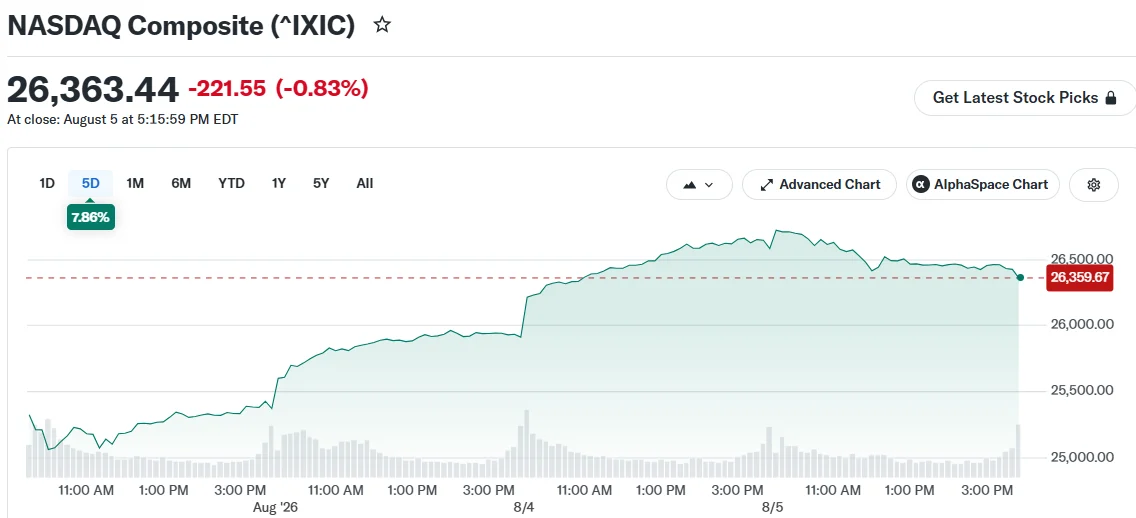
Wednesday marked the third consecutive session where the Dow reached a new all-time high at the closing bell. Meanwhile, the Nasdaq experienced selling pressure, primarily driven by a sharp drop in Alphabet stock following the tech giant’s announcement of structural changes within its artificial intelligence operations.
Thursday’s pre-market action continues this divergent trend between the two benchmarks. Market participants are increasingly shifting capital allocation away from mega-cap technology companies.
Growing anxiety about corporate artificial intelligence infrastructure investments—and whether these expenditures will generate adequate returns—is dampening investor enthusiasm. Stretched valuations across certain technology names are compounding these concerns.
Technology Sector Under Pressure
Advanced Micro Devices (AMD) plummeted 7.04% in the wake of its quarterly earnings release. Sandisk and Western Digital experienced similar steep declines as the market punished AI-focused companies that delivered underwhelming results.

Nvidia (NVDA) emerged as a notable exception, advancing more than 3% during Wednesday’s trading. The chipmaker’s rally followed SpaceX’s public commitment to source its processors exclusively from Nvidia.
SpaceX shares continue trading near historic lows. Thursday marks the expiration of a lockup period, potentially triggering additional downward pressure if company insiders opt to liquidate their holdings.
Middle East Agreement Eases Energy Market Tension
A preliminary arrangement between Iran and Oman has established a temporary maritime passage through the Strait of Hormuz. Iranian Foreign Ministry spokesman Esmail Baghaei indicated the agreement would be finalized “if certain third parties do not obstruct this process.”
Crude oil prices stabilized around the $80 per barrel level following this diplomatic development. Gold reached multi-week peaks as ongoing geopolitical tensions sustained demand for traditional safe-haven assets.
Deutsche Bank’s Jim Reid highlighted that positive earnings results combined with the Hormuz corridor agreement could serve as constructive market drivers. However, he observed that Wednesday’s equity advance showed signs of weakening as the session concluded.
Attention is shifting toward employment data. Thursday’s calendar includes the Challenger, Gray and Christmas layoff report along with weekly initial jobless claims figures.
The July employment situation report arrives Friday. This crucial dataset will provide insight into whether the Federal Reserve maintains flexibility to implement additional interest rate increases as it combats persistent inflation.
The central bank’s forthcoming policy decisions remain paramount for market participants. Evidence of labor market strength could elevate expectations for continued monetary tightening.
A cautious market posture is expected to prevail through Friday’s release. The employment report represents one of this month’s most significant economic indicators for equity markets.
Get 3 Free Stock Ebooks
Discover top-performing stocks in AI, Crypto, and Technology with expert analysis.
- Top 10 AI Stocks - Leading AI companies
- Top 10 Crypto Stocks - Blockchain leaders
- Top 10 Tech Stocks - Tech giants


