



Quick Summary
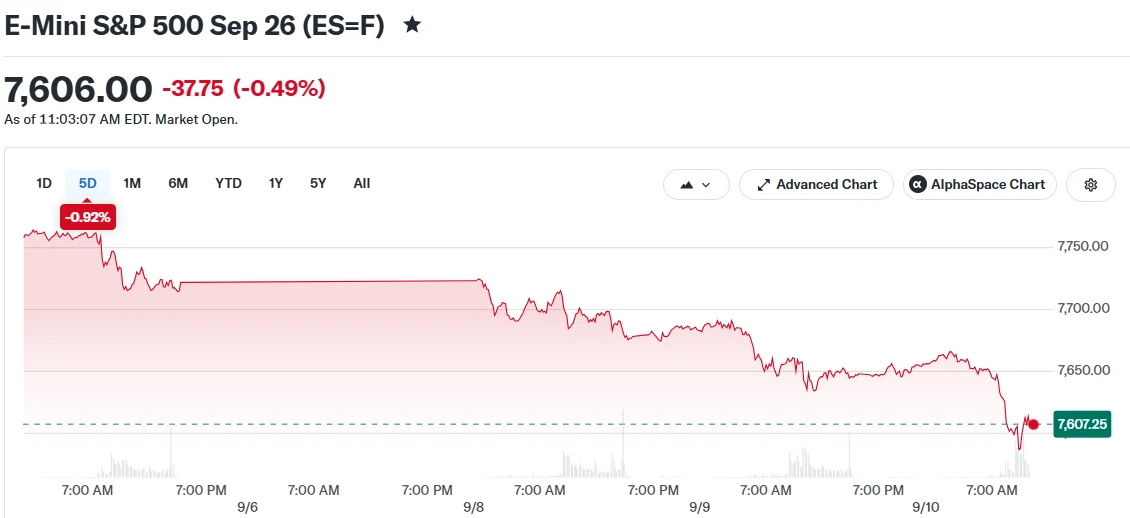
- Major indexes extended their losing streak to four sessions in Thursday trading
- Crude oil surged past the $100 threshold following Iranian attacks on US naval vessels in Middle Eastern waters
- The 10-year Treasury yield surpassed 4.9%, marking its highest level in three years
- Wholesale prices climbed 5.4% annually, while consumer price data is expected Friday
- President Trump proposed $5,000 stimulus checks for American adults contingent on Republican congressional control
US stocks experienced another session of losses Thursday morning, extending the downturn across all three primary benchmarks to a fourth consecutive day.
The Dow Jones Industrial Average declined 0.4%, while the S&P 500 retreated 0.5%, and the Nasdaq Composite dropped between 0.8% and 1%.
Energy Markets and Bond Yields Fuel Downdraft
The primary catalyst for this week’s market weakness has been surging energy prices. Brent crude pushed past $105 per barrel while West Texas Intermediate breached the $100 mark following Iranian military actions against US Navy vessels in the Strait of Hormuz.
The escalating Middle Eastern tensions have intensified worries about potential widespread energy disruptions. Elevated crude prices typically fuel inflationary pressures, potentially forcing the Federal Reserve to implement additional interest rate increases.
Treasury yields also moved sharply higher Thursday, with the benchmark 10-year note climbing above 4.9% to reach levels not seen in three years. This followed Wednesday’s advance after the Treasury Department announced plans to purchase as much as $6 billion in longer-dated securities.

Elevated yields increase financing costs throughout the economy and typically create headwinds for equity valuations, with technology shares particularly vulnerable.
Wholesale Price Data Meets Forecasts
Thursday morning brought new wholesale inflation metrics. The Producer Price Index registered a 5.4% annual increase, with the core measure rising 4.6%.
These results aligned closely with analyst predictions. Friday will bring consumer price data, offering additional insight into the trajectory of inflation.
The European Central Bank implemented a 25 basis-point rate increase Thursday. Market participants now broadly anticipate the Federal Reserve will implement a comparable adjustment.
President Trump indicated Wednesday that energy prices might remain elevated through the midterm elections, now approximately two months away.
Additional Market Developments
Trump also suggested distributing $5,000 checks to all American adults should Republicans maintain congressional majorities. The funding mechanism for such a program remains unclear, as congressional authorization would be required.
Oracle is scheduled to announce quarterly results following Thursday’s market close. Investors will scrutinize the report for insights regarding artificial intelligence infrastructure spending and demand trends.
Nasdaq futures had already shifted lower during premarket hours, preceding the official release of wholesale inflation figures.
Each of the three major benchmarks has now posted declines for four straight sessions, with no obvious near-term catalyst emerging to reverse the downward momentum.
Market participants are focused on Friday’s consumer inflation release, though strategists suggest a single data point is unlikely to materially alter the Fed’s policy trajectory while energy prices and yields continue their upward climb.
Get 3 Free Stock Ebooks
Discover top-performing stocks in AI, Crypto, and Technology with expert analysis.
- Top 10 AI Stocks - Leading AI companies
- Top 10 Crypto Stocks - Blockchain leaders
- Top 10 Tech Stocks - Tech giants


