



Key Takeaways
- Thursday’s session saw the S&P 500 reach unprecedented levels, fueled by artificial intelligence sector momentum and below-forecast wholesale inflation figures
- Friday morning futures presented a mixed picture, with Dow contracts dropping 68 points amid mounting geopolitical concerns
- Washington’s warning of an indefinite naval blockade against Iran triggered commodity market reactions
- Brent crude advanced 1.7% to reach $88.51 per barrel; WTI gained 1.9% to settle at $82.79
- Ten-year Treasury yields increased by 2 basis points to 4.67% as market participants reassessed interest rate trajectories
Thursday marked a milestone for the S&P 500, which secured a fresh all-time high supported by impressive artificial intelligence earnings reports and encouraging wholesale inflation metrics. As Friday’s pre-market session began, futures contracts showed limited movement, although Dow futures retreated by 0.1%.
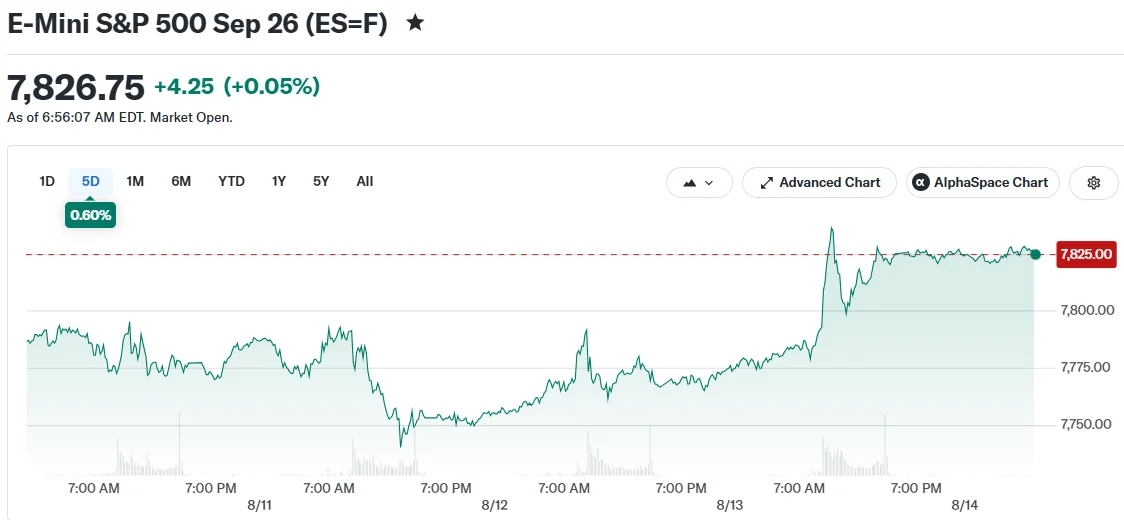
Market tranquility proved short-lived. Early Friday morning brought renewed volatility as escalating friction between Washington and Tehran disrupted investor sentiment following US statements regarding an extended naval blockade against Iran.
Crude Markets React to Middle East Tensions
The blockade announcement sparked concerns about potential disruptions to maritime traffic through the Strait of Hormuz, a critical chokepoint for worldwide petroleum distribution. Brent crude contracts surged 1.7% to $88.51 per barrel, while WTI increased 1.9% to $82.79 during morning trade.
Escalating oil prices carry significant implications for broader markets, as energy costs directly influence overall price levels across the economy. Persistent inflation could compel the Federal Reserve to reconsider its monetary policy stance, potentially favoring rate increases over maintaining current levels.

Friday’s trading showed the 10-Year Treasury Note yield climbing 2 basis points to 4.67%, indicating bond market participants were already recalibrating their expectations for future rate movements.
While Dow futures faced early session headwinds, both S&P 500 and Nasdaq 100 futures contracts advanced 0.1%, demonstrating divergent reactions across market segments.
Overnight sessions in Asia suggested momentum for US equities. South Korea’s KOSPI index surged over 1.4%, while Japan’s Nikkei registered a 0.8% gain.
Upcoming Retail Reports and Economic Indicators Take Center Stage
Friday’s light earnings calendar redirected investor focus toward the coming week’s corporate reports. Major retailers Target and Walmart have scheduled announcements in the days ahead.
Nvidia’s August 26 earnings release has attracted considerable attention from market participants monitoring artificial intelligence sector developments.
Economic calendar highlights for Friday included retail sales data and the University of Michigan’s consumer sentiment survey. These metrics provide crucial insights into American household spending patterns and confidence levels.
Both the S&P 500 and Nasdaq remained positioned for positive weekly performance despite Friday’s uncertain opening. The Dow lagged behind its counterparts, pressured by inflation worries stemming from energy market movements.
Friday’s divergent futures performance illustrated the tug-of-war between opposing market forces: robust corporate earnings and moderating inflation versus climbing oil prices and heightened geopolitical uncertainty.
Market participants monitored crude oil trajectories closely, assessing whether continued price appreciation might shift sentiment ahead of next week’s retail earnings cycle.
The 10-Year Treasury yield’s position at 4.67% represents a critical benchmark for financial markets, as additional upward movement could generate headwinds for equity valuations.
Get 3 Free Stock Ebooks
Discover top-performing stocks in AI, Crypto, and Technology with expert analysis.
- Top 10 AI Stocks - Leading AI companies
- Top 10 Crypto Stocks - Blockchain leaders
- Top 10 Tech Stocks - Tech giants


