



Quick Summary
- Major U.S. equity indexes rebounded approximately 1% on Friday, breaking a four-session decline
- August’s Consumer Price Index registered 0.4% month-over-month and 3.4% year-over-year, running warmer than July
- Core inflation advanced 0.3%, surpassing the projected 0.2%, reinforcing rate increase expectations
- Traders now assign an 87% probability to a 25-basis-point Federal Reserve rate increase next week
- Crude oil retreated Friday, with WTI dropping to $100 per barrel following a tumultuous trading week
US stocks finished in positive territory on Friday despite August’s inflation report exceeding forecasts, which elevated the likelihood of the Federal Reserve implementing another interest rate increase at its upcoming policy meeting.
The S&P 500 advanced 0.86%, while the Nasdaq Composite climbed 0.96%, and the Dow Jones Industrial Average surged 0.98%, tacking on approximately 509 points. Despite Friday’s gains, all three benchmarks registered weekly declines following four consecutive sessions of losses.
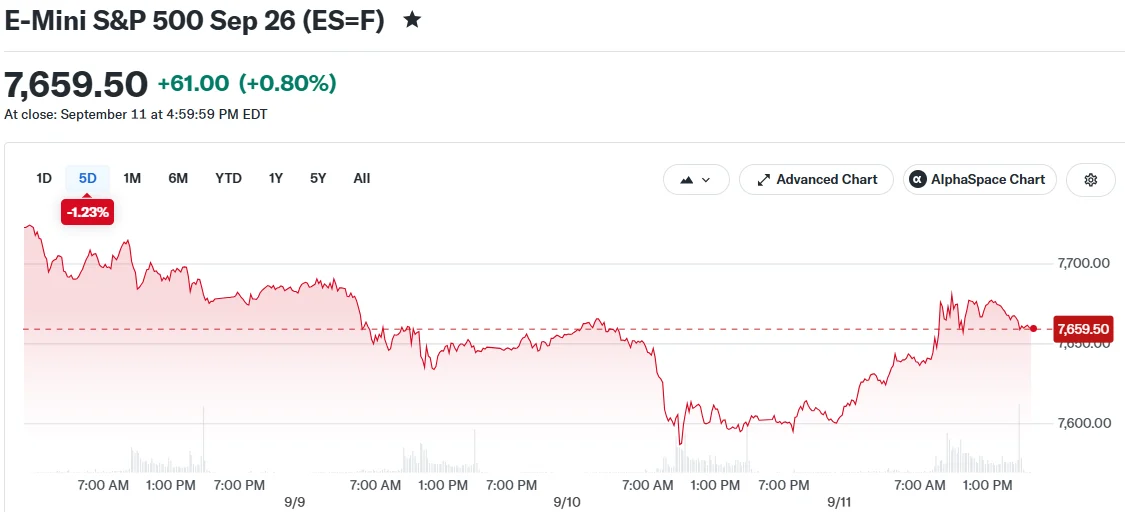
The inflation data revealed consumer prices climbed 0.4% for the month and 3.4% compared to the previous year. While both metrics aligned with economist projections, they represented a slight acceleration from July’s figures.
The core inflation measure, which excludes volatile food and energy components, increased 0.3% from the prior month. This exceeded the consensus estimate of 0.2% that Wall Street had anticipated.
Federal Reserve Rate Hike Expectations Surge Following CPI Release
The warmer core inflation reading prompted market participants to dramatically increase their wagers on Fed action. According to CME’s FedWatch tool, financial markets are currently assigning approximately an 87% probability that the central bank will implement a 25-basis-point rate increase during next week’s Federal Open Market Committee gathering.

This represents a significant jump from 72% odds just a day prior and 50% probability one week earlier. The surge in rate hike expectations eliminated some market ambiguity, which market observers suggest helped fuel the afternoon equity rally.
“We’ve observed this pattern repeatedly where macroeconomic developments trigger a selloff, but it’s usually recovered fairly swiftly when investors recognize they can purchase equities at discounted levels,” explained Will Rhind, CEO of GraniteShares.
Government bond yields edged upward after an initial decline following the CPI announcement. The benchmark 10-year Treasury note yield concluded trading just under 5%.
Crude Oil Retreats Following Tumultuous Trading Period
Energy markets experienced significant volatility throughout the week, with Brent crude surpassing $108 per barrel and diesel prices hitting an all-time high of $6 per gallon. These price spikes intensified inflation worries during the trading period.
However, Friday brought relief as oil prices moderated. WTI crude retreated to $100 per barrel. Brent crude futures similarly eased their ascent.
Saudi Arabia’s Energy Ministry disclosed a temporary halt to operations through the East-West Pipeline. Nonetheless, oil futures remained relatively stable throughout the trading session.
Overall price pressures have been moderating since peaking in May but continue to sit substantially above the Federal Reserve’s 2% inflation objective.
Market strategists highlighted that technology sector earnings have provided crucial support for equity valuations. Rhind emphasized that the market is “fundamentally resilient, at least regarding earnings performance, especially within the technology sector.”
The Federal Reserve’s upcoming policy decision next week represents the next critical hurdle for equity markets.
Get 3 Free Stock Ebooks
Discover top-performing stocks in AI, Crypto, and Technology with expert analysis.
- Top 10 AI Stocks - Leading AI companies
- Top 10 Crypto Stocks - Blockchain leaders
- Top 10 Tech Stocks - Tech giants


