


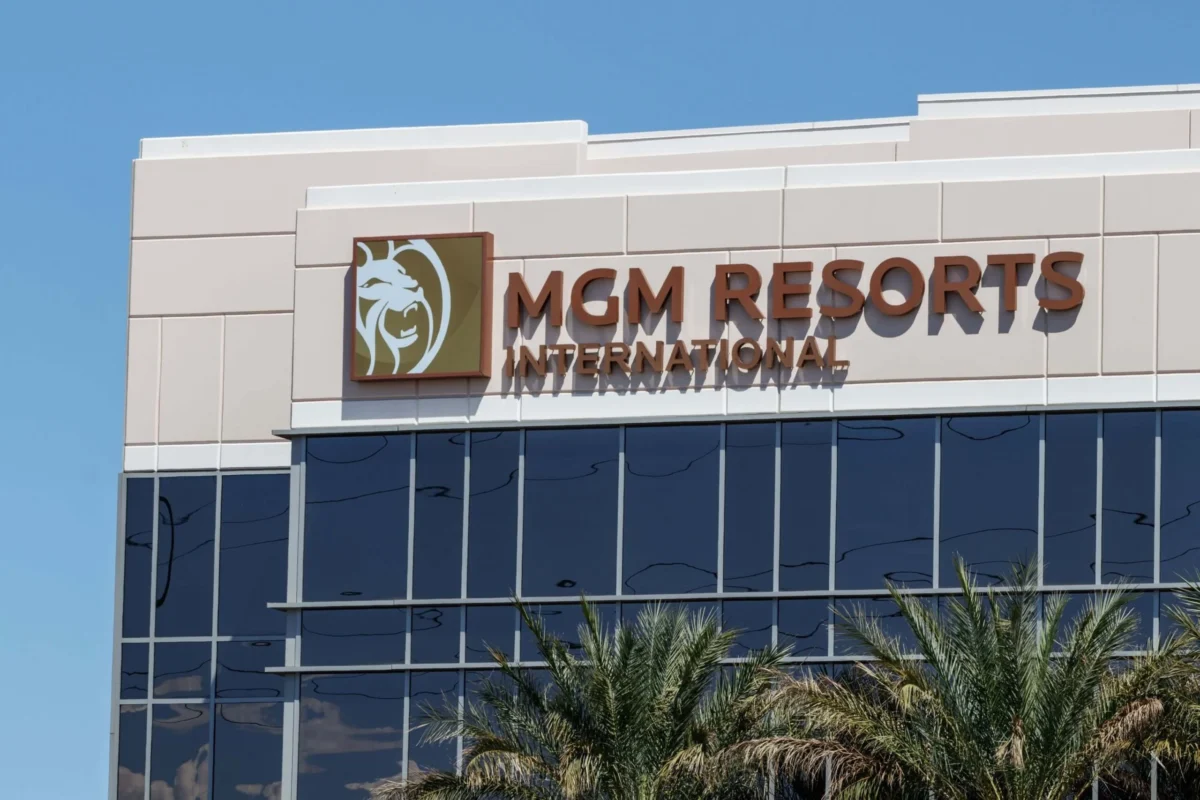
Key Highlights
- JPMorgan elevated MGM Resorts from “Neutral” to “Overweight” accompanied by a $46 price objective
- The new rating suggests approximately 20% potential gains from MGM’s previous closing price of $38.45
- Las Vegas Strip hotel room pricing shows 1% year-over-year growth for Q2 2026
- Visitor traffic to the Strip increased in both February and March, marking the first consecutive monthly growth in over a year
- MGM shares reached a fresh 52-week peak of $41.63 Wednesday after the analyst rating change
Shares of MGM Resorts surged by as much as 9% during Wednesday’s trading session, reaching a new 52-week peak of $41.63, driven by a favorable analyst upgrade and increased price forecast from JPMorgan.
MGM Resorts International, MGM
JPMorgan elevated its stance on MGM from “Neutral” to “Overweight” while boosting its December 2026 price objective to $46 from the previous $41 target. This revised forecast represents approximately 20% upside potential from the stock’s most recent closing price of $38.45.
Led by analyst Daniel Politzer, the upgrade reflects a belief that MGM’s Las Vegas Strip profit projections “appear to have reached a floor” following a challenging period during the latter half of 2025.
The investment bank highlighted that MGM currently offers a 14% implied free cash flow yield, which JPMorgan considers attractive compared to industry competitors.

Signs of Las Vegas Market Strengthening
The rating enhancement was supported by encouraging trends emerging from Las Vegas market data. Strip visitor counts climbed in both February and March, representing the first two-month consecutive increase in 13 months.
Revenue per available room (RevPAR) on the Strip has posted gains for three straight months. JPMorgan’s proprietary room rate analysis indicated that MGM’s Q2 2026 pricing is running 1% higher year-over-year, a marked improvement from the 2% decrease projected earlier in the year.
Premium properties including Bellagio, Aria, Cosmopolitan, and Mandalay Bay demonstrated the most robust performance. Meanwhile, lower-tier properties also exhibited signs of stabilization.
JPMorgan’s examination of Chase consumer spending patterns revealed that U.S. discretionary travel expenditures increased 4.1% year-over-year in May. The growth spanned all income brackets, with affluent consumers showing the strongest momentum while middle and lower-income segments maintained solid performance.
Mitigating Hard Rock Competition Worries
Market participants have been monitoring the upcoming Hard Rock Las Vegas property, scheduled to debut in late 2027. JPMorgan countered concerns that the new development would damage existing casino operators’ performance.
The firm referenced historical patterns, noting that significant new Strip developments typically expand total market demand rather than merely redistributing existing customer traffic among current operators.
JPMorgan also quantified potential downside exposure: a 1% revenue decline to MGM’s Strip operations would decrease its valuation by approximately $1.80 per share, representing roughly 5% of the stock’s current price level.
MGM’s latest quarterly results, released April 29, showed Q1 earnings per share of $0.49, falling short of the $0.56 analyst consensus. Revenue totaled $4.45 billion, exceeding projections of $4.37 billion and marking a 4.2% year-over-year increase.
MGM isn’t the only casino operator drawing analyst scrutiny recently. Mizuho maintained an “outperform” stance while reducing its price target to $59 from $62. Deutsche Bank reaffirmed a “buy” recommendation on May 1. The consensus rating among 22 Wall Street analysts stands at “Hold” with an average price target of $48.18.
IAC Inc. acquired 550,000 MGM shares during March at an average cost of $37.30 per share, expanding its total position to more than 66 million shares.
MGM most recently changed hands at $41.52, representing an approximately 8.8% daily gain.
Get 3 Free Stock Ebooks
Discover top-performing stocks in AI, Crypto, and Technology with expert analysis.
- Top 10 AI Stocks - Leading AI companies
- Top 10 Crypto Stocks - Blockchain leaders
- Top 10 Tech Stocks - Tech giants


