


Key Takeaways
- Michael Burry has expanded his holdings in MercadoLibre, Adobe, PayPal, Lululemon, and Zoetis.
- He acquired MercadoLibre shares around $1,500, describing the company as a long-term opportunity trading at a bargain.
- Burry established a significant position in Lululemon, seeing it as substantially undervalued.
- He cautioned that current AI investment trends resemble the dot-com bubble dynamics.
- Recent data reveals 87% of venture capital funding is now directed toward AI ventures, echoing 1999’s tech investment concentration.
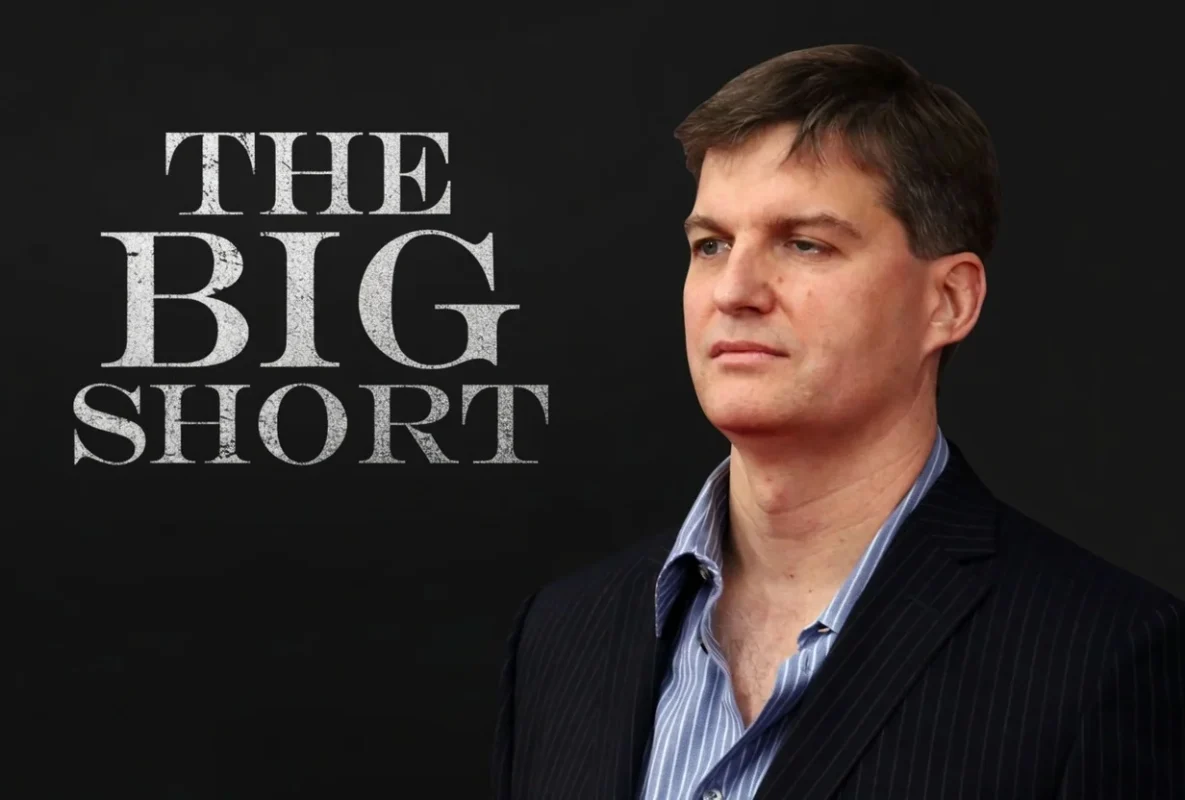
Michael Burry, the legendary investor immortalized in The Big Short, has been strategically accumulating shares in companies he considers market-neglected. As capital floods into artificial intelligence ventures, he’s deliberately moving in the opposite direction.
Burry revealed on Monday his recent acquisitions spanning five distinct companies: MercadoLibre, Adobe, PayPal, Lululemon Athletica, and Zoetis.
In a Substack post, he articulated his investment philosophy, characterizing these positions as beneficiaries of a “mass whale fall” occurring outside the market’s primary focus.
Breaking Down Burry’s Investment Strategy
Burry disclosed that he accumulated additional MercadoLibre shares when the stock traded in the mid-$1,500 territory. He characterized the Latin American e-commerce giant as a high-quality long-term investment currently undervalued due to concerns about its international market presence.

He also bolstered his existing positions in both Adobe and PayPal, while highlighting Zoetis — a veterinary pharmaceutical company — as an exceptional opportunity requiring investor patience.
Perhaps his most significant action involved Lululemon, where he initiated what he termed a substantial, full-scale investment.
Burry’s investment philosophy is clear-cut: these equities are being dismissed as market participants chase artificial intelligence opportunities.
Drawing Parallels to the Dot-Com Collapse
Burry established an explicit parallel to the 1999 market environment. During that period, established economy stocks and international companies were discarded as capital rushed into internet and telecommunications equities.
He referenced research from Apollo Chief Economist Torsten Slok demonstrating that 87% of current venture capital investments target AI-focused companies.
Borrowers with AI connections now represent nearly half of all investment-grade bond offerings and approximately 38% of high-yield debt issuance.
Burry highlighted that over $100 billion in investment-grade debt issued throughout the 1999–2000 technology surge subsequently fell to junk status within several years.
He characterized today’s market environment as an asset bubble.
The equities Burry is accumulating have all retreated considerably from peak valuations. Lululemon has experienced significant declines over the past twelve months. Adobe confronts questions surrounding its expansion trajectory. PayPal continues working to restore market credibility.
MercadoLibre, despite operating a robust business model, faces headwinds related to Latin American currency volatility and regional economic conditions.
Zoetis functions within the animal healthcare sector, essentially insulated from technology investment cycles.
Burry’s investment hypothesis suggests that capital flight from these companies — propelled by artificial intelligence excitement — has generated attractive entry points.
His historical performance lends credibility to his contrarian positions. He famously anticipated the US housing market collapse preceding the 2008 financial catastrophe.
Whether these particular investments deliver expected returns remains uncertain, but Burry’s public disclosures have refocused attention on a collection of stocks largely absent from recent market advances.
Get 3 Free Stock Ebooks
Discover top-performing stocks in AI, Crypto, and Technology with expert analysis.
- Top 10 AI Stocks - Leading AI companies
- Top 10 Crypto Stocks - Blockchain leaders
- Top 10 Tech Stocks - Tech giants


