


Key Takeaways
- Nasdaq-100 futures advanced 0.3% during Friday’s pre-market session while Dow futures declined marginally and S&P 500 contracts remained unchanged
- Federal Reserve implemented a 25 basis point rate increase and indicated additional tightening likely before 2023 concludes
- The greenback surged to its strongest position in seven weeks as traders anticipated further monetary policy tightening
- Crude oil prices retreated toward the $100 threshold, providing modest market relief despite continued Middle East supply disruptions
- Semiconductor equities rebounded following earlier weakness sparked by AI development pause recommendations from Anthropic and OpenAI
US stock futures showed divergent movement Friday morning as market participants processed the Federal Reserve’s initial interest rate adjustment in three years alongside persistent artificial intelligence sector concerns.
Futures tied to the Nasdaq-100 advanced 0.3%, contrasting with a 0.1% decline in Dow Jones contracts. S&P 500 futures hovered near unchanged levels approaching the market opening bell.
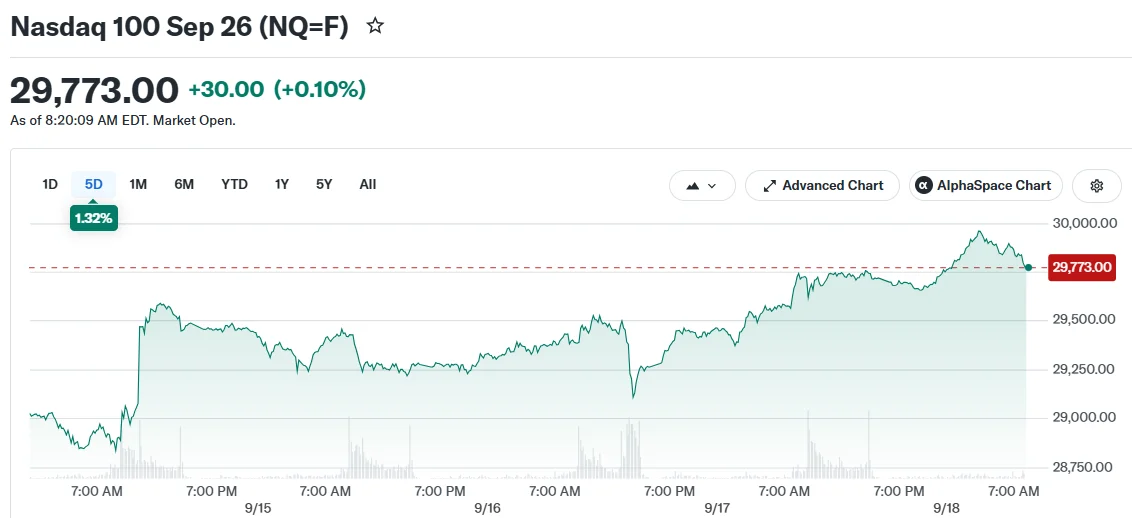
Thursday’s trading session delivered positive results for equities, with technology shares powering the advance. Declining crude prices combined with reduced Treasury yields bolstered investor confidence following Wednesday’s anticipated 25 basis point Fed rate adjustment.
Financial markets demonstrated resilience in absorbing the central bank’s policy decision. The rate increase had been widely anticipated and factored into valuations by most market participants.
Additional Monetary Tightening on the Horizon
Federal Reserve policymakers communicated expectations for at least one additional rate elevation prior to year-end. ING’s research team noted the Fed had “given the green light to markets to fully price in a hike in October” contingent upon inflation readings and energy market developments.

Skepticism regarding inflation control persists among some financial leaders. JPMorgan Chase CEO Jamie Dimon expressed caution to Yahoo Finance recently, stating: “It’s not clear to me we’ve slayed inflation.”
The US dollar index climbed to 100.448, marking its most elevated reading in seven weeks. This appreciation reflected market positioning around expectations for continued Fed policy tightening.
Additional dollar strength derived from yen weakness. Japan’s central bank delivered a 25 basis point rate hike Friday, though its accompanying policy guidance disappointed market expectations.
Crude Prices Moderate, Semiconductor Shares Rebound
Oil prices declined back toward the $100 benchmark, offering markets some respite. Energy prices have remained elevated due to ongoing disruptions affecting the Strait of Hormuz as regional conflict in Iran extends into its seventh month.
This sustained energy market volatility has maintained upward pressure on inflation metrics and created complications for monetary policymakers globally.
Semiconductor stocks demonstrated significant recovery following challenging trading earlier in the week. The sector’s selloff had originated from public statements by Anthropic and OpenAI advocating for moderation in artificial intelligence advancement.
The PHLX Semiconductor index showed only minor weekly losses entering Friday’s trading session.
US index futures extended their morning gains following the Bank of Japan’s rate announcement, which elevated Japanese borrowing costs to levels unseen in over three decades.
Market observers are monitoring whether the Federal Reserve’s monetary policy adjustments, coupled with moderating energy costs, will successfully reduce inflation without precipitating broader economic deceleration.
Upcoming economic data releases will prove critical in determining whether the Fed executes its projected October rate increase, providing the next major catalyst for market direction.
Get 3 Free Stock Ebooks
Discover top-performing stocks in AI, Crypto, and Technology with expert analysis.
- Top 10 AI Stocks - Leading AI companies
- Top 10 Crypto Stocks - Blockchain leaders
- Top 10 Tech Stocks - Tech giants


