


Key Takeaways
- Jensen Huang secured a spot on Trump’s Beijing delegation after initial reports noted his exclusion from the roster
- President Trump arrives in Beijing Thursday for his first China visit in almost ten years to meet with Xi Jinping
- US export controls have devastated Nvidia’s position in China’s artificial intelligence chip sector
- Tech titans including Elon Musk, Tim Cook, and Kelly Ortberg from Boeing round out the business contingent
- Scott Bessent conducted preliminary negotiations with Chinese counterparts in South Korea before the main summit
The Nvidia CEO’s name was conspicuously absent from the preliminary delegation announcement. When the White House released its initial participant list for Donald Trump’s Beijing visit, Jensen Huang didn’t make the cut, despite confirmation that other prominent business executives would accompany the president.
This is absolutely insane.
President Trump is currently flying to China with all of the following people to request “deals” with China’s President Xi:
1. Elon Musk, Tesla and SpaceX CEO
2. Jensen Huang, Nvidia CEO
3. Tim Cook, Apple CEO
4. Larry Fink, BlackRock CEO
5. Stephen…— The Kobeissi Letter (@KobeissiLetter) May 13, 2026
The situation reversed itself during a layover in Alaska. Journalists observed Huang stepping aboard Air Force One en route to the Chinese capital, following a direct invitation from Trump that came after news outlets reported on the CEO’s notable omission.
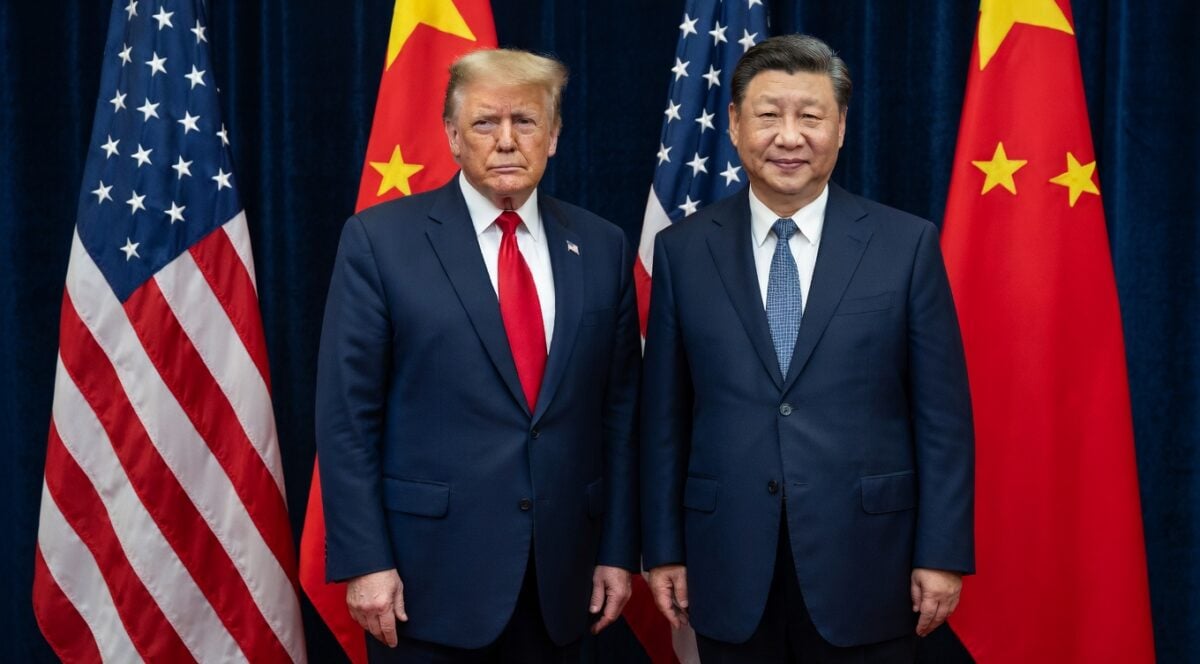
This journey represents Trump’s return to China after nearly ten years away from the country. His itinerary includes discussions with President Xi Jinping scheduled across Thursday and Friday, featuring sessions at the Great Hall of the People alongside a formal state dinner.
Accompanying Trump are business leaders including Elon Musk, Tim Cook from Apple, and Kelly Ortberg of Boeing. The assembled group predominantly represents corporations grappling with ongoing commercial complications in China.
Nvidia’s challenges revolve around semiconductor sales. American export regulations have prevented the company from marketing its cutting-edge AI chips within China, blocking products like the H200 from reaching Chinese buyers. Huang has acknowledged publicly that the company’s market share in China’s AI chip sector has experienced a dramatic decline.
According to recent company statements, Nvidia characterized its standing in China’s data center sector as essentially eliminated, with domestic Chinese manufacturers capturing the market vacuum created by export restrictions.

Nvidia’s Strategic Objectives at the Summit
Huang’s participation in the discussions focuses more on strategic positioning than generating immediate revenue. Even with potential relaxation of certain restrictions, the process of obtaining approvals and delivering semiconductors to China requires navigating complex regulatory frameworks across multiple jurisdictions.
Recent policy modifications concerning products such as the H200 have yielded minimal business results to date. Substantial reported order quantities haven’t converted into actual revenue streams because of supply chain constraints and approval delays.
Trump articulated his primary summit objective as requesting Xi to “open up” Chinese markets to American enterprises. He declared via Truth Social that this request would top his agenda during the bilateral meetings.
Concurrent Trade Negotiations
Meanwhile, Scott Bessent, serving as US trade negotiator, conducted approximately three hours of discussions with Chinese Vice Premier He Lifeng at Incheon airport in South Korea. Both parties declined to provide detailed readouts of those conversations.
The negotiations aim to preserve the trade agreement established last October, which saw Washington suspend punitive tariffs exceeding one hundred percent on Chinese merchandise while Beijing withdrew threats to limit rare earth material exports.
American objectives include selling Boeing jetliners, agricultural commodities, and energy products to China as part of efforts to narrow the bilateral trade imbalance. China’s priorities include loosening restrictions on semiconductor manufacturing equipment and advanced chip technology.
Observers suggest the Trump administration faces greater pressure to secure outcomes from this summit compared to China’s position. Xi doesn’t confront the same internal political dynamics as Trump, who must contend with midterm elections approaching in November.
“The Trump administration needs this meeting more than China does,” said Liu Qian, founder of Wusawa Advisory in Beijing. “It needs to show to American voters that deals are signed, money is made.”
Beijing also restated its objections to American weapons sales to Taiwan. A pending $14 billion military equipment package continues awaiting Trump’s final authorization.
Whether substantive agreements emerge from the summit regarding semiconductors, trade arrangements, or technology market access remains uncertain. For Nvidia, even modest reopening of Chinese market access would carry significance — though the journey toward substantial sales figures remains complex and extended.
Get 3 Free Stock Ebooks
Discover top-performing stocks in AI, Crypto, and Technology with expert analysis.
- Top 10 AI Stocks - Leading AI companies
- Top 10 Crypto Stocks - Blockchain leaders
- Top 10 Tech Stocks - Tech giants


