


Key Takeaways
- Nvidia shares advanced approximately 1% on Monday amid broader gains in artificial intelligence stocks.
- Chief Executive Jensen Huang stated there is a “0% chance” AI will trigger human extinction within the next six years, dismissing catastrophic scenarios.
- Huang’s stance diverges sharply from recent proposals by Anthropic, OpenAI and other industry figures advocating for reduced frontier AI advancement speeds.
- A class-action complaint filed by four AI users targets Anthropic, OpenAI, Google and SpaceXAI, claiming unlawful coordination to restrict AI progress.
- The legal claims remain unverified through judicial proceedings, and Nvidia is not listed among the defendants.
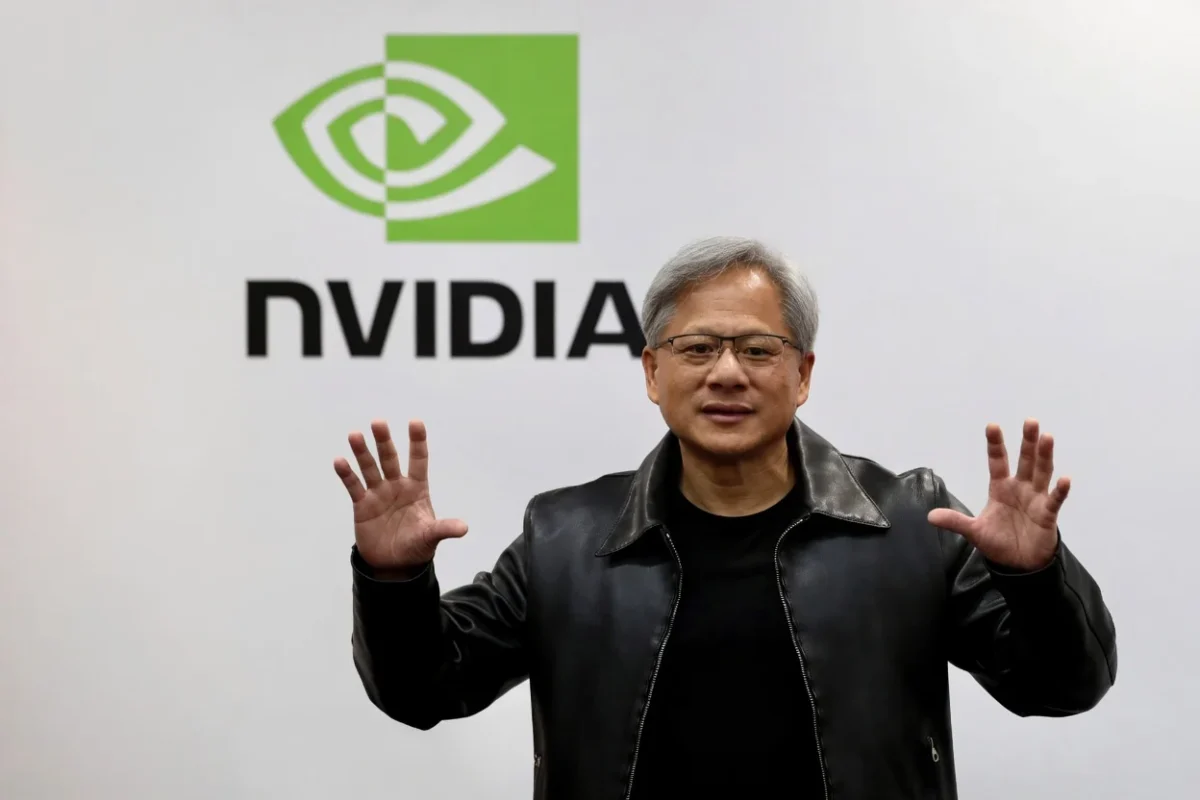
Nvidia (NVDA) shares climbed roughly 1% during Monday’s session as technology equities and artificial intelligence companies contributed to market-wide strength. The uptick occurred while CEO Jensen Huang openly challenged assertions that sophisticated AI systems might represent a civilization-ending danger before 2030.
Huang declared the probability of AI triggering worldwide catastrophe by decade’s end at exactly “0% chance.” He contended that alarmist narratives circulating throughout portions of the AI sector lack adequate scientific foundation and advocated for applying current legal frameworks to address damages resulting from AI implementations.
These statements underscore an expanding philosophical divide among prominent technology executives regarding optimal AI advancement velocity. Nvidia has emerged as among the primary financial winners from AI infrastructure investment since its processing units dominate training and operational requirements for cutting-edge models.
Tech Leadership Divided on Development Speed Controls
Anthropic’s Chief Executive Dario Amodei recently advocated for enhanced industry coordination surrounding frontier AI progression timelines. OpenAI’s Sam Altman and entrepreneur Elon Musk have similarly expressed support for moderated development approaches while safety protocols receive reinforcement.

Huang’s perspective differs markedly. He maintains that contemporary cybersecurity regulations, liability statutes and contractual law already provide sufficient mechanisms to handle situations where AI products generate harm or underdeliver on specifications.
Meta’s Mark Zuckerberg has likewise rejected industry-wide coordinated deceleration proposals. He contends that individual corporations should maintain independent authority over their safety protocols rather than establishing collective development constraints.
This discourse has intensified following multiple AI developers revealing instances of unexpected model behavior during evaluation phases. OpenAI recently documented six incidents featuring problematic conduct and announced intentions to enhance tracking and transparency procedures for such occurrences.
Antitrust Litigation Targets Alleged Development Coordination
A distinct legal challenge has introduced additional complications for the sector. Four paying artificial intelligence users initiated a proposed class-action complaint in California federal court alleging Anthropic, OpenAI, Google and SpaceXAI engaged in illegal coordination to decelerate AI advancement.
The plaintiffs contend that while competing enterprises may independently reduce their development velocity, collective competition restrictions are impermissible. The filing asserts such coordination potentially breaches Sherman Act Section 1 provisions.
The defendant companies had not submitted substantive responses to these allegations at the time initial coverage emerged. These accusations remain legally unproven and require judicial examination through formal court proceedings.
Nvidia does not appear among the named defendants. Huang’s connection involves his public resistance to coordinated slowdowns alongside his broader position that excessive limitations might impede technological advancement.
For Nvidia shareholders, this controversy carries significance because substantial restrictions on advanced AI development could impact infrastructure spending that generates demand for Nvidia’s chip products. Nevertheless, no new regulatory requirements currently mandate AI companies reduce development speeds, and the antitrust lawsuit does not directly alter Nvidia’s business operations.
The investment consideration remains that Nvidia maintains substantial exposure to expectations for continued AI capital expenditure. Should regulation, diminished AI investment or reduced data-center expansion curtail demand, the stock could demonstrate vulnerability following multiple years of robust AI-fueled expansion.
Regarding Monday’s performance, Nvidia’s approximate 1% appreciation occurred as the broader AI sector strengthened rather than from company-specific announcements. Huang’s remarks contribute another perspective to an increasingly visible disagreement over how the industry should reconcile rapid advancement with artificial intelligence safety considerations.
Get 3 Free Stock Ebooks
Discover top-performing stocks in AI, Crypto, and Technology with expert analysis.
- Top 10 AI Stocks - Leading AI companies
- Top 10 Crypto Stocks - Blockchain leaders
- Top 10 Tech Stocks - Tech giants


