


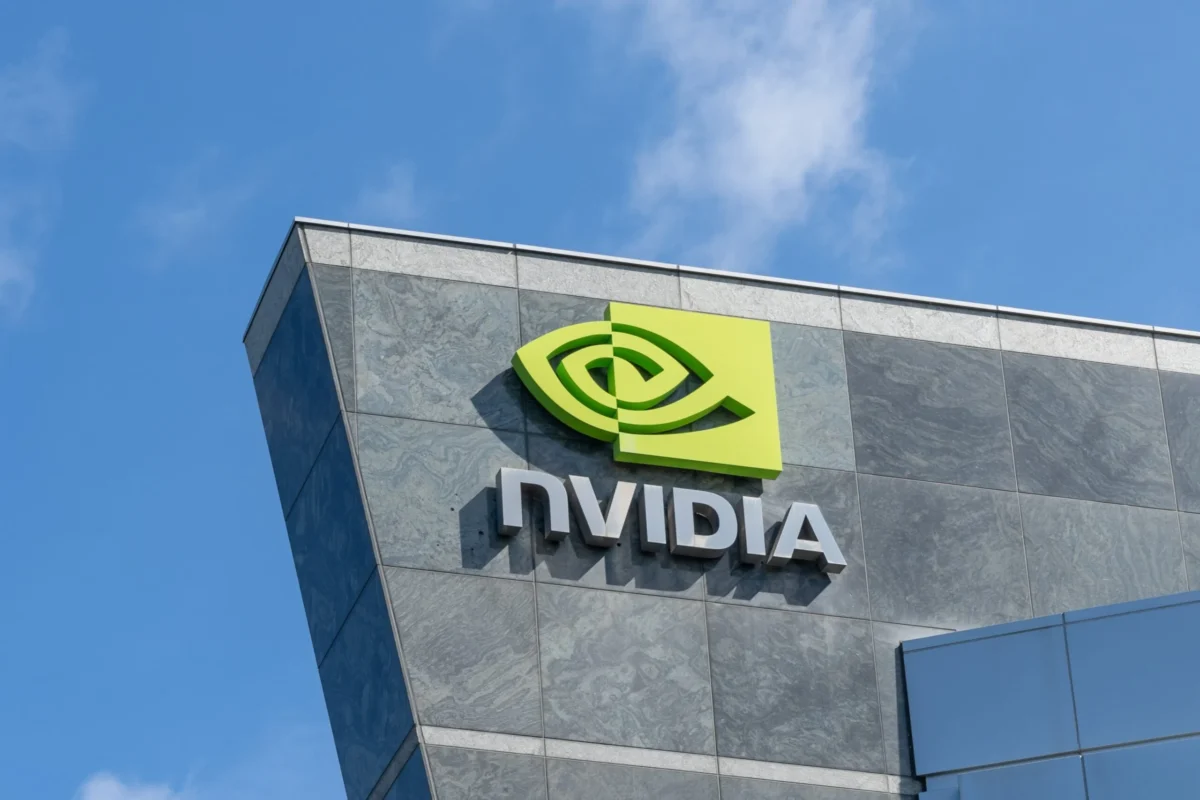
Key Takeaways
- Nvidia’s quarterly earnings report drops Wednesday after market close, with analysts focused on AI demand trends.
- Shares reached an all-time high of $235.75 Thursday, climbing 4.4% in a seven-session rally that delivered 20% gains.
- The company’s valuation has surged to $5.7 trillion — an unprecedented market capitalization for any publicly traded firm.
- UBS’s Timothy Arcuri boosted his price target to $275 while reaffirming his Buy recommendation.
- Despite beating estimates, Nvidia shares have declined following each of the previous three earnings announcements.
Nvidia (NVDA) approaches Wednesday’s quarterly report riding a remarkable seven-session winning streak, though historical patterns suggest the momentum may not survive the earnings release.
Shares peaked at an all-time high of $235.75 Thursday, marking a 4.4% single-day jump and a 20% surge across the week. However, Friday’s premarket trading showed a 2.5% retreat to $229.80.
Multiple catalysts have powered the recent advance: widespread optimism about AI spending, speculation around potential agreements that might restore chip exports to China, and revelations that President Trump’s trust acquired over $1 million in Nvidia-related instruments during Q1.
Yet Wednesday’s financial results remain the primary focus.

Timothy Arcuri of UBS elevated his price objective from $245 to $275 before the announcement, maintaining his Buy stance. His valuation applies a 19x multiple to his projected 2027 earnings. Arcuri’s research note highlighted what he characterized as unexpected indifference among major institutional long-term holders — a dynamic he believes could trigger substantial upside if results impress.
The catch? Nvidia’s last three quarters all featured earnings beats, yet shares fell after every single report.
The Broader Market Implications of NVDA’s Report
Nvidia’s quarterly performance reverberates far beyond its own ticker. Commanding a $5.7 trillion market capitalization — an all-time corporate record, nearly $1 trillion above its closest competitor — Nvidia exerts unmatched influence on market-cap-weighted indices.
The stock represents 8.6% of the SPY ETF. Apple, holding the second-largest weighting, accounts for 6.9%.
Last week illustrated this dominance vividly. Of the S&P 500’s 2.3% weekly advance, three-quarters originated from just five names: Nvidia, Micron, Apple, AMD, and Intel. While Micron, AMD, and Intel each surged over 25%, Nvidia’s relatively measured 8% climb still contributed more to index performance than any other company — even as over half the S&P 500 constituents declined.
This outsized influence makes Wednesday’s conference call essential viewing for virtually every market participant.
Surging Capital Expenditure on AI Infrastructure
The major cloud providers have laid the groundwork. Alphabet, Microsoft, Amazon, Meta, and Oracle have all increased their AI capital expenditure projections in recent earnings cycles. Collectively, these technology behemoths now anticipate deploying over $700 billion toward AI infrastructure in the current year — representing at least a 60% increase from 2025 levels.
Nvidia occupies the epicenter of this investment tsunami. Throughout this year, the company has unveiled or expanded collaborations with OpenAI, Marvell, Corning, CoreWeave, Nebius, and IREN. Most arrangements involve either direct Nvidia capital investment or equity participation rights.
Corning, traditionally a specialty glass manufacturer, has emerged as one of 2025’s top-performing S&P 500 components driven by fiber-optic cable demand from AI data centers — demonstrating how extensively Nvidia’s influence permeates related industries.
In his UBS preview, Arcuri acknowledged that “investor interest here is always obviously high,” while observing an atypical sense of subdued anticipation surrounding this specific release — a condition he interprets as potentially favorable for a pronounced positive market response.
Nvidia’s earnings announcement is scheduled for Wednesday, May 21, after the closing bell.
Get 3 Free Stock Ebooks
Discover top-performing stocks in AI, Crypto, and Technology with expert analysis.
- Top 10 AI Stocks - Leading AI companies
- Top 10 Crypto Stocks - Blockchain leaders
- Top 10 Tech Stocks - Tech giants


