


TLDRs
- Nvidia says agentic AI will reshape computing across devices, cloud, and robotics systems.
- Jensen Huang envisions distributed AI workloads between local devices and cloud systems.
- RTX Spark introduces powerful AI PCs designed for on-device autonomous agents.
- Physical AI in robots and vehicles may become the next major technology wave.
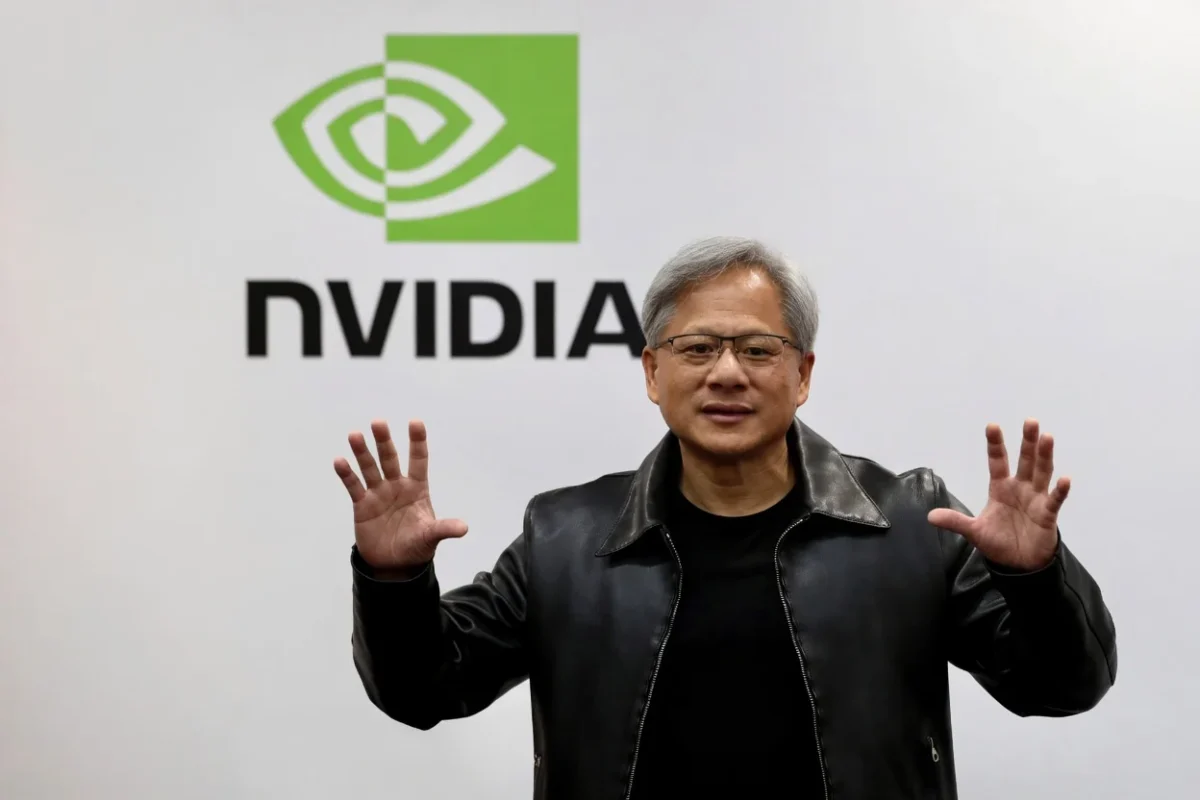
Nvidia (NASDAQ: NVDA) CEO Jensen Huang has outlined a sweeping vision for the next era of computing, arguing that “agentic AI” will fundamentally reshape how digital systems are built and operated across the world. Speaking at a media briefing in Taipei on June 2, Huang described a future where artificial intelligence systems do more than respond to prompts—they reason, plan, and execute tasks independently.
According to Huang, this transition represents a structural shift in computing architecture, one that spans personal computers, robotics, autonomous vehicles, and large-scale data centers. Instead of relying on a single system or device to handle all tasks, future computing workloads will be distributed across multiple layers, including local devices, home environments, and cloud infrastructure.
Computing Moves Beyond Single Systems
Huang emphasized that the traditional model of centralized computing is evolving into a more dynamic and distributed framework. In this emerging structure, different types of processing will be handled by different environments depending on their requirements.
Latency-sensitive decisions, for instance, will remain on local devices to ensure fast response times. Meanwhile, more complex reasoning, data-heavy computation, and coordination tasks will be offloaded to cloud systems. This hybrid model preserves device autonomy while leveraging the scalability of cloud infrastructure.
Researchers and industry observers have increasingly pointed to this approach as a defining characteristic of next-generation AI systems. It enables devices to operate more intelligently in real time while still benefiting from large-scale computational power when needed.

RTX Spark Signals New Direction
A key example of Nvidia’s vision is RTX Spark, which the company unveiled at GTC Taipei as a new category of Windows PCs designed specifically for personal AI agents. These machines are built to handle advanced AI workloads locally, with Nvidia claiming performance levels of up to 1 petaflop of AI compute and 128GB of unified memory.
RTX Spark systems are intended to support a new class of applications where AI agents operate directly on personal devices. These agents are expected to manage tasks, assist users, and interact with software in more autonomous and context-aware ways than traditional applications.
By embedding significant AI compute power directly into consumer hardware, Nvidia is effectively pushing AI capabilities closer to the user edge, reducing reliance on constant cloud connectivity.
Physical AI as Next Frontier
Beyond personal computing, Huang also highlighted what he calls “physical AI” as the next major wave of innovation. This includes technologies such as self-driving vehicles and humanoid robots that can perceive, interpret, and act in real-world environments.
In this model, AI systems are not confined to digital environments but are embedded into machines that interact directly with the physical world. These systems will rely on the same distributed architecture, balancing local processing for immediate decisions with cloud-based intelligence for complex reasoning and coordination.
Huang’s comments suggest that Nvidia is positioning itself at the center of this transition, supplying both the hardware and software infrastructure needed to power agentic and physical AI systems at scale.
Market Implications for NVDA
The shift toward agentic AI could have significant implications for Nvidia’s long-term growth narrative. As demand expands beyond traditional AI model training into autonomous systems, edge computing, and robotics, Nvidia’s GPU and AI platforms may become even more deeply embedded in global computing infrastructure.
Investors continue to view Nvidia as a central player in the AI revolution, with its technologies increasingly underpinning not just data centers but also next-generation consumer and industrial systems.
Get 3 Free Stock Ebooks
Discover top-performing stocks in AI, Crypto, and Technology with expert analysis.
- Top 10 AI Stocks - Leading AI companies
- Top 10 Crypto Stocks - Blockchain leaders
- Top 10 Tech Stocks - Tech giants


