


Key Highlights
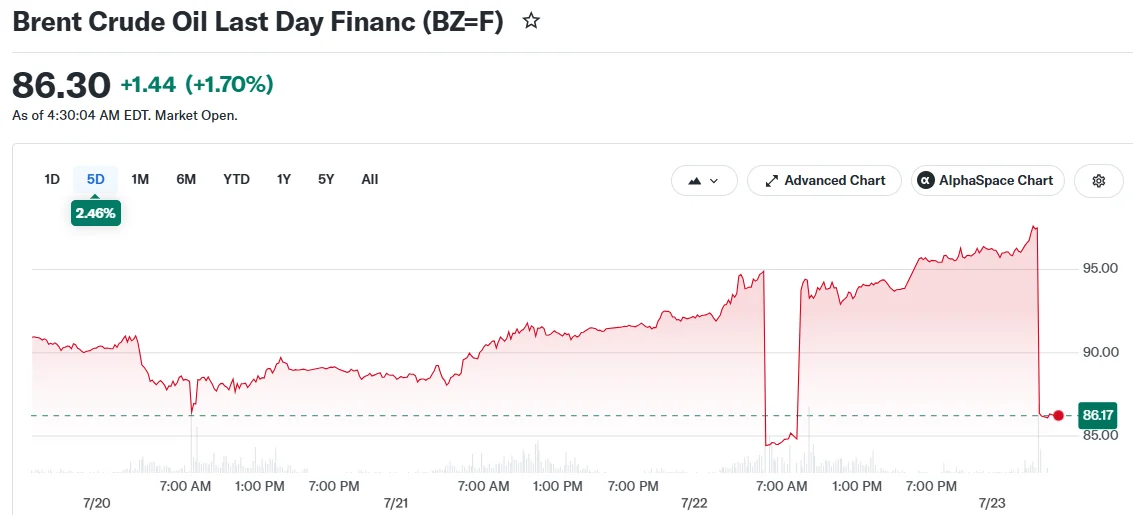
- Brent crude jumped 4% to reach $97.87 per barrel, marking the highest price point since the beginning of June
- Iranian authorities announced a full closure of the Strait of Hormuz following a tanker explosion incident
- Yemen-based Houthi forces targeted two Saudi Arabian oil vessels navigating the Bab el-Mandeb strait
- American forces conducted their twelfth consecutive night of military operations against Iranian targets
- Financial analysts at Goldman Sachs project sustained elevated oil prices throughout the summer months
Global crude markets extended their winning streak to five consecutive sessions on Thursday, with Brent crude advancing 4% to settle at $97.87 per barrel—a price level not witnessed since June 3. Meanwhile, U.S. West Texas Intermediate climbed 3.2% to reach $89.63 per barrel.
Market momentum was fueled by renewed concerns regarding potential supply chain disruptions affecting two of the planet’s most strategically important maritime oil transport corridors.
According to Iran’s Revolutionary Guards, an oil tanker experienced a fire following an explosive incident along a mined waterway south of the Strait of Hormuz, in proximity to Oman’s coastline. Two additional vessels reversed their routes. Subsequently, Iranian officials announced a comprehensive closure of the strait, issuing warnings that no tanker traffic would be permitted passage without advance approval from Iranian authorities.
Red Sea Blockade Intensifies with Houthi Actions
Coinciding with these developments, Houthi forces allied with Iran claimed responsibility for striking two Saudi Arabian oil tankers—identified as ENCELA and LAYLIA—operating in Red Sea waters. The militant organization alleged the ships had breached a recently imposed maritime embargo targeting vessels with Saudi connections.
Saudi officials have yet to verify any vessel damage. However, these aggressive actions represent a significant escalation in a regional crisis now simultaneously endangering both the Strait of Hormuz and the Bab el-Mandeb strait.

Combined, these strategic waterways facilitate a substantial portion of global maritime crude oil transportation. The Bab el-Mandeb serves as the vital link between the Red Sea and the Gulf of Aden. According to Goldman Sachs, oil transit through this passage has maintained an average of approximately 9 million barrels daily throughout the preceding month, with roughly 4 million barrels per day representing volumes that would face significant rerouting challenges should both strategic passages face simultaneous blockades.
Multiple Saudi crude carriers destined for Indian and Chinese markets had already modified their navigation routes earlier this week in response to Houthi threat announcements.
American Military Operations Against Iran Continue
U.S. military command confirmed the completion of its twelfth consecutive night conducting strikes against Iranian positions. President Donald Trump had previously pledged to demolish an Iranian bridge or electrical facility for each instance of Iranian aggression against vessels transiting the Strait of Hormuz.
Ahmad Assiri, research strategist at Pepperstone, noted that financial markets are currently incorporating “a concerning likelihood of supply disruptions affecting a second critical chokepoint,” which continues to provide upward pressure on near-term crude pricing forecasts.
Investment bank Goldman Sachs projects that oil prices will maintain the majority of recent increases throughout July and August. The firm cited diminishing global petroleum inventories, reduced Middle Eastern output levels, heightened seasonal demand from summer transportation patterns, and a deceleration in strategic petroleum reserve releases as supporting factors.
However, one contrary indicator emerged. The U.S. Energy Information Administration released data revealing an unexpected increase in commercial crude stockpiles of 2 million barrels during the week concluding July 17, elevating aggregate reserves to 411.7 million barrels. Both gasoline and distillate inventories similarly registered increases.
Notwithstanding the inventory accumulation, market participants maintained their concentration on transportation vulnerabilities, escalating insurance premiums, and the ongoing threat of additional assaults targeting tanker vessels or critical energy infrastructure facilities.
Get 3 Free Stock Ebooks
Discover top-performing stocks in AI, Crypto, and Technology with expert analysis.
- Top 10 AI Stocks - Leading AI companies
- Top 10 Crypto Stocks - Blockchain leaders
- Top 10 Tech Stocks - Tech giants


