


Key Takeaways
- White House hosting Thursday summit with senators to push forward the CLARITY Act cryptocurrency legislation
- Senator Lummis announces updated bill draft coming within days, floor vote targeted for next week
- Kalshi prediction market shows 79% probability of Senate vote occurring before August congressional break
- Democratic Senator Chris Murphy claims bill protects Trump’s cryptocurrency business ventures
- Recent financial filings reveal Trump earned approximately $1.4 billion from crypto-related activities
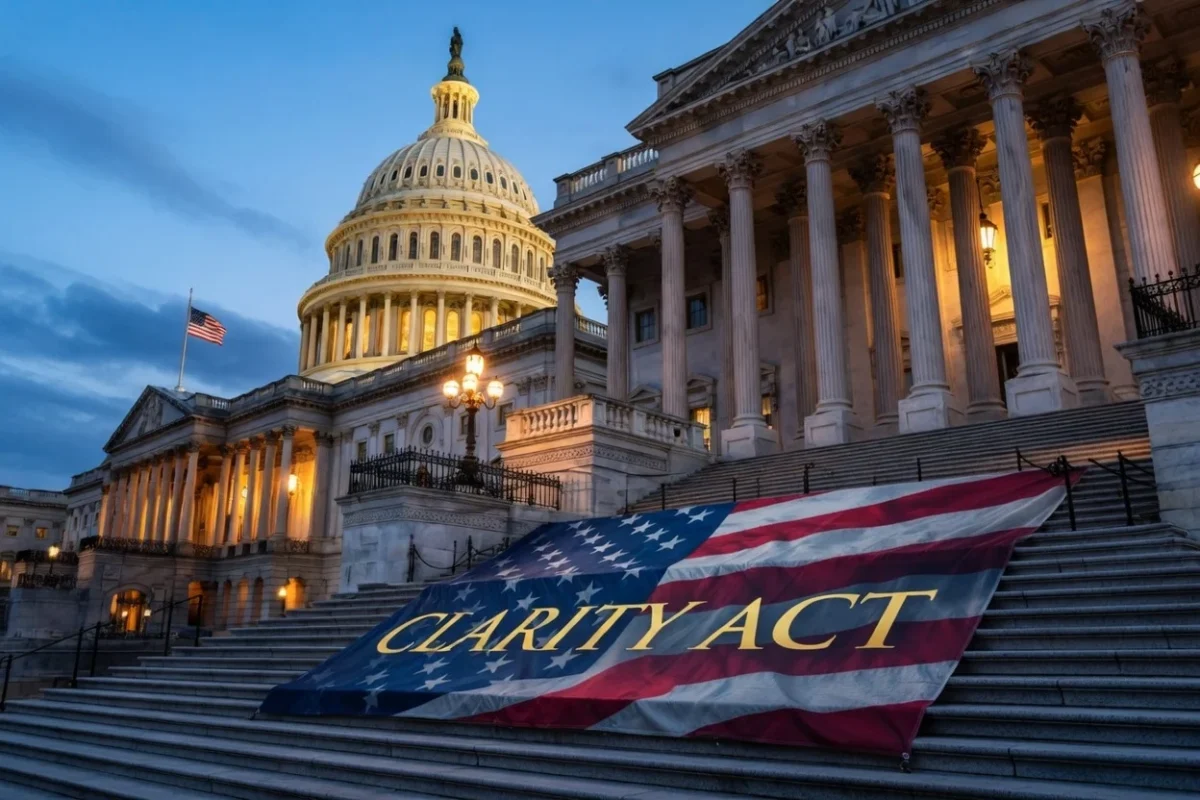
President Donald Trump has scheduled a Thursday White House session with multiple senators to accelerate momentum on the CLARITY Act, a comprehensive cryptocurrency market framework that Congress aims to finalize before lawmakers depart for their August break.
Senator Bernie Moreno verified the upcoming gathering, stating that Senate members will update Trump on the legislation and outline “its trajectory toward passage.” Senator Cynthia Lummis is also confirmed to participate.
The August recess represents a critical deadline for congressional action. Political observers widely view this period as the final viable opportunity to advance the measure ahead of upcoming midterm campaign season.
Senator Thom Tillis, actively negotiating outstanding components of the proposed law, informed Politico he anticipates resolution on remaining issues by week’s end.
During a Fox Business interview Wednesday, Lummis revealed that an amended version will emerge in the coming days, with Senate floor proceedings anticipated next week.
Betting Markets Show Growing Confidence
Traders participating on Kalshi currently assess the CLARITY Act’s chances of receiving a Senate vote before the August break at 79%, representing an increase from the previous day’s 68.8%.

Nevertheless, expectations for full enactment remain more cautious. Kalshi participants assign a 36% likelihood to the bill becoming law during 2026. Meanwhile, Polymarket bettors estimate those odds at 39%.
Democrats Intensify Their Resistance
On July 14, Democratic Senator Chris Murphy escalated his objections to the proposed legislation, characterizing it as a measure that would “effectively authorize Donald Trump’s cryptocurrency conflict of interest operation.”
Murphy contended the current bill language fails to prohibit government officials from gaining financial advantages from sectors they oversee through regulation.
His statements followed Trump’s most recent financial disclosure documentation showing approximately $1.4 billion in cryptocurrency-derived revenue, predominantly connected to his family’s World Liberty Financial venture.
Senators Jeff Merkley and Chris Van Hollen aligned with Murphy’s position, demanding enhanced ethics safeguards before legislative advancement.
They advocate for clear language preventing the president, vice president, congressional members, and their direct relatives from earning profits from cryptocurrency enterprises subject to forthcoming regulatory frameworks.
Five days prior to Murphy’s public statement, senior Democrats from five Senate committees, including Senator Elizabeth Warren, formally requested investigative hearings examining Trump’s cryptocurrency holdings.
The Senate iteration of this legislation has undergone negotiations spanning more than ten months. Disputes concerning stablecoin yield structures and conflict-of-interest protocols have created procedural delays.
The CLARITY Act would establish split regulatory authority over digital assets between the Commodity Futures Trading Commission and the Securities and Exchange Commission, while simultaneously implementing consumer safeguard standards.
Cryptocurrency industry organizations maintain their support for the measure. Coinbase leadership has emphasized that definitive digital asset regulations are essential for maintaining U.S. market competitiveness against China and the European Union.
Lummis verified that the combined Banking and Agriculture Committee version stands prepared for full Senate consideration. The subsequent legislative stage is projected between July 15 and July 20, with Senate Majority Leader John Thune holding authority over the bill’s ultimate procedural route.
Get 3 Free Stock Ebooks
Discover top-performing stocks in AI, Crypto, and Technology with expert analysis.
- Top 10 AI Stocks - Leading AI companies
- Top 10 Crypto Stocks - Blockchain leaders
- Top 10 Tech Stocks - Tech giants


