


Key Points
- SK Hynix ADRs declined 6.8% to $180.65 in premarket sessions on Wednesday following Tuesday’s extraordinary 27% rally
- IBM’s CEO Arvind Krishna sparked Tuesday’s surge by noting customer spending shifts toward memory and storage solutions
- Following Tuesday’s jump, SKHY ADRs reached a 6.2x forward earnings valuation — essentially matching Micron’s metrics
- The company dominates approximately 56% of the high-bandwidth memory sector, providing essential components for Nvidia’s AI hardware
- The valuation spread between Korean-listed shares and ADRs may narrow when mutual conversion becomes available around July 29
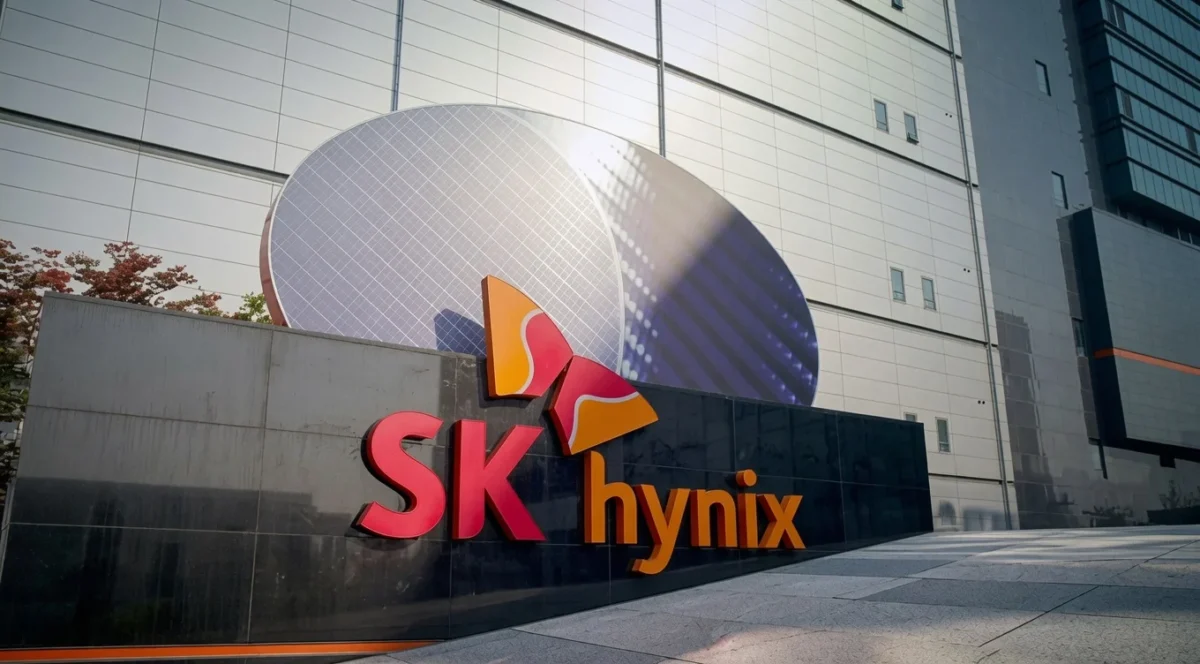
SK Hynix (SKHY) American Depositary Receipts retreated 6.8% to $180.65 during Wednesday’s premarket session, with shareholders capitalizing on gains after Tuesday’s remarkable 27% single-day advance.
Tuesday’s extraordinary movement originated from comments by IBM’s CEO Arvind Krishna, who indicated that enterprise clients were reallocating capital toward storage and memory solutions — creating favorable conditions for SK Hynix.
Following that explosive rally, the ADRs reached a forward earnings multiple of 6.2x, effectively eliminating the valuation discount compared to Micron — which had been a primary attraction for certain investors.
A significant draw for SKHY ADRs had been their valuation advantage relative to Micron. With that differential erased, the rationale for maintaining positions became murkier.

The ADR weakness occurred despite SK Hynix’s Seoul-traded shares advancing 8.8% in South Korean markets on Wednesday. The two securities haven’t tracked together since the American market debut last Friday.
Korean equity markets have experienced heightened volatility, with domestic traders deploying leveraged exchange-traded funds to magnify directional movements.
SK Hynix entered U.S. markets through what became the largest inaugural American listing by an international corporation. Demand during the offering process surpassed available shares by over sevenfold.
SK Hynix’s Critical Role in Nvidia’s AI Infrastructure
The semiconductor manufacturer commands approximately 56% of worldwide high-bandwidth memory production — the specialized memory chips positioned adjacent to processors in Nvidia’s AI accelerator systems that enable high-speed data transfer.
HBM chips are essential; without them, even the most advanced AI processors cannot function optimally. This positioning makes SK Hynix an indispensable link in the AI hardware ecosystem.
The firm has consistently been first-to-market with each successive HBM generation. For HBM4, which supports Nvidia’s newest Vera Rubin architecture, industry analysts project SK Hynix will provide the bulk of components. The companies formalized a technology collaboration agreement in June to synchronize future development timelines.
This leadership position doesn’t mean rivals are idle. Samsung has commenced HBM4 volume manufacturing, while Micron has steadily expanded its footprint. Both competitors have received qualification approval for Nvidia’s current-generation platform.
Understanding the ADR Premium and Future Outlook
A notable concern for American investors involves the pricing differential between Korean-listed shares and ADRs. This premium exceeded 50% on Tuesday.
The Korea Securities Depositary is anticipated to enable mutual conversion between domestic shares and ADRs beginning July 29, potentially narrowing this spread.
Memory semiconductors represent a cyclical business segment. SKHY’s Korea-listed equity surged throughout the previous year, though memory stocks temporarily entered bear territory just prior to the U.S. listing — illustrating how rapidly market dynamics can change.
Demand for SK Hynix’s HBM products is projected to remain constrained through 2027. Both Samsung and Micron have achieved certification for Nvidia’s HBM4 architecture and are actively scaling production capacity.
Get 3 Free Stock Ebooks
Discover top-performing stocks in AI, Crypto, and Technology with expert analysis.
- Top 10 AI Stocks - Leading AI companies
- Top 10 Crypto Stocks - Blockchain leaders
- Top 10 Tech Stocks - Tech giants


