


Key Highlights
- Treasury Secretary Scott Bessent revealed historic economic isolation tactics targeting Iran, set for release next week
- US naval forces confirm ability to maintain Iranian port blockade without time constraints
- Tehran moving toward BRICS New Development Bank membership in search of alternative financial channels
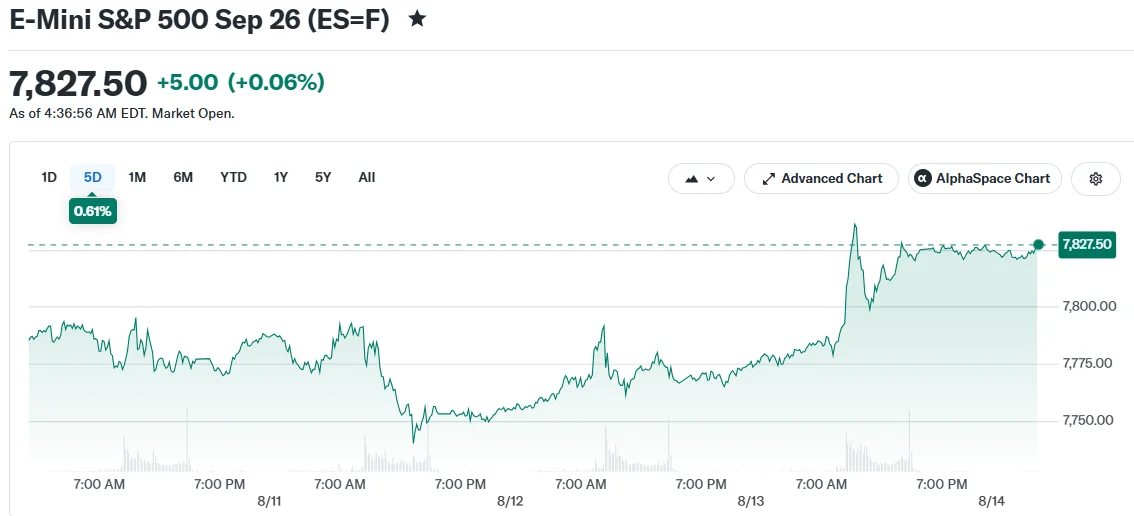
- S&P 500 achieved record closing level of 7,798.99, marking its third consecutive winning week
- Brent crude climbed beyond $87 per barrel amid technology sector strength
Wall Street’s S&P 500 index achieved an unprecedented closing high of 7,798.99 on Thursday, accompanied by the Nasdaq Composite’s 0.81% advance to 26,803.03. The performance extended winning streaks to three consecutive weeks for two of America’s primary market benchmarks.
Markets across Asia predominantly mirrored the upward momentum. Declining oil prices combined with unchanged producer price inflation figures bolstered investor confidence throughout the region.
Brent crude futures advanced more than 1% to settle at $87.95 per barrel. West Texas Intermediate followed suit, climbing to $82.15 per barrel.
The positive market performance persisted despite ongoing geopolitical uncertainty surrounding the strategically vital Strait of Hormuz.
Treasury Department Announces Unprecedented Iran Sanctions Strategy
In a significant policy announcement, Treasury Secretary Scott Bessent revealed that Washington will unveil novel economic measures targeting Iran next week. He characterized these actions as unprecedented tactics “like have never been seen in the history of economic isolation on a country.”

Bessent characterized the strategy as a “one-two punch,” merging the forthcoming financial restrictions with the ongoing naval blockade operations at Iranian maritime facilities.
Defense Secretary Pete Hegseth independently confirmed that American naval forces possess the capacity to maintain the blockade “indefinitely” through systematic warship rotations across the region. The USS George Washington is currently traveling to relieve the USS Abraham Lincoln, which has maintained Middle Eastern operations for more than 250 consecutive days.
Tehran has responded by pursuing alternative arrangements. Iran’s central bank leadership announced imminent membership in the BRICS New Development Bank, representing the nation’s effort to establish financial partnerships beyond traditional Western institutions.
President Trump has issued warnings of 25% tariff impositions on nations purchasing Iranian goods or services, a move that would significantly impact China, currently Iran’s primary commercial partner.
The United States and Iran remain in a standoff over the Strait of Hormuz, the critical waterway through which approximately one-fifth of global oil and natural gas shipments transit. Each nation continues demanding concessions that the opposing side has consistently rejected.
British Economic Performance Exceeds Expectations Despite Conflict Risks
Britain’s economy expanded 0.4% during the second quarter, positioning the nation to potentially lead G7 growth for two consecutive quarters. Business investment surged 1.7%, significantly outperforming economist predictions of a 0.5% contraction.
The International Monetary Fund had earlier cautioned that the Iranian crisis would inflict greater economic damage on the United Kingdom than any other developed nation, citing Britain’s substantial dependence on energy imports.
Defying those projections, British consumer expenditure exceeded analyst expectations in recent months. Favorable weather conditions, England’s impressive FIFA World Cup showing, and strengthening business sentiment all played contributing roles.
A Deutsche Bank UK economist acknowledged the robust first-half expansion but cautioned that escalating fuel costs could constrain household purchasing power moving forward.
In separate developments, Uber and Pony.ai revealed intentions to introduce over 2,000 autonomous taxis throughout Europe, expanding beyond Zagreb into four additional metropolitan areas.
Get 3 Free Stock Ebooks
Discover top-performing stocks in AI, Crypto, and Technology with expert analysis.
- Top 10 AI Stocks - Leading AI companies
- Top 10 Crypto Stocks - Blockchain leaders
- Top 10 Tech Stocks - Tech giants


