


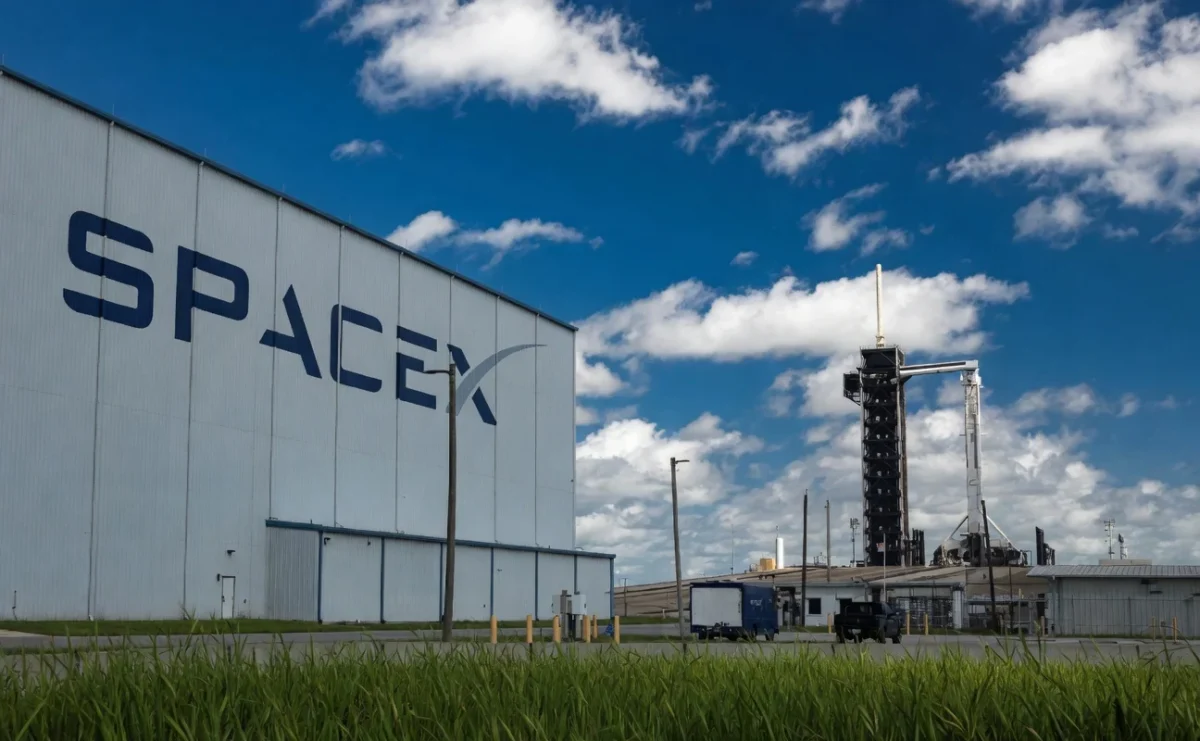
Key Highlights
- Shares of SpaceX advanced 1% to $116.35 during premarket hours Thursday following Wednesday’s 6.7% decline
- The 13th Starship test mission targets a 6:45 p.m. ET departure from the Starbase facility in Texas
- Following engine ignition problems that scrubbed the July 17 launch, SpaceX engineers swapped out multiple Raptor engines
- Weather concerns have emerged as Tropical Storm Bertha approaches, prompting close monitoring by SpaceX teams
- Mission objectives include launching 20 Starlink V3 satellites and testing Raptor engine restart capabilities in orbit
Shares of SpaceX ticked up 1% to reach $116.35 during Thursday’s premarket session, recovering modestly from Wednesday’s sharp 6.7% downturn.
Space Exploration Technologies Corp., SPCX
The modest gain arrives as market participants turn their attention to the company’s thirteenth Starship test mission, which targets a 6:45 p.m. ET departure from the Starbase launch complex in Texas.
Since going public, the stock has faced headwinds despite a record-breaking IPO debut. After ending a seven-session decline on Tuesday, shares retreated once more on Wednesday. Analysts point to valuation concerns as a key factor — the company currently commands approximately 40 times projected 2026 revenue, a multiple unprecedented for trillion-dollar enterprises.
The initial July 17 launch window was canceled moments before liftoff after multiple engines on the Super Heavy booster experienced automatic ignition failures. During the subsequent week, SpaceX engineers removed and installed at least two replacement Raptor engines among the booster’s 33-engine array, CEO Elon Musk confirmed.

A new challenge has emerged in the form of Tropical Storm Bertha. The company posted on X that meteorological conditions represent “currently a significant watch item,” as the storm system delivers precipitation, elevated winds, and hazardous surf conditions along the Texas coastline. The National Hurricane Center warns that flash flooding and tropical storm-strength winds could impact the launch area.
Mission Objectives for Flight 13
The test flight carries an ambitious agenda. The Super Heavy booster must successfully execute liftoff, ascent phase, stage separation, boostback maneuver, and a precision landing burn at a designated offshore location in the Gulf of America.
Meanwhile, the Starship upper stage will work to release 20 Starlink V3 satellites into orbit, conduct a single Raptor engine restart test while in space, then perform a controlled atmospheric re-entry sequence culminating in an Indian Ocean splashdown.
Mission success would represent continued progress toward achieving full reusability for Starship. SpaceX projects that reusable launch systems could reduce orbital access costs by approximately 90% relative to its current Falcon 9 platform.
RBC Capital’s Ken Herbert characterizes cost reduction as the central “flywheel” driving SpaceX’s value proposition. He maintains that without Starship capabilities, concepts like orbital AI computing facilities remain impractical.
Future Launch Cadence and Commercial Timeline
Morgan Stanley’s Adam Jonas has highlighted SpaceX’s long-term ambition to conduct thousands of Starship flights annually. To put this in perspective, global launch activity totaled approximately 330 missions in 2025 — with SpaceX responsible for over half that figure.
Jonas indicated that commercial payload operations aboard Starship could commence as soon as the fourth quarter, though he emphasized that “space is hard, and future Starship and in-space anomalies should be expected.”
The vehicle also plays a critical role in NASA’s lunar exploration program, with the agency depending on Starship for upcoming moon landing operations, intensifying development schedule pressures.
Live coverage of the launch will stream on SpaceX’s website beginning approximately 30 minutes prior to the launch window, with real-time updates available on X.
Engineering teams have installed fresh booster engines following the aborted July 17 launch attempt.
Get 3 Free Stock Ebooks
Discover top-performing stocks in AI, Crypto, and Technology with expert analysis.
- Top 10 AI Stocks - Leading AI companies
- Top 10 Crypto Stocks - Blockchain leaders
- Top 10 Tech Stocks - Tech giants


