



Key Takeaways
- Equity futures showed mixed signals Thursday following a three-session decline
- Crude oil prices remained elevated with Brent holding above $95 amid geopolitical concerns
- Treasury yields continued their ascent with the 10-year note reaching 4.79%
- Broadcom experienced pre-market declines despite surpassing earnings expectations; Snowflake dropped more than 4%
- Market participants are focused on Friday’s employment data as the next critical market driver
US stock futures showed little conviction Thursday morning as market participants monitored advancing Treasury yields, sustained oil price strength, and continued geopolitical instability in the Middle East.
Dow Jones Industrial Average futures advanced 0.2%, while futures tied to the S&P 500 hovered near unchanged levels. Futures linked to the Nasdaq-100 slipped into negative territory, erasing portions of Wednesday’s advance.
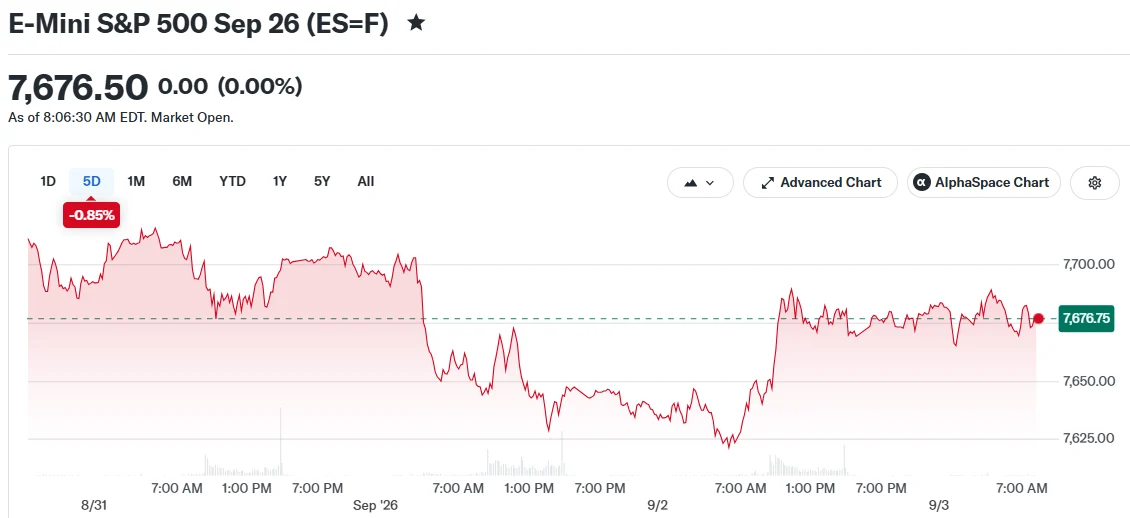
The benchmark S&P 500 index had broken its three-day slide during Wednesday’s trading session, supported by strength in Nvidia’s stock price. However, that positive momentum quickly dissipated as Treasury yields resumed their upward trajectory during overnight trading.
Treasury Yields Continue Upward March
The benchmark 10-year Treasury note yield advanced 1 basis point to 4.79% during early morning hours. Elevated yields typically create headwinds for equity markets, especially technology and growth-oriented stocks, by increasing capital costs and enhancing the relative appeal of fixed-income investments.
West Texas Intermediate crude oil surged 2.1% to reach $92.95 per barrel. Brent crude contracts maintained positions above $97 per barrel, continuing to trade well beyond the $95 threshold that has sustained inflationary concerns among investors.

Kathleen Brooks, who serves as research director at digital brokerage platform XTB, indicated that a genuine rebound in investor confidence would necessitate energy prices retreating to levels observed during the early summer months.
Brooks emphasized that absent a complete cessation of hostilities from all parties involved in the Middle East conflict, significant recoveries in commodity markets or bond valuations appear unlikely. She noted that monetary policy authorities will maintain a vigilant stance regarding inflation threats.
President Trump announced that the United States executed a “very heavy attack” targeting Iran on Wednesday, though he indicated the confrontation would be brief in duration. Financial markets continue to monitor developments for any indications of a potential ceasefire agreement.
Corporate Results and Employment Metrics Under Scrutiny
In corporate earnings developments, Broadcom’s stock declined in pre-market activity despite the semiconductor company delivering quarterly results that exceeded analyst projections. Snowflake’s shares tumbled more than 4%.
Athleisure retailer Lululemon Athletica and electronic signature provider DocuSign are slated to announce their quarterly financial performance following Thursday’s market close.
Career transition consultancy Challenger, Gray and Christmas disclosed a deceleration in corporate job cut announcements during August. The findings suggest what market observers characterize as a “low hire, low fire” employment environment.
The Bureau of Labor Statistics was scheduled to release weekly jobless claims data Thursday morning. Both employment indicators are drawing attention as preliminary signals ahead of Friday’s comprehensive monthly payrolls report.
The monthly employment report carries significant weight for Federal Reserve officials as they deliberate future monetary policy adjustments.
Financial markets continue to demonstrate heightened sensitivity to economic releases that could influence rate reduction expectations. With energy prices elevated and yields advancing, the trajectory for equity markets heading into the weekend remains clouded with uncertainty.
Get 3 Free Stock Ebooks
Discover top-performing stocks in AI, Crypto, and Technology with expert analysis.
- Top 10 AI Stocks - Leading AI companies
- Top 10 Crypto Stocks - Blockchain leaders
- Top 10 Tech Stocks - Tech giants


