


Key Highlights
- More than 100 job postings related to Optimus demonstrate Tesla’s transition from experimental phase to industrial-scale manufacturing
- Elon Musk revealed plans to discontinue Model S and Model X production, converting Fremont factory space for Optimus assembly
- Production of Optimus Version 3 scheduled to commence summer 2026, with full-scale manufacturing planned for 2027
- Construction began on dedicated Optimus production facility at Texas Gigafactory, targeting annual capacity of 10 million robots
- Musk projects Optimus revenue potential at $10 trillion, potentially eclipsing Tesla’s automotive division
As of March 25, 2026, Tesla (TSLA) shares are hovering around the $278 mark.
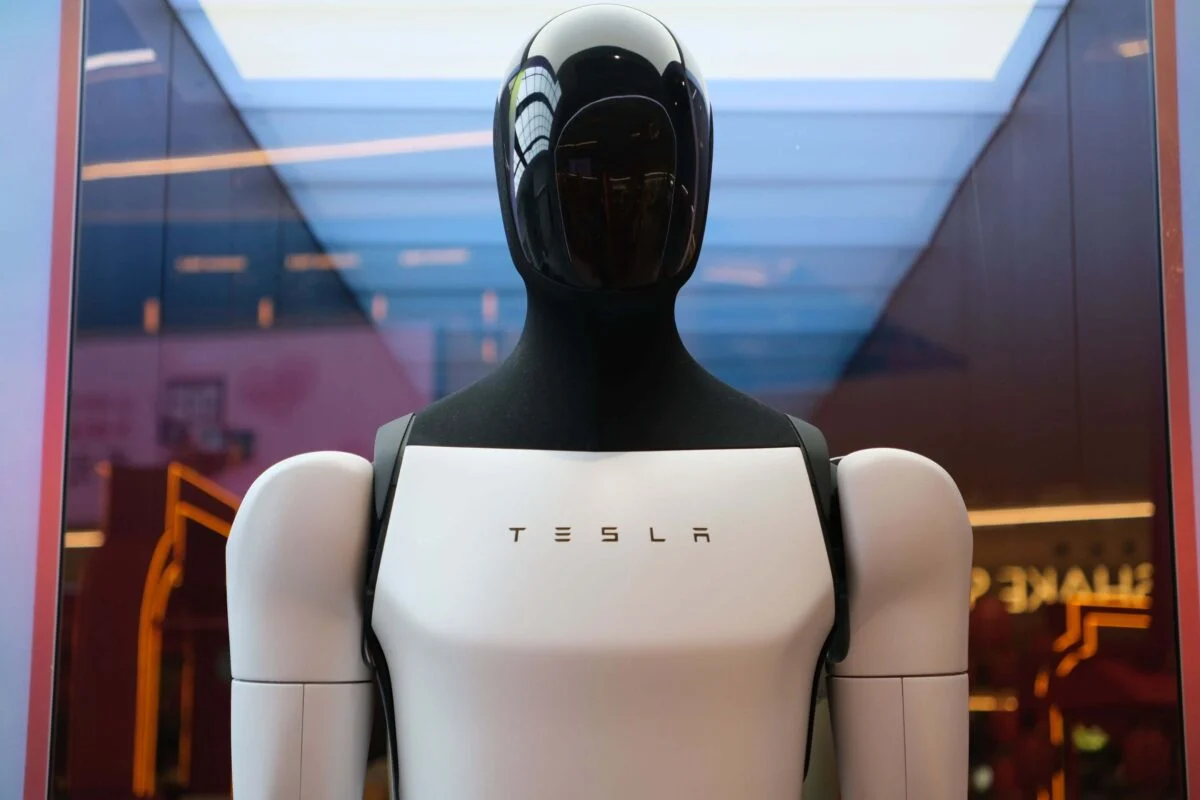
Tesla is placing an unprecedented wager on the future of humanoid robotics. The electric vehicle manufacturer is aggressively advancing its Optimus program from concept validation to industrial manufacturing, with recruitment efforts revealing the magnitude of this transformation.
The company currently has more than 100 active job postings dedicated to Optimus development across its American operations. Open positions span Robotics Software Engineers, Manufacturing Engineers, Mechanical Integration Engineers, and AI Engineers specializing in world modeling and generative video technologies.
[[LINK_START_0]] [[LINK_END_0]]A representative job description tasks candidates with constructing scalable data infrastructure for Optimus assembly operations and creating automation frameworks for high-volume production. The terminology clearly indicates factory-ready systems rather than experimental prototypes.

The most definitive indicator of Tesla’s strategic direction emerged during the January 28, 2026 fourth quarter earnings discussion. Musk disclosed that Tesla would cease manufacturing both Model S and Model X vehicles, reallocating those Fremont production facilities entirely to Optimus robot construction.
This represents a bold strategic pivot. Tesla is exchanging two legacy vehicle platforms for what its CEO characterizes as the company’s most significant product opportunity to date.
Manufacturing Roadmap
The third iteration of Optimus is slated to begin rolling off production lines this summer, with the company aiming for industrial-scale output by 2027. Tesla’s initial production target stands at one million units annually.
The automaker also initiated construction of a purpose-built Optimus production complex at its Texas Gigafactory during late 2025. The ultimate objective calls for annual production capacity reaching 10 million units from this location.
Supporting this timeline, Tesla has published footage showcasing the robot’s current hardware specifications—featuring precision reduction gearboxes and articulated hand mechanisms—providing insight into the engineering progress achieved thus far.
Economic Rationale
Musk’s vision centers on labor market dynamics. Should Optimus successfully perform repetitive manual tasks at volume with minimal operating costs, the addressable market becomes massive.
Initial deployment sectors include assembly line operations, materials movement, quality control inspection, and warehouse operations—encompassing loading, unloading, inventory sorting, and goods transportation.
Longer-range projections envision Optimus penetrating residential markets, healthcare facilities, and broader logistics applications at consumer electronics adoption rates.
Musk has projected that Optimus could ultimately outpace Tesla’s automotive operations and deliver $10 trillion in revenue. While this projection attracts substantial attention, near-term metrics remain the primary focus for market participants.
GF Value analysis positions TSLA at $253.41, suggesting significant overvaluation. The stock remains central to ongoing debates regarding how extensively Optimus projections are already reflected in current pricing.
Currently, Tesla’s employment expansion and manufacturing reconfiguration confirm a fundamental reality: Optimus has evolved beyond experimental status.
Optimus 3 production launch remains scheduled for this summer, with mass manufacturing commencing in 2027.
Get 3 Free Stock Ebooks
Discover top-performing stocks in AI, Crypto, and Technology with expert analysis.
- Top 10 AI Stocks - Leading AI companies
- Top 10 Crypto Stocks - Blockchain leaders
- Top 10 Tech Stocks - Tech giants


