


Key Highlights
- Tesla secured 52% of U.S. electric vehicle deliveries through August 2026, climbing from 43% in the prior year period
- While Tesla’s domestic deliveries declined 16%, the overall U.S. EV sector contracted 30%, driving the market share increase
- Traditional manufacturers like Ford, GM, Honda and Volkswagen have reduced or eliminated various EV offerings
- Portfolio manager Gary Black attributes gains to Model Y Juniper refresh and competitor withdrawals rather than Full Self-Driving technology
- Analysts give TSLA a Moderate Buy consensus rating with a mean price target of $377.08, suggesting 3.19% potential upside
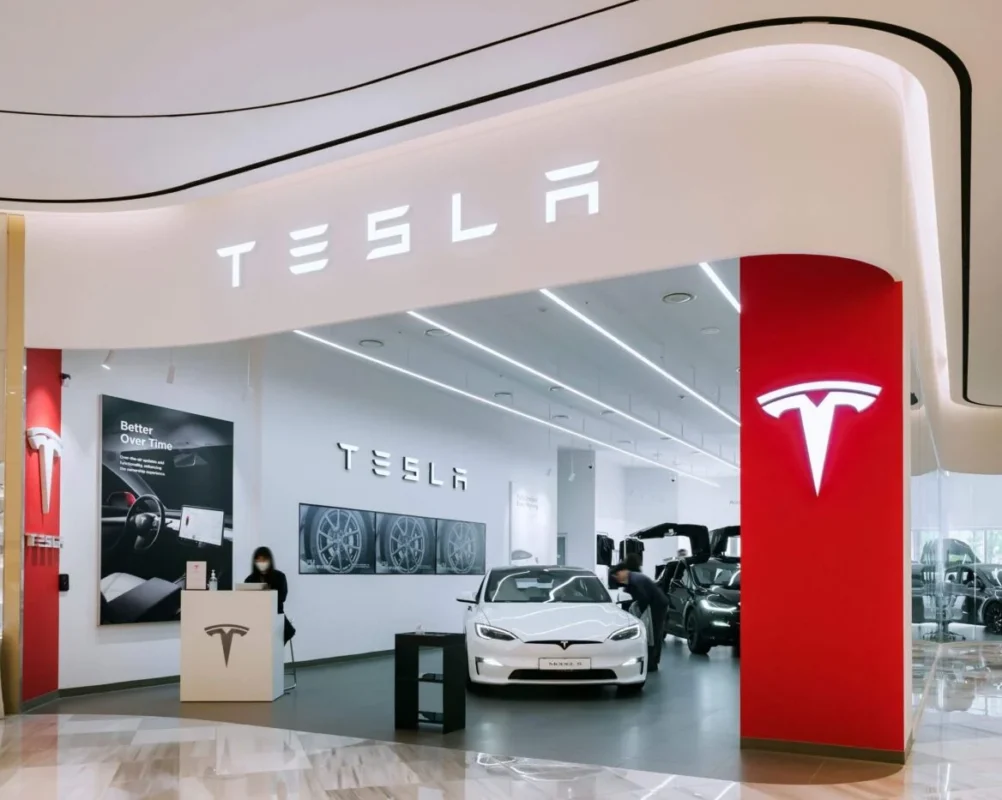
Tesla has reclaimed majority control of the U.S. electric vehicle sector, though the underlying dynamics reveal a more complex picture than simple growth.
Tesla (TSLA) commanded 52% of American EV deliveries from January through August 2026, representing a substantial jump from 43% in the comparable timeframe last year. Shares traded near $360.48 during after-hours activity before declining 0.05% to $365.25 in standard session trading.
The increased market penetration tells less of a Tesla expansion narrative and more reveals a contracting industry where competitors are fading faster. Aggregate U.S. EV deliveries plummeted 30% through August, while Tesla’s domestic volume decreased 16%. Cox Automotive analyst Stephanie Valdez Streaty characterized the situation succinctly: “Tesla is shrinking too, but just more slowly.”
Tesla’s domestic market presence had reached an all-time low of 41% in 2025, pressured by intensifying competition and consumer reactions to CEO Elon Musk’s political engagement.

Traditional Manufacturers Scale Back Commitments
The competitive environment has transformed dramatically. Honda is discontinuing the Prologue while Volkswagen phases out its ID.4. Ford has curtailed F-150 Lightning production volumes. GM has reduced manufacturing targets for the Chevrolet Bolt, and Nissan postponed releasing the most affordable variant of its redesigned Leaf.
Gary Black, co-founder of Future Fund LLC and prominent Tesla investor, identified two primary drivers behind the company’s market share rebound. First, established automakers reduced EV spending in 2025 to stem financial losses. Second, the comprehensive Model Y redesign launched in early 2025, nicknamed Juniper, reinvigorated Tesla’s highest-volume vehicle.
Black rejected suggestions that Full Self-Driving technology drives the market share expansion. “It’s implausible that FSD is driving TSLA share gains when no one other than TSLA bulls on X are aware of FSD,” he stated. He contended that aggressive FSD marketing could accelerate additional share growth.
Industry consultant John Murphy offers a contrasting perspective, asserting FSD has become a critical differentiator. “The perceived unique feature of FSD is the focal point now in their auto business,” Murphy explained.
Model Y Dominates Sales Performance
Within Tesla’s vehicle portfolio, performance varies significantly. Model 3 deliveries have plunged 34% year-to-date. Cybertruck volumes reached merely 9,769 units through August. The Model Y shoulders most of the burden, with sales declining just 2% while representing approximately one-third of total U.S. EV deliveries.
Tesla introduced a six-seat Model Y L configuration this summer. The company has ceased Model S and Model X production without announcing direct successors.
Domestic deliveries are projected to decline for the third straight year.
Traditional automakers face significant obstacles mounting a substantial EV resurgence without advanced battery innovations or federal policy modifications, Murphy suggested.
Wall Street maintains a Moderate Buy consensus on TSLA, comprising 11 Buy ratings, 12 Hold ratings, and 3 Sell ratings issued over the past three months. The consensus price target stands at $377.08, indicating 3.19% potential appreciation from present levels.
Get 3 Free Stock Ebooks
Discover top-performing stocks in AI, Crypto, and Technology with expert analysis.
- Top 10 AI Stocks - Leading AI companies
- Top 10 Crypto Stocks - Blockchain leaders
- Top 10 Tech Stocks - Tech giants


