



Key Takeaways
- Markets assign an 80-85% probability to a 25 basis point rate increase from the Federal Reserve on Wednesday
- Critical retail sales figures for August release Wednesday morning, potentially intensifying market swings
- Crude oil prices broke through $100 per barrel following drone strikes that disabled a major Saudi Arabian pipeline, heightening inflation worries
- Anthropic’s CEO Dario Amodei urged the AI industry to decelerate development pace, triggering selloffs in AI-related equities throughout Asian and European trading sessions
- Japan’s central bank is projected to increase rates to 1.25%, while the Bank of England will likely maintain its 3.75% rate
The Federal Reserve commences its two-day policy gathering on Tuesday, with the rate announcement scheduled for Wednesday at 2 p.m. ET. Market participants are assigning roughly 80% to 85% odds to a quarter-point increase.
Support for tightening monetary policy grew stronger following last week’s inflation figures, which showed persistent price pressures. August’s Consumer Price Index climbed 3.4% on an annual basis, unchanged from July’s pace. Producer price data similarly exceeded forecasts.
Fed Chairman Kevin Warsh will address reporters at 2:30 p.m. ET on Wednesday. Market participants will scrutinize his comments for clues about the trajectory of future policy adjustments, which may prove more consequential than Wednesday’s decision alone.
Consumer Spending Data and Energy Prices Complicate Fed’s Calculus
The Census Bureau releases August retail sales figures Wednesday morning at 8:30 a.m. ET. Consumer expenditures declined 0.6% between June and July in nominal terms, and another disappointing print could signal mounting pressure on American households.
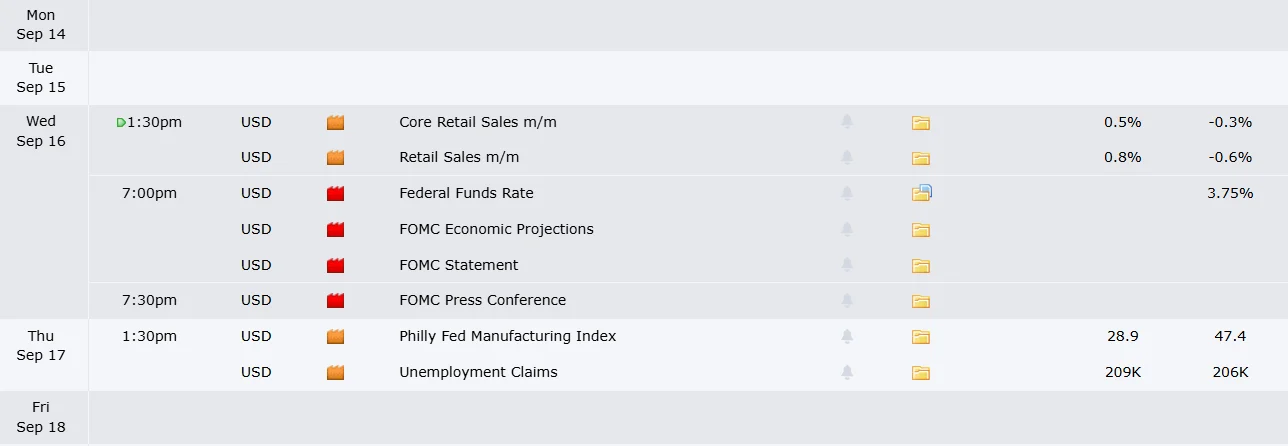
Robust consumer activity might reinforce arguments for additional monetary tightening. Regardless of direction, Wednesday promises significant market turbulence.

Energy markets have introduced additional complications to the economic outlook. Brent crude momentarily exceeded $108 per barrel after a critical Saudi pipeline transporting approximately 4 million barrels daily was disabled by drone strikes attributed to Iran-aligned Houthi forces.
Tensions surrounding the Strait of Hormuz have intensified further. A scheduled diplomatic engagement between Gulf nations and Iran was called off, eliminating near-term prospects for resolving the supply disruption. Prior to the escalation, roughly one-fifth of global oil and liquefied natural gas shipments transited through this strategic waterway.
Elevated energy costs contribute to inflationary pressures, creating additional dilemmas for monetary policymakers. Energy sector equities stand to gain from sustained price increases, while airlines and consumer-facing companies confront margin compression from higher operating expenses.
Technology Sector Responds to AI Safety Discussion
Independent of macroeconomic developments, artificial intelligence stocks declined throughout Monday’s Asian and European sessions. The weakness followed a weekend essay by Anthropic CEO Dario Amodei advocating for reduced velocity in AI system advancement.
Amodei highlighted escalating risks associated with sophisticated AI platform misuse. Anthropic had disclosed the previous week that its Claude technology had been exploited for weapons research and fraudulent activities.
OpenAI CEO Sam Altman and xAI founder Elon Musk endorsed Amodei’s position. Altman additionally confirmed OpenAI would forgo plans for a public market debut this year, citing safety considerations.
SoftBank shares experienced substantial declines in Tokyo trading. Taiwan Semiconductor Manufacturing Company, SK Hynix, and Samsung Electronics similarly posted losses.
Deutsche Bank analysts suggested Amodei’s perspective could redirect AI capital allocation toward safety infrastructure and governance frameworks, rather than curtailing aggregate investment levels.
Looking beyond monetary policy and artificial intelligence, Salesforce launches its Dreamforce conference on Tuesday. Homebuilding company Lennar delivers quarterly results Wednesday, while Carnival reports Thursday, providing insights into consumer discretionary spending trends.
Equity markets concluded last week on a negative note, with the Dow Jones Industrial Average retreating 1.6%. The S&P 500 maintains year-to-date gains of approximately 12%.
Get 3 Free Stock Ebooks
Discover top-performing stocks in AI, Crypto, and Technology with expert analysis.
- Top 10 AI Stocks - Leading AI companies
- Top 10 Crypto Stocks - Blockchain leaders
- Top 10 Tech Stocks - Tech giants


