


Key Highlights
- Trump issued a warning of 100% tariffs against nations implementing Digital Services Taxes targeting American corporations.
- European countries contemplating levies on companies such as Meta, Alphabet, and Amazon are primary targets.
- The president stated these tariffs would supersede all current and pending trade agreements.
- Legal obstacles remain after the Supreme Court invalidated Trump’s earlier “reciprocal” tariff initiative.
- France has maintained its 3% digital levy since 2019 and refuses to eliminate it under U.S. pressure.
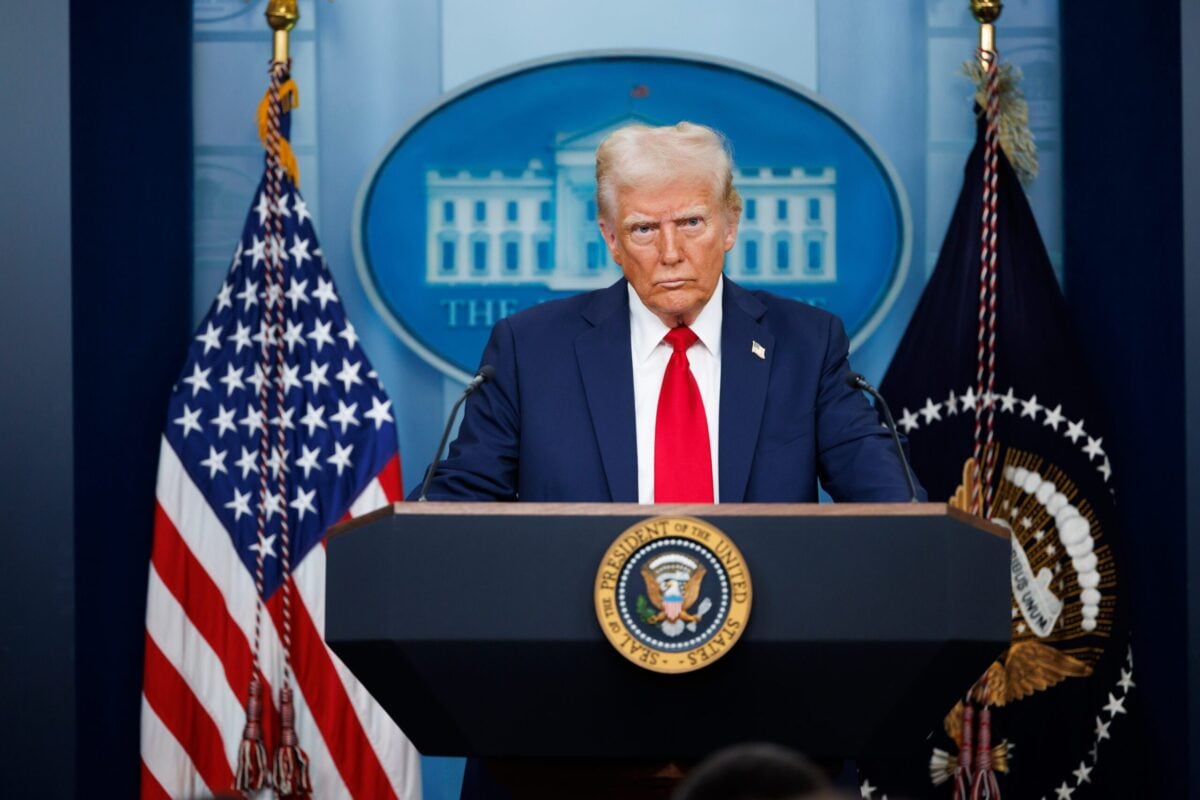
President Donald Trump issued a stark ultimatum via Truth Social on Friday, declaring that any nation implementing a Digital Services Tax on American technology corporations would immediately face 100% tariffs on all products exported to the United States.
The statement specifically referenced “numerous European Countries” as those weighing such taxation measures. Trump indicated the punitive tariffs would take effect without delay should these nations proceed with implementation.
“Please let this statement serve to represent that any Country that imposes such a Tax will immediately be met with a 100% TARIFF on any and all Goods sent to the United States of America,” the president declared.
Trump further emphasized that these tariffs would nullify existing trade agreements with the United States, regardless of whether they’ve been finalized or are under negotiation.
The announcement’s timing is particularly notable. It arrived merely 24 hours after European Union member states ratified a trade agreement with Washington that limits taxation on European imports to 15%.
Digital services taxes are structured to target exclusively the world’s most prominent technology corporations. Companies including Meta, Alphabet, and Amazon face these measures because they earn substantial revenues in nations where their local tax contributions are minimal.

Over a dozen nations currently enforce various forms of these digital taxation policies.
France Maintains Firm Position
France implemented its digital services tax in 2019. The policy imposes a 3% charge on digital service revenues for corporations generating over €25 million in French revenue and €750 million globally.
French President Emmanuel Macron declared during last week’s G7 summit that France would maintain its tax despite American objections.
Prior to the summit, Trump had already threatened to impose 100% tariffs on French wine imports unless Paris abandoned the digital levy.
This isn’t Trump’s first deployment of such threats. Last year, he warned Canada regarding its proposed digital tax. Canadian authorities subsequently abandoned the levy before implementation.
Legal Challenges May Complicate Enforcement
The legal foundation Trump would invoke to implement these tariffs remains uncertain.
The Supreme Court invalidated his previous “reciprocal” tariff program, determining that the International Emergency Economic Powers Act failed to grant the administration authority to unilaterally impose comprehensive global tariffs.
Following that judicial decision, Trump issued an executive order establishing a 10% worldwide tariff utilizing Section 122 of the Trade Act of 1974. Nevertheless, tariffs imposed under this statute can only remain effective for 150 days. Any continuation would require Congressional authorization.
While the legal viability of this latest ultimatum remains uncertain, the political signal is unmistakable: Washington is monitoring European deliberations on digital taxation with intense scrutiny.
Get 3 Free Stock Ebooks
Discover top-performing stocks in AI, Crypto, and Technology with expert analysis.
- Top 10 AI Stocks - Leading AI companies
- Top 10 Crypto Stocks - Blockchain leaders
- Top 10 Tech Stocks - Tech giants


