


Key Takeaways
- Shares of Unitree skyrocketed up to 629% during their inaugural trading session on Shanghai’s STAR Market, maintaining approximately 500% gains by the midday bell.
- The company’s public offering generated roughly $904 million in capital, with initial share pricing set at 150.80 yuan ($22.36) per share.
- Unitree’s market capitalization reached approximately $50 billion, catapulting founder Wang Xingxing’s paper wealth beyond $12 billion.
- A July decision by the US FCC prohibits imports of the company’s upcoming robot models due to national security issues, eliminating access to a critical market.
- A minimum of six additional Chinese humanoid robotics companies are lining up for public listings, with Unitree’s performance likely influencing their market valuations.
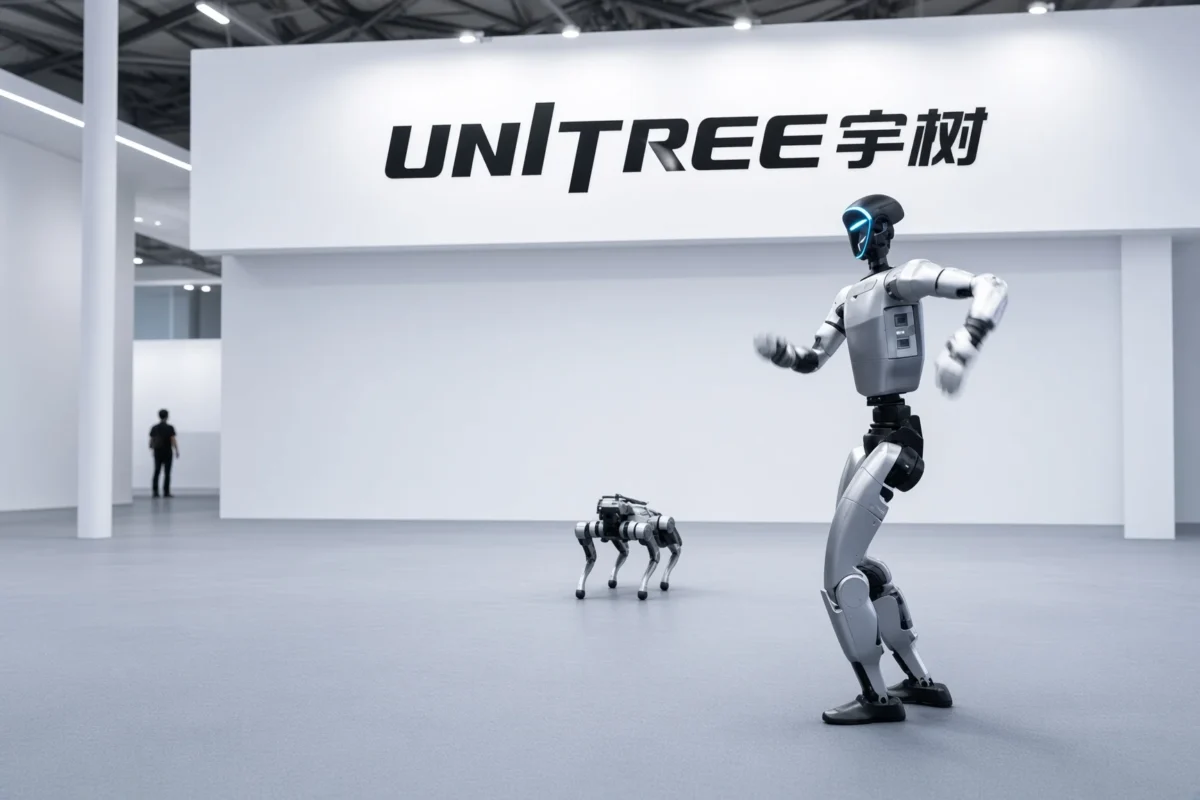
The robotics company Unitree delivered one of the most remarkable market entries seen in years. Trading began Wednesday for the Chinese humanoid robot manufacturer on Shanghai’s STAR Market, with shares exploding to heights of 629% beyond the initial offering price of 150.80 yuan ($22.36). By the midday trading break, gains remained substantial at nearly 500%, with shares trading at 883.87 yuan and pushing the company’s total valuation to approximately $50 billion.
🇨🇳BREAKING: Chinese humanoid robot maker Unitree surges over 600% in its Shanghai market debut.
Unitree opened at 1,100 yuan ($163) per share versus an IPO price of around 150 yuan ($22).
This briefly pushed its market capitalization to nearly 445 billion yuan ($66… pic.twitter.com/dagTez31ea
— Coin Bureau (@coinbureau) August 19, 2026
This opening-day performance significantly exceeded the 279% average gain recorded by new Chinese listings throughout this year.
Through the public offering, Unitree secured approximately 6.1 billion yuan ($904 million) in funding, offering roughly 10% of company shares to retail and institutional investors. Wang Xingxing, who established the enterprise in Hangzhou back in 2016, maintains ownership of approximately one-fifth of the business. His calculated net worth has now surpassed $12 billion.
American Restrictions Present Challenges
The market excitement comes with substantial complications. Last July, the US Federal Communications Commission implemented an import prohibition on upcoming models of foreign-manufactured humanoid and quadruped robots, referencing national security considerations. Unitree has acknowledged that this restriction applies to its newer product lines.
American markets represented roughly 13% of Unitree’s total revenue during the previous year, prior to the ban’s implementation. Additional US regulatory actions remain a potential threat to the company’s future operations.
Last June, the Department of Defense designated Unitree on its roster of Chinese military-affiliated entities, characterizing it as a “contributor to the Chinese defense industrial base.” The company maintains that its products serve civilian applications exclusively.

For 2025, Unitree recorded approximately 1.7 billion yuan ($250 million) in total revenue, derived primarily from humanoid and quadruped robot sales. International markets contributed over 40% of these earnings. Distinguished from most competitors, the company operates at a profit.
Major technology investors including Tencent, Alibaba, and DeepSeek back the company, while founder Wang Xingxing has participated in high-level summits organized by President Xi Jinping.
Additional IPOs Expected Soon
As the inaugural mainland Chinese humanoid robotics manufacturer to complete a public listing, Unitree’s performance will serve as a reference point for competing firms. No fewer than six competing companies are advancing toward IPOs, including Deep Robotics and Leju Robotics planning mainland exchange listings, while Mech-Mind Robotics, X Square Robot, and AgiBot target Hong Kong markets.
Hong Kong-listed competitor UBTech experienced a 10.6% decline on the identical day Unitree made its market entrance.
According to Morningstar analyst Kangyuxiao Li, while the public offering provides mainland investors with direct access to an industry frontrunner, the “real competitive test” centers on whether these companies can deliver consistent profitability through large-scale commercial applications. Currently, the majority of Unitree’s robots are purchased by research facilities and educational institutions rather than deployed in commercial operations.
The market debut aligned with the commencement of the World Robot Conference in Beijing, where hundreds of predominantly Chinese robotics enterprises are presenting their latest innovations.
Get 3 Free Stock Ebooks
Discover top-performing stocks in AI, Crypto, and Technology with expert analysis.
- Top 10 AI Stocks - Leading AI companies
- Top 10 Crypto Stocks - Blockchain leaders
- Top 10 Tech Stocks - Tech giants


