



Quick Summary
- Equity futures declined Tuesday morning with the Nasdaq 100 shedding more than 1% amid heightened Middle East tensions
- Trump’s warning to bomb Oman regarding Strait of Hormuz access triggered a significant rally in crude markets
- Brent crude surged to $91/barrel while WTI climbed near $85, marking the strongest levels in over fourteen days
- Long-term Treasury yields jumped to 5.33%, approaching levels not seen in nearly two decades
- Technology hardware makers including Sandisk, Western Digital, and Seagate experienced notable premarket declines
American equity futures retreated during Tuesday’s early trading hours as escalating diplomatic friction between Washington and Tehran sent energy markets higher while government bond yields extended their recent advance.
Contracts tracking the Nasdaq 100 declined approximately 1.1%. The S&P 500 futures slipped between 0.4% and 0.6%. Dow Jones Industrial Average futures decreased by roughly 22 to 58 points, trading near unchanged levels.
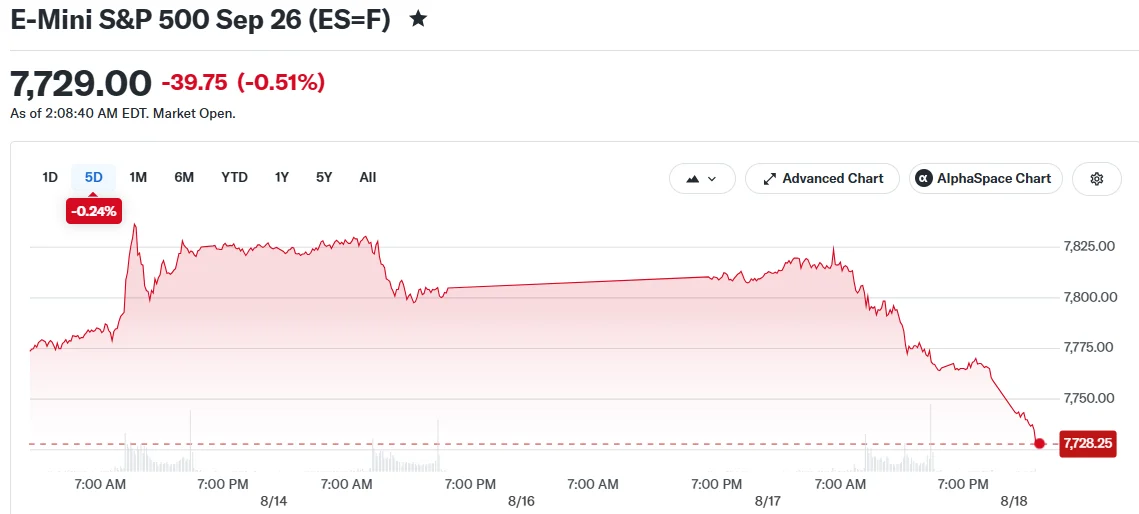
The downturn came after Monday’s challenging session, during which all three primary indices finished lower following President Donald Trump’s threat of potential military strikes against Oman should it obstruct American operations near the strategically vital Strait of Hormuz.
Energy Markets Surge Alongside Government Debt Costs
The president stated his intention to impose additional economic pressure on Iran and indicated willingness to conduct bombing operations against Oman if the nation prevented passage through the critical waterway. This rhetoric propelled crude prices significantly higher in early Tuesday dealings.

Brent crude futures advanced to $91 per barrel. West Texas Intermediate contracts increased to approximately $85 per barrel, representing a daily gain of roughly 1%. Both international benchmarks reached their strongest positions in more than two weeks.
The nation’s Strategic Petroleum Reserve dropped to its most depleted state since 1982, compounding upward momentum in oil markets.
Government bond yields similarly advanced. The benchmark 10-year Treasury yield reached 4.72%. The 30-year maturity climbed to a range between 5.31% and 5.33%, hovering near its peak level in approximately nineteen years.
Deutsche Bank’s macro strategist Henry Allen noted that market participants became increasingly doubtful regarding a near-term resolution to the Strait of Hormuz situation, creating headwinds for longer-duration sovereign debt instruments.
Technology Hardware Sector Weakens
Semiconductor and storage technology equities, which had provided some support during Monday’s session, faced significant selling pressure in Tuesday’s premarket activity.
Sandisk, Coherent, Western Digital, and Seagate ranked among the poorest performers within the S&P 500 universe during before-hours trading.
Market participants had rotated into chip-related names during recent weeks, though those advances appeared vulnerable amid climbing yields and geopolitical uncertainty.
In more positive developments, Home Depot shares gained approximately 1% in premarket trading following the retailer’s report of stronger second quarter revenue. Consumer preference for smaller-scale home improvement projects throughout summer months contributed to better-than-feared results.
Toll Brothers and Klarna are scheduled to publish earnings reports later Tuesday.
Government bond yields have advanced across international markets, influenced by multiple factors including elevated energy costs, substantial borrowing related to artificial intelligence infrastructure investments, and mounting concerns regarding sovereign debt burdens.
Financial markets remain unsettled as diplomatic discussions between the United States and Iran demonstrate minimal progress, maintaining downward pressure on stocks while supporting oil and bond yields ahead of Tuesday’s regular trading session.
Get 3 Free Stock Ebooks
Discover top-performing stocks in AI, Crypto, and Technology with expert analysis.
- Top 10 AI Stocks - Leading AI companies
- Top 10 Crypto Stocks - Blockchain leaders
- Top 10 Tech Stocks - Tech giants


