



Key Takeaways
- US equity futures show minimal movement Monday as traders assess diplomatic developments between Washington and Tehran in Switzerland
- Washington and Tehran reached an understanding on halting military activities in Lebanon and maintaining access through the Strait of Hormuz
- Crude oil retreated following diplomatic gains, with Brent trading around $79 and WTI approaching $75 per barrel
- Investor attention shifts to Thursday’s Personal Consumption Expenditures data, the Federal Reserve’s key inflation metric
- British Prime Minister Keir Starmer stepped down, driving the pound sterling to its weakest 2026 level
American stock index futures are showing little movement Monday morning as market participants evaluate two significant developments: diplomatic advancement in US-Iran negotiations and an approaching inflation release that may influence Federal Reserve policy decisions.
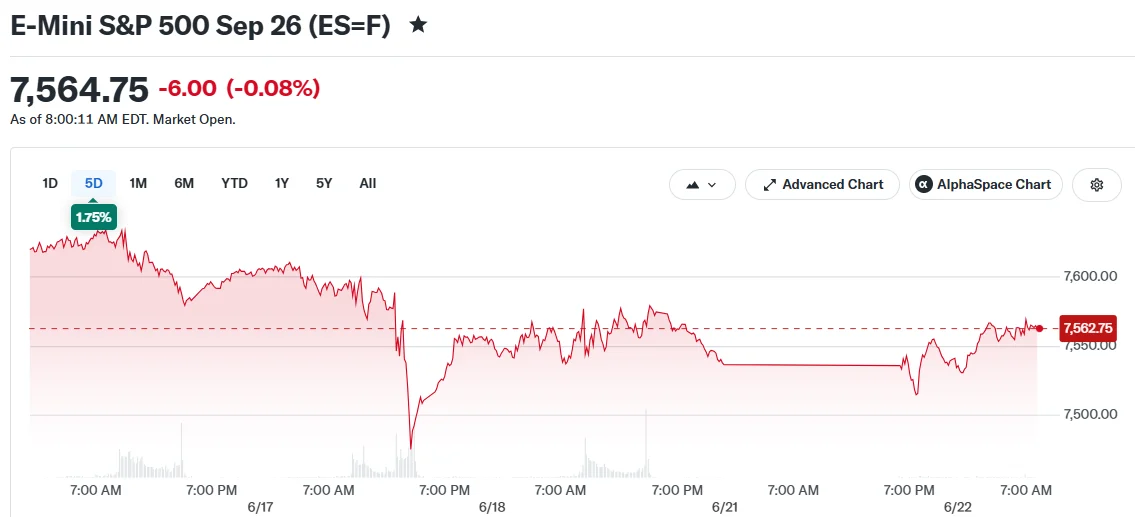
Futures tied to the S&P 500 declined 0.1%. Dow Jones Industrial Average futures remained unchanged. Nasdaq 100 futures gained 0.1%. Markets are reopening following Friday’s holiday with a wait-and-see approach.
Diplomatic Breakthrough Between US and Iran
Tehran announced Monday that “encouraging progress” has emerged from diplomatic discussions with Washington taking place in Switzerland. Intermediaries Qatar and Pakistan verified that a communication channel between the United States and Iran has been established to prevent confrontations and ensure commercial vessel passage through the Strait of Hormuz.
The Strait of Hormuz represents a critical global petroleum shipping corridor. Tehran had reimposed restrictions over the weekend, claiming Washington and Tel Aviv violated ceasefire terms.
President Trump had issued warnings to Iran via social media regarding its backing of Hezbollah in Lebanon. These warnings temporarily pushed petroleum prices upward after Iranian representatives departed the negotiation site.

However, following Monday’s announcement of the new framework, oil prices retreated. Brent crude decreased approximately 1.9% to roughly $79 per barrel. West Texas Intermediate dropped toward $75 per barrel.
Treasury bond yields increased despite declining oil prices. The two-year yield advanced to 4.22% while the 10-year climbed to 4.48%.
The American dollar also gained strength, with the DXY index rising 0.1% to approximately 100.9. The index had reached a twelve-month peak of 101.1 on Friday.
Thursday’s PCE Data Takes Center Stage
Traders are now directing their focus toward Thursday’s Personal Consumption Expenditures release. This metric serves as the Federal Reserve’s primary inflation measurement tool.
Economic analysts anticipate the core PCE reading, which excludes volatile food and energy components, will demonstrate a modest uptick from April figures.
This information carries significant weight because Fed officials recently adopted a more restrictive stance during their latest policy meeting. Market participants are attempting to determine whether a rate increase remains on the table for later this year.
In the UK, Prime Minister Keir Starmer announced his resignation Monday amid mounting political challenges. Sterling dropped to its 2026 low as market participants expressed concern about potential changes in government spending policy.
Japan’s Nikkei index reached an all-time high Monday, standing in stark contrast to the cautious sentiment prevailing in American markets.
Former Federal Reserve Chairman Alan Greenspan passed away at age 100, according to reports released Monday morning.
Bitcoin experienced modest gains but remained confined within a tight trading band, based on current market data.
Get 3 Free Stock Ebooks
Discover top-performing stocks in AI, Crypto, and Technology with expert analysis.
- Top 10 AI Stocks - Leading AI companies
- Top 10 Crypto Stocks - Blockchain leaders
- Top 10 Tech Stocks - Tech giants


