



Key Takeaways
- Consumer inflation accelerated to 4.2% year-over-year in May, matching the fastest rate since May 2023
- Major indexes declined sharply: Dow down 600+ points, S&P 500 off 1%, Nasdaq lower by 1.4%
- Overnight military confrontation between US and Iran forces drove crude oil prices significantly higher
- Semiconductor stocks fell 2.9% as measured by the PHLX index amid ongoing AI sector weakness
- Market attention turns to Oracle’s quarterly report and Friday’s historic SpaceX public offering
Equity markets suffered significant losses Wednesday following the release of May’s inflation data, which confirmed consumer prices are climbing at the steepest pace witnessed in three years. While the 4.2% year-over-year increase in the Consumer Price Index aligned with analyst predictions, it nonetheless reignited worries that the Federal Reserve might need to implement additional interest rate increases before year-end.
The Dow Jones Industrial Average surrendered more than 630 points, representing a 1.2% decline. The S&P 500 retreated approximately 1%, while the Nasdaq Composite lost 1.4%. Despite an intraday attempt to recover that temporarily brought the Dow close to unchanged territory, sellers ultimately regained control.
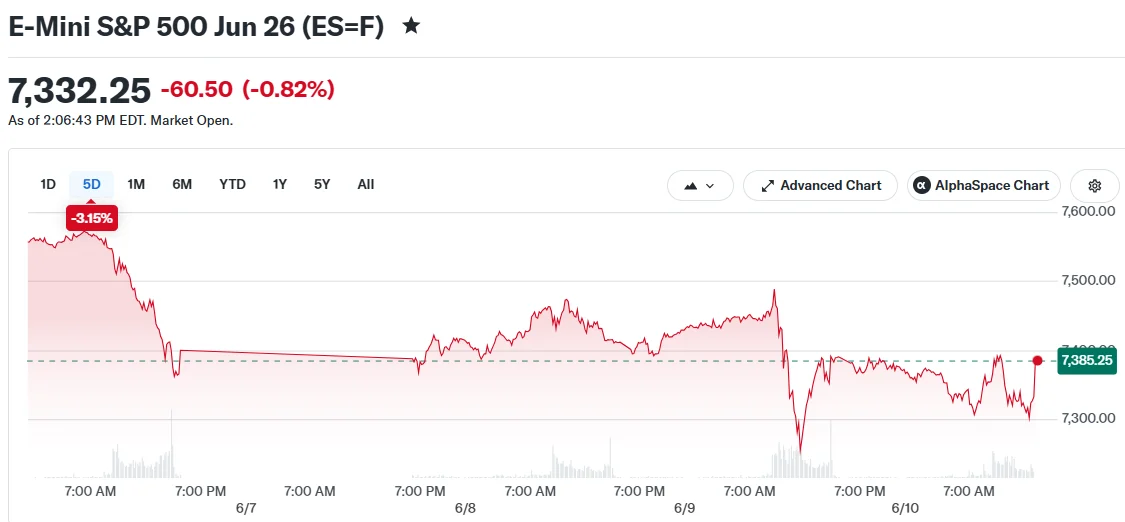
The energy sector stood alone in positive territory, surging 2.5% alongside a substantial jump in crude oil quotations. Consumer staples also posted modest gains as market participants rotated into traditionally defensive holdings. Meanwhile, industrials, consumer discretionary, technology, and materials sectors bore the brunt of selling pressure.
The elevated inflation print comes at a time when energy commodity prices remain the primary catalyst, directly linked to the intensifying Middle East crisis involving Iran. Overnight military actions saw the United States and Iran exchange fire following the destruction of a US Apache helicopter.
Escalating Middle East Conflict Weighs on Sentiment
President Trump stated Wednesday that Iran’s negotiating delays had gone on too long and the country would need to “pay the price.” In subsequent comments to the press, he indicated the US response would be “very hard.” This aggressive rhetoric unsettled investors who were already processing Tuesday’s technology sector weakness.

Crude oil markets reacted swiftly to the developments. The spike in petroleum prices intensified inflation worries while introducing additional uncertainty into an already volatile trading environment for stocks.
The PHLX Semiconductor index dropped 2.9% despite briefly pushing into positive territory during the session. The persistent shift away from artificial intelligence-themed investments continued, with mounting concerns surrounding the anticipated blockbuster IPOs from OpenAI and Anthropic contributing to sector weakness.
Oracle Results and SpaceX Market Debut Await
Oracle is scheduled to release its quarterly financial results after Wednesday’s closing bell. With OpenAI among its client roster, market participants are paying particular attention to the company’s cloud computing segment performance amid recent AI stock volatility.
Leading up to the earnings announcement, Oracle shares were trading approximately 1.2% higher, demonstrating relative strength against the broader market decline.
Friday brings what many consider the week’s marquee event: the public market debut of SpaceX. The offering is being characterized as the largest initial public offering ever recorded, generating widespread interest that extends far beyond traditional financial markets.
With the May CPI data meeting expectations rather than delivering a surprise, markets lacked a definitive catalyst to escape the choppy, directionless trading pattern that has characterized recent sessions. Technical and algorithm-driven trading strategies have been noticeably influential in creating the recent back-and-forth price action.
Get 3 Free Stock Ebooks
Discover top-performing stocks in AI, Crypto, and Technology with expert analysis.
- Top 10 AI Stocks - Leading AI companies
- Top 10 Crypto Stocks - Blockchain leaders
- Top 10 Tech Stocks - Tech giants


