



Key Takeaways
- Wells Fargo has increased its S&P 500 year-end projection to 7,950 from 7,300
- Earnings per share estimates for 2026 have been revised upward to $340 from $315
- Reduced geopolitical risks following a U.S.-Iran agreement have lowered market volatility
- The bank’s chief strategist maintains that the AI-driven bull run has legs
- Technology, particularly semiconductors and AI infrastructure, remains the preferred investment theme
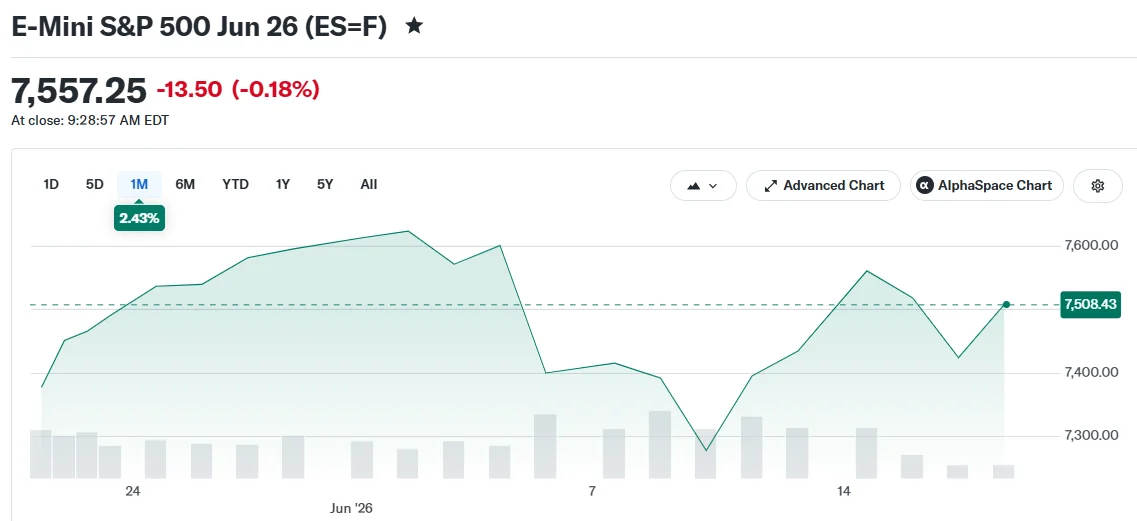
Wells Fargo has revised its 2026 year-end projection for the S&P 500 upward to 7,950, marking a significant increase from its earlier forecast of 7,300. This updated target suggests approximately 5.2% potential growth from the index’s latest closing level of 7,554.29.
The financial institution attributed this optimistic revision to improved corporate profitability, diminishing geopolitical concerns, and a recent market correction that has recalibrated expectations among investors.
The bank has upgraded its S&P 500 earnings per share forecast for 2026 to $340, representing an increase from its previous $315 projection. Additionally, Wells Fargo has elevated its 2027 EPS estimate to $390 from $365.
In a parallel move, Wells Fargo Investment Institute has adjusted its own year-end S&P 500 target band to 7,800–8,000, moving up from 7,400–7,600. The institute has also established a 2027 target range of 8,600–8,800.
The S&P 500 has climbed 10.3% year-to-date, propelled primarily by enthusiasm surrounding artificial intelligence applications and developments related to the Iran situation.

Market Psychology Has Recalibrated
Chief equity strategist Ohsung Kwon explained during a CNBC appearance that a recent modest market decline served to recalibrate investor psychology back to neutral territory. This recalibration, he suggested, provides runway for additional market appreciation.
“The trajectory for the equity market continues to point upward,” Kwon stated.
The financial institution highlighted crude oil prices, currently hovering near $70 per barrel, as a stabilizing force that should help contain inflationary pressures in the coming months.
Kwon emphasized that recent Federal Reserve communications were “more balanced than market participants interpreted,” suggesting concerns about the central bank’s monetary policy direction may be overblown.
While Wells Fargo identified inflation as the primary residual threat to equity markets, this concern only materializes if the Fed responds with aggressive tightening. The bank suggested that a more accommodative “run it hot” approach would actually support equity valuations.
Declining energy costs and falling bond yields could provide tailwinds for sectors outside the technology complex. Nevertheless, Kwon recognized that the Fed’s somewhat hawkish posture continues to present challenges for broader market participation.
Technology and Chip Stocks Remain Central Theme
Despite addressing macroeconomic factors, Wells Fargo maintained its emphasis squarely on the technology sector. Kwon expressed confidence that the AI-fueled bull market has substantial room to run.
He referenced significant capital expenditure on AI infrastructure from technology giants, including Alphabet and Meta, as a positive catalyst for what he terms “CapEx takers” — semiconductor manufacturers and AI infrastructure providers.
Kwon rejected worries about declining token valuations, contending that more affordable AI models could actually stimulate greater demand for computational capacity. “We’re still in the very early stages of AI adoption,” he emphasized.
Throughout recent periods of market turbulence, semiconductor and AI infrastructure equities have demonstrated strength even as other sectors retreated, a pattern Wells Fargo interprets favorably.
“I don’t observe significant stress in the equity market at this juncture,” Kwon remarked.
Get 3 Free Stock Ebooks
Discover top-performing stocks in AI, Crypto, and Technology with expert analysis.
- Top 10 AI Stocks - Leading AI companies
- Top 10 Crypto Stocks - Blockchain leaders
- Top 10 Tech Stocks - Tech giants


