



TLDR
- The Dow climbed more than 700 points as the Nasdaq declined, driven by a rotation away from Big Tech stocks
- Micron Technology shares jumped over 10% following record-breaking earnings and an optimistic forecast
- Qualcomm revealed plans to enter the data center market, eyeing $15 billion in AI-driven revenue
- May’s PCE inflation index climbed to 4.1%, sustaining conversations about potential rate increases
- Oil prices dropped to their lowest point since the Iran conflict, with Brent crude hovering near $74 per barrel
Thursday, June 25, brought a dramatic split across major indices, as the Dow Jones Industrial Average surged 733 points—a 1.4% gain—while the Nasdaq Composite declined approximately 0.6% during midday trading. The S&P 500 posted a moderate 0.5% increase.
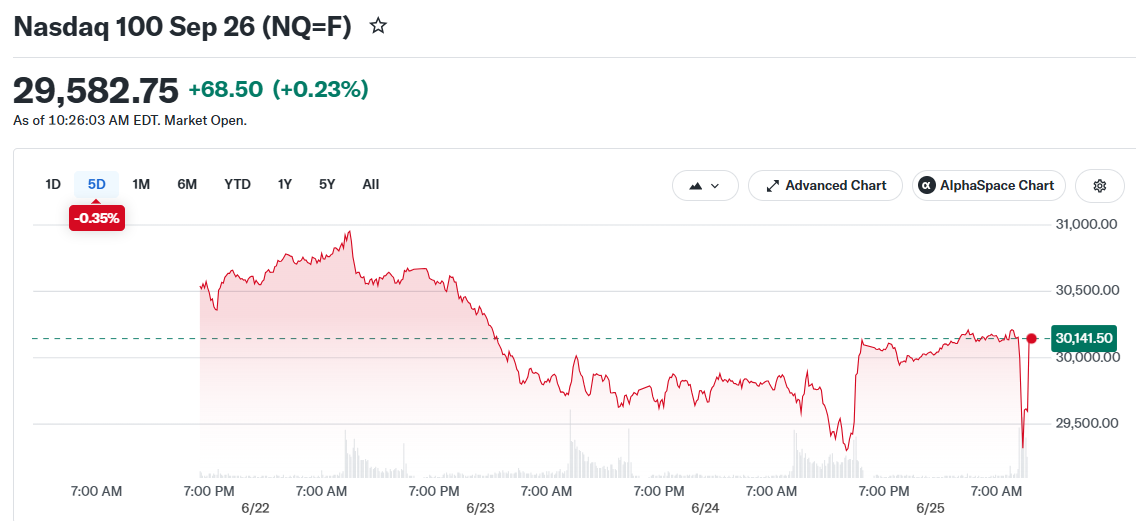
The divergence stemmed from a clear pattern: capital flowing out of Big Tech names and into alternative sectors.
More than 80% of S&P 500 components were positioned for positive closes. However, the Roundhill Magnificent Seven ETF tumbled 2%, weighing heavily on the Nasdaq.
Among the day’s worst performers were Dell Technologies, Albemarle, Apple, EchoStar, and Palantir Technologies.
Micron’s Blockbuster Results Drive Rally
[[LINK_START_2]]Micron Technology[[LINK_END_2]] emerged as Thursday’s star performer. The semiconductor manufacturer delivered record quarterly figures that surpassed analyst estimates and provided guidance exceeding market expectations.
Shares surged more than 10% following the announcement. The robust results highlighted strong demand for memory products linked to artificial intelligence infrastructure development.
While the earnings beat initially boosted market sentiment, that enthusiasm failed to sustain momentum across the broader technology sector.
Qualcomm also captured attention Thursday with its strategic pivot announcement. The chip manufacturer unveiled intentions to expand beyond mobile devices into data center solutions, including processors and servers designed for AI applications.
[[LINK_START_3]]Qualcomm[[LINK_END_3]] outlined ambitions for $15 billion in additional revenue from this expansion. The company’s shares climbed approximately 5% following the disclosure.PCE Data Sustains Rate Increase Speculation
The Personal Consumption Expenditures index—the Federal Reserve’s favored inflation metric—revealed prices increased 4.1% in May, matching analyst projections. On a monthly basis, prices advanced 0.4%, just below estimates.
The figures maintained the possibility of an interest rate increase in active discussion. Rising rates typically pressure growth-oriented stocks, which constitute a substantial portion of the Nasdaq.
Concurrently, investors shifted capital toward sectors perceived as more resilient under elevated rate environments. Industrials, healthcare, materials, financial services, utilities, and energy all attracted buying interest.
[[LINK_START_4]]Oil prices[[LINK_END_4]] declined to levels not seen since the Iran conflict, with Brent crude edging up slightly to approximately $74 per barrel and West Texas Intermediate trading near $70.The two-year Treasury yield—closely monitored by investors as an indicator of Federal Reserve policy trajectory—has been signaling potential rate adjustments ahead.
Treasury yields retreated following the PCE release, while the dollar also weakened.
Markets continue to react sensitively to any Federal Reserve signals as the debate between maintaining current rates and implementing increases extends into the latter half of 2026.
Get 3 Free Stock Ebooks
Discover top-performing stocks in AI, Crypto, and Technology with expert analysis.
- Top 10 AI Stocks - Leading AI companies
- Top 10 Crypto Stocks - Blockchain leaders
- Top 10 Tech Stocks - Tech giants


