


Key Takeaways
- Bitcoin declined approximately 3% to $75,398 amid liquidations exceeding $400 million, yet maintains its position as the leading institutional cryptocurrency
- Ethereum continues to underperform compared to Bitcoin, despite serving as the foundation for the majority of DeFi and smart contract operations
- Solana experienced notable spot ETF inflows surpassing $103 million during May, contrasting sharply with Bitcoin and Ethereum ETF outflows
- Hyperliquid has emerged as one of 2026’s top-performing crypto assets, fueled by robust decentralized derivatives trading activity
- NEAR Protocol benefits from the AI-blockchain convergence story, attracting analyst attention as AI token interest resurges
Bitcoin
When market turbulence strikes, Bitcoin typically becomes investors’ primary destination.
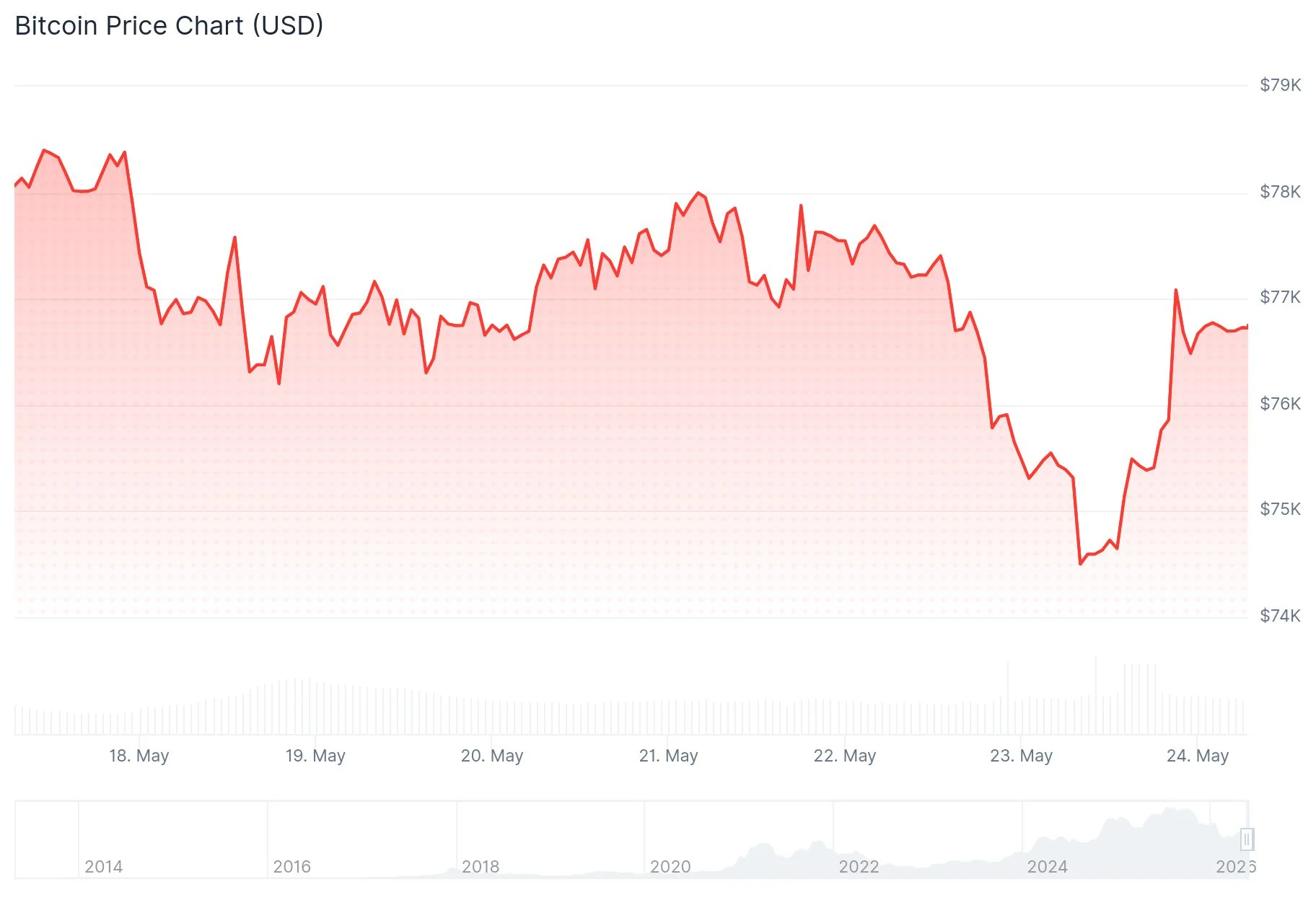
The latest correction arrived with force. Bitcoin experienced a roughly 3% decline over a 24-hour period, settling near $75,398, while liquidations across cryptocurrency markets exceeded $400 million. Such aggressive selling pressure reveals that market sentiment remains vulnerable.
Exchange-traded fund activity paints an informative picture. Following a relatively robust April, demand for Bitcoin ETFs weakened in May, marked by multiple days of significant capital outflows. Given that spot ETFs serve as one of the most transparent indicators of institutional interest, rising outflows naturally create downward price pressure.
Yet despite these headwinds, Bitcoin retains its status as the most liquid and widely adopted cryptocurrency. It commands the deepest institutional participation and continues to anchor the strongest digital store-of-value thesis available in the market.
Ethereum
Ethereum has lagged Bitcoin’s performance lately, leaving investor sentiment divided.

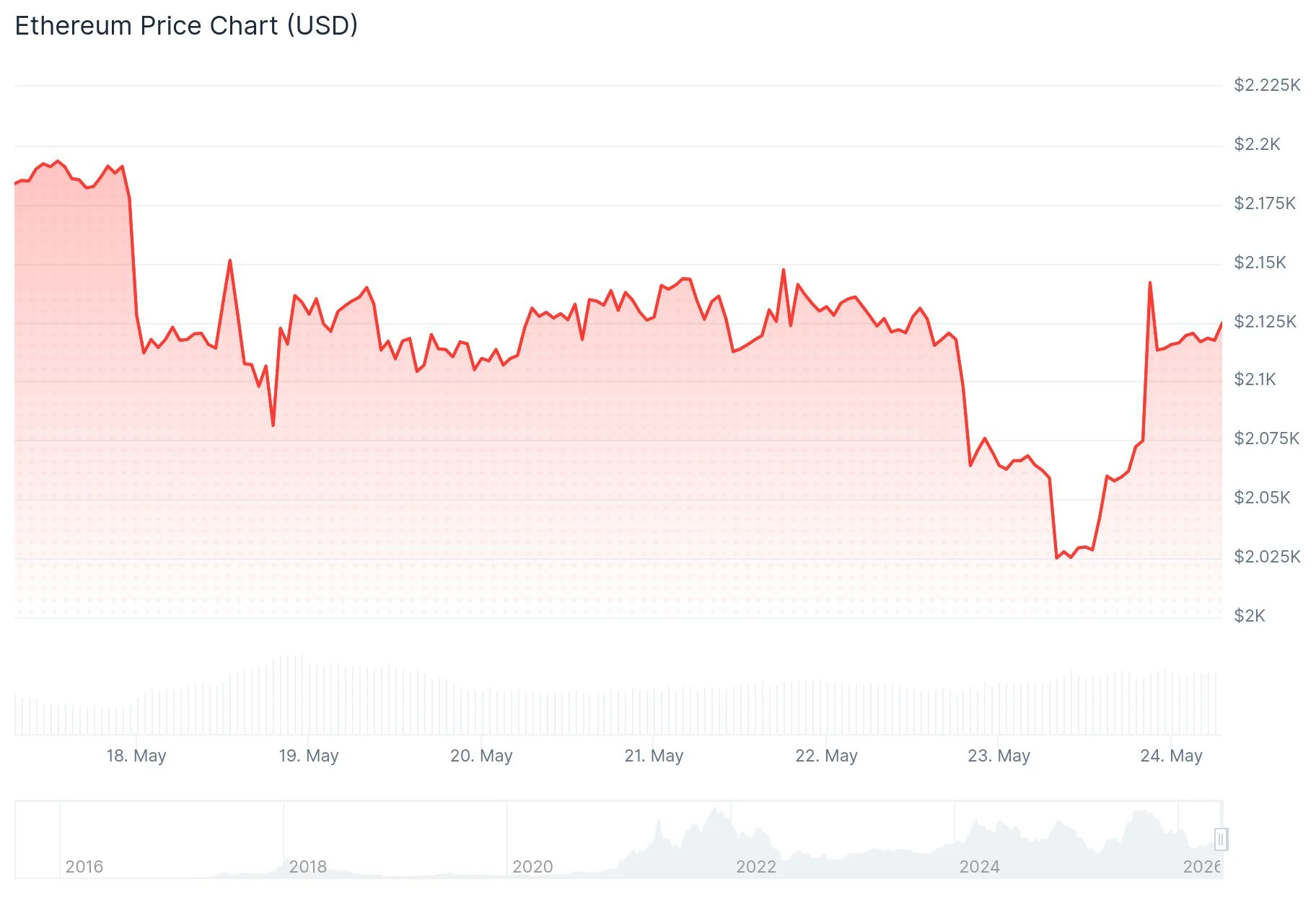
The price trajectory has been disappointing. ETH has failed to generate meaningful upward momentum despite ongoing accumulation narratives, and hasn’t displayed the type of movement needed to restore confidence.
The fundamental investment case remains intact. Ethereum powers the vast majority of smart contract infrastructure throughout the crypto ecosystem—DeFi protocols, stablecoins, asset tokenization, and on-chain lending platforms all rely on its network.
The primary obstacle is intensifying competition. Solana, Layer-2 scaling solutions, and emerging blockchain platforms are all vying for developer talent and user adoption. Ethereum requires strengthened demand and improved price performance to reclaim its dominant position.
Solana
Solana stands as the exceptional performer among major altcoins in today’s market environment.
Its spot ETF products accumulated over $103 million in inflows by May 19, even while Bitcoin and Ethereum ETF offerings experienced net outflows. This represents tangible evidence that investor appetite for Solana exposure remains healthy.
Solana offers rapid transaction processing, minimal fees, and vibrant retail engagement. It connects to meme token activity, DeFi trading platforms, consumer-facing applications, and payment system experiments—providing one of the most diversified growth stories among large-cap cryptocurrencies.
The primary concern is price volatility. Solana typically experiences more pronounced swings than Bitcoin or Ethereum in both upward and downward directions. A broader market decline could impact SOL more severely than most alternatives.
Hyperliquid
Hyperliquid has become one of the most frequently discussed mid-cap assets this year.
The platform operates a decentralized perpetual futures exchange. This creates a more direct connection between its token value and actual platform usage, distinguishing it from numerous speculative altcoins where token economics lack clarity.
Hyperliquid has ranked among the strongest-performing major crypto assets throughout 2026, backed by substantial trading volumes. Analyst Michaël van de Poppe suggested HYPE could potentially reach $100 or higher if overall cryptocurrency market conditions strengthen.
The downside is that it remains a relatively new and highly volatile asset. Should derivatives trading activity decline or traders shift away from high-beta altcoins, HYPE could experience rapid retracements.
NEAR Protocol
NEAR represents the second mid-cap cryptocurrency currently capturing attention.
It maintains close association with the artificial intelligence-blockchain convergence narrative, which has regained momentum recently. CoinDesk noted that AI tokens featured prominently in recent altcoin rally discussions, with NEAR highlighted alongside Hyperliquid as tokens traders are monitoring closely.
NEAR possesses a mature ecosystem and maintains a sustained focus on scalable application development and user experience. This provides considerably more substance than many tokens that merely attach an AI designation without underlying functionality.
The challenge is that AI-crypto narratives can quickly become hype-driven. NEAR’s long-term investment thesis depends on genuine AI and consumer applications successfully driving user adoption on-chain.
As mid-May approached, Solana ETF inflows and Hyperliquid’s platform expansion remained among the most concrete positive indicators in an otherwise inconsistent market landscape.
Get 3 Free Stock Ebooks
Discover top-performing stocks in AI, Crypto, and Technology with expert analysis.
- Top 10 AI Stocks - Leading AI companies
- Top 10 Crypto Stocks - Blockchain leaders
- Top 10 Tech Stocks - Tech giants


