



Key Takeaways
- The Magnificent Seven ETF surged 2.3% midweek and has climbed more than 7% throughout July following a 9% decline in June
- Apple reached an all-time high with a 4% gain, while Alphabet, Amazon, Meta, and Microsoft each added approximately 3%
- Chip stocks excluding Nvidia have lost approximately $1.8 trillion in market capitalization this month, sliding into bear market conditions
- A massive $3.2 trillion sector rotation between Mag 7 and semiconductor stocks has left the S&P 500 virtually unchanged
- Upcoming Big Tech earnings reports represent the next critical catalyst that may finally push markets beyond their two-month consolidation
Equity markets have been trapped in a consolidation phase for more than eight weeks. An enormous $3.2 trillion capital rotation between mega-cap technology companies and semiconductor manufacturers has prevented the S&P 500 from making any meaningful directional progress.
The Roundhill Magnificent Seven ETF rallied 2.3% during Wednesday’s session. The fund has now advanced more than 7% during July, recovering from a 9% downturn in June — marking the second-worst monthly performance in the fund’s history.
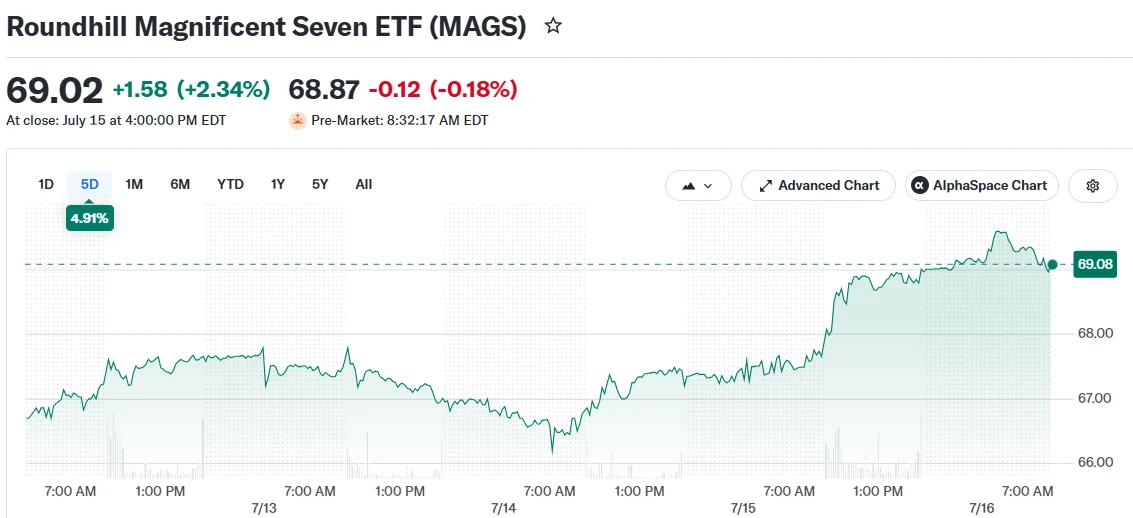
Apple spearheaded the rally, advancing 4% to establish a new record closing price. Alphabet, Amazon, Meta, and Microsoft each posted gains near 3% during the same trading session.
Semiconductor Sector Under Pressure
As mega-cap technology stocks have rallied, the semiconductor industry has experienced severe selling pressure. The PHLX Semiconductor Index has declined 13% during July.
Chip manufacturers excluding Nvidia have collectively shed nearly $1.8 trillion in valuation this month. Memory chip producers have suffered the steepest losses, with Micron, Samsung, and SK Hynix leading the sector deeper into bear market conditions.

Semiconductor-focused ETFs are currently processing more than $40 billion in daily trading volume. This represents a dramatic increase from approximately $9 billion just twelve months earlier, based on research from Strategas.
Strategas ETF strategist Todd Sohn drew parallels between the recent chip stock frenzy and the ARKK bubble of 2020. He noted that both episodes featured elevated trading volumes and capital inflows before ultimately losing momentum.
The semiconductor sector has expanded to represent nearly 18% of the S&P 500’s total weight, a concentration level Sohn characterized as historically exceptional.
Software Companies Show Resilience
Software equities have demonstrated significantly stronger performance than chip stocks. Forty-four out of 51 software companies in the Yahoo Finance sector classification are trading higher in July, with a median return approaching 6%.
Meanwhile, only a small fraction of the 62 semiconductor stocks are posting gains this month. The median chip stock has declined nearly 20%.
IBM’s recent selloff highlighted mounting pressure on enterprise technology spending. Nevertheless, the software sector has maintained relative strength compared to semiconductors.
The five most stable components of the Mag 7 — Apple, Amazon, Alphabet, Meta, and Microsoft — have essentially transformed into defensive positions. Capital flows into these names when semiconductor stocks face selling pressure.
Another dynamic is emerging. Should memory chip pricing decline further, Big Tech companies can sustain aggressive AI infrastructure investments while reducing overall capital expenditure costs.
The offsetting movements across these technology subsectors have essentially neutralized each other. The S&P 500 has remained confined within the same technical range since early May.
The Nasdaq Composite has followed a comparable trading pattern. The Dow Jones Industrial Average has barely budged in July despite individual component strength.
Big Tech earnings season is approaching. These quarterly reports may provide the catalyst necessary to finally break the market free from its extended consolidation range.
Get 3 Free Stock Ebooks
Discover top-performing stocks in AI, Crypto, and Technology with expert analysis.
- Top 10 AI Stocks - Leading AI companies
- Top 10 Crypto Stocks - Blockchain leaders
- Top 10 Tech Stocks - Tech giants


