



Key Takeaways
- The BNB token powers multiple functions including fee reductions, staking rewards, decentralized finance applications, blockchain gaming, and payment processing within Binance’s platform
- Binance implements regular token burn events each quarter, systematically decreasing total supply from an initial 200 million toward a final target of 100 million tokens
- The moderate forecast for 2031 estimates BNB between $1,200–$1,800, achievable without extraordinary market conditions
- Optimistic projections place BNB at $2,500–$4,000 contingent on increased institutional participation and significant BNB Chain ecosystem development
- Regulatory challenges represent the primary downside risk, with pessimistic scenarios suggesting prices of $400–$600
Binance Coin has established itself as a consistently strong performer among major cryptocurrency assets throughout recent years. The token’s trajectory through 2031 hinges on several critical variables.
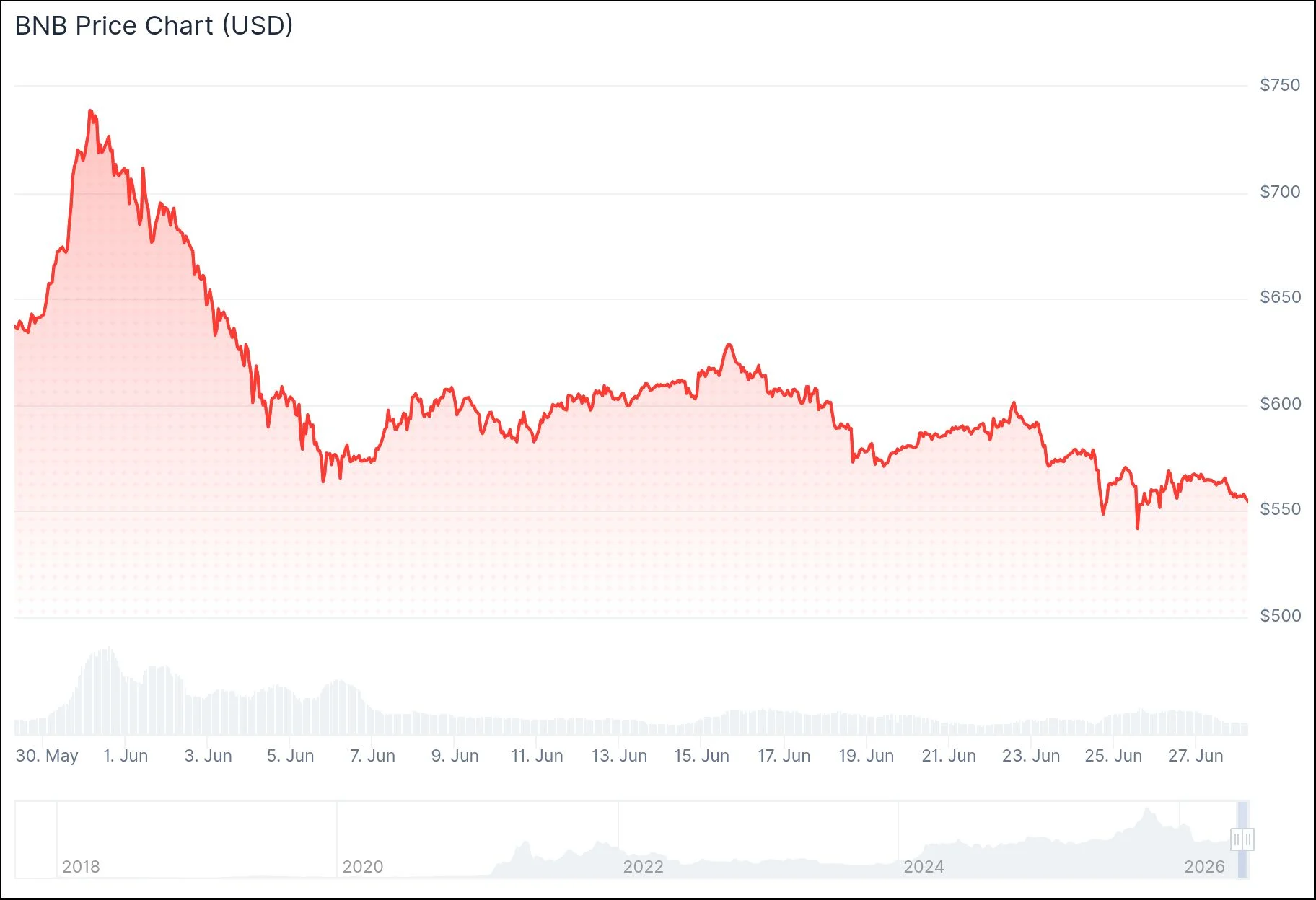
The relationship between BNB and the Binance platform remains fundamental to its value proposition. Countless users maintain holdings to benefit from reduced transaction fees, participate in initial exchange offerings, cover transaction costs on BNB Chain, and unlock additional platform features.
This practical functionality distinguishes BNB from numerous other digital assets lacking tangible use cases.
Beyond utility, Binance maintains a systematic quarterly burn mechanism. Every three months, tokens are irreversibly eliminated from the circulating supply. The ultimate objective involves reducing total token count by 50%—from the original 200 million to a final 100 million BNB.
This deflationary supply model, combined with sustained user demand, forms the foundation of the long-term valuation thesis.

Moderate Scenario: $1,200 to $1,800
The most probable outcome by 2031 positions BNB trading within a $1,200 to $1,800 range. This projection assumes Binance maintains its position among leading cryptocurrency platforms while digital asset adoption continues expanding at current rates.
This valuation band corresponds to a total market capitalization between approximately $180 billion and $270 billion. Given recent cryptocurrency market trajectories, this represents a reasonable expectation.
Reaching this range requires no exceptional circumstances—merely sustained user base expansion and ongoing supply reduction through burns.
Optimistic Scenario: $2,500 to $4,000
Under favorable conditions, BNB could achieve valuations between $2,500 and $4,000. This outlook depends on accelerating institutional investment flows, BNB Chain establishing itself as a dominant infrastructure for decentralized applications and payment systems, and continuation of aggressive token burn schedules.
Such pricing would translate to market capitalization between $375 billion and $600 billion. While substantial, this doesn’t necessitate BNB surpassing established leaders like Bitcoin or Ethereum.
Primary Threat: Regulatory Pressure
Unlike Bitcoin’s decentralized architecture, BNB maintains inherent connections to Binance as a corporate entity.
Should regulatory authorities impose restrictions on Binance operations across key jurisdictions, platform activity could decline substantially, correspondingly reducing BNB demand.
In a pessimistic regulatory environment, BNB might trade between $400 and $600 by 2031.
The probability-adjusted price projection from this assessment centers around $1,650 for 2031. BNB’s future valuation depends more heavily on Binance’s operational success than purely speculative forces.
Get 3 Free Stock Ebooks
Discover top-performing stocks in AI, Crypto, and Technology with expert analysis.
- Top 10 AI Stocks - Leading AI companies
- Top 10 Crypto Stocks - Blockchain leaders
- Top 10 Tech Stocks - Tech giants


