



Key Highlights
- BTC surpassed $64,000 during Asian trading hours Monday despite a weekly decline approaching 3%
- HYPE from Hyperliquid led weekly gains among major tokens, climbing 9% to approximately $59
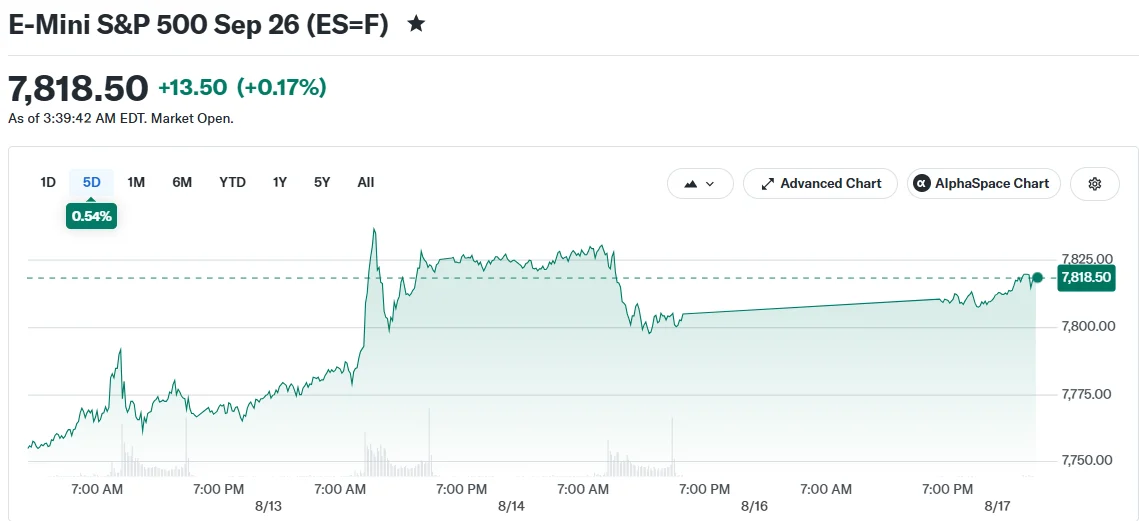
- Equity futures showed minimal movement Sunday evening before key retail sector earnings releases
- Major retailers Walmart and Target scheduled to announce quarterly results this week
- Federal Reserve’s July policy meeting minutes scheduled for Wednesday release, potentially influencing market direction
The leading cryptocurrency pushed past the $64,000 threshold during Monday’s Asian trading session, registering approximately 0.5% gains for the day. However, this modest uptick hasn’t offset the nearly 3% decline recorded across the previous seven-day period.
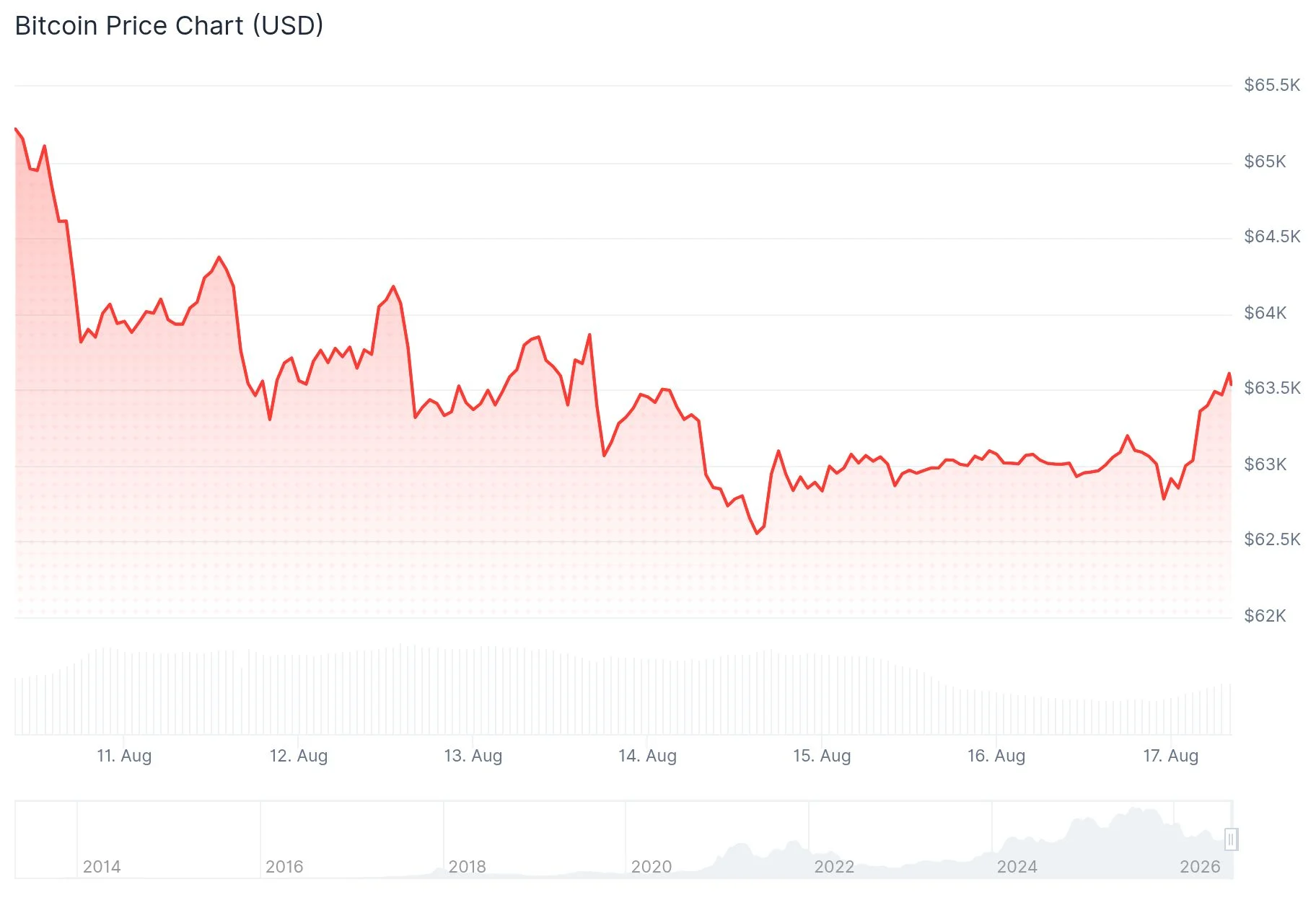
Digital asset markets experienced modest appreciation across major cryptocurrencies on Sunday. Nevertheless, weekly performance metrics remain predominantly negative. Leading tokens including Bitcoin, Ether, XRP, and Solana all posted losses over the seven-day timeframe.
HYPE from Hyperliquid emerged as the week’s dominant performer. The token increased more than 3% during the day to approximately $59 and posted nearly 9% weekly gains, distinguishing itself as the sole major cryptocurrency with substantial positive weekly momentum.
Ethereum advanced slightly over 1% to approach $1,900 but maintains a 1% weekly deficit. Dogecoin registered gains approaching 1%, while XRP showed marginal improvement to $1 despite carrying a 3% seven-day loss.
Solana increased marginally to slightly above $75, carrying nearly 2% weekly losses. BNB declined modestly to approximately $604 with flat weekly performance.

The greenback weakened as a Bloomberg tracking measure declined 0.1%, approaching its third consecutive drop and reaching levels not observed since May. An MSCI emerging-market currency index achieved an intraday peak, driven primarily by the Taiwanese dollar and Thai baht.
Friday’s US retail sales figures revealed the steepest monthly contraction in more than twelve months. This data diminished Federal Reserve rate increase expectations, with market participants now assigning roughly 25% probability to a hike next month, down from approximately 50% the previous week.
Nick Ruck from LVRG Research noted the cryptocurrency market continues trading in a consolidation pattern around $63,000. He identified diminishing ETF capital flows as evidence of subdued sentiment following the previous week’s market decline.
Ruck highlighted two critical upcoming catalysts: Wednesday’s FOMC minutes publication and a White House cryptocurrency policy discussion. Both developments could significantly influence regulatory frameworks and monetary policy expectations.
Equity Futures Unchanged as Major Retail Earnings Approach
American equity futures demonstrated minimal volatility Sunday evening. Dow Jones futures remained unchanged, S&P 500 futures held flat, while Nasdaq 100 futures advanced 0.1%.
Major retail chains including Walmart and Target are preparing to release quarterly earnings this week. These financial reports will provide crucial insights into consumer spending patterns following disappointing retail sales data.
Escalating geopolitical tensions between Washington and Tehran persist. President Trump suggested potential US control over the Strait of Hormuz following military action against Iran. Iran’s Major General Amir Hatami responded with warnings that America would face consequences for such actions.
Oil prices advanced higher. Brent crude surged nearly 6% Friday to reach $88.52 per barrel, while West Texas Intermediate settled at $82.40. Both benchmark contracts continued climbing slightly on Sunday.
The Dow Jones concluded last week with a 0.6% decline, ending a two-week advance. The S&P 500 recorded 0.4% weekly gains and maintains 13.7% year-to-date appreciation. The Nasdaq registered 0.1% weekly improvement and holds 15% gains for the year.
Federal Reserve policy committee minutes from the July 28-29 session will be published Wednesday at 2 p.m. ET. These documents will disclose how near policymakers came to implementing rate increases before recent economic data altered market projections.
Get 3 Free Stock Ebooks
Discover top-performing stocks in AI, Crypto, and Technology with expert analysis.
- Top 10 AI Stocks - Leading AI companies
- Top 10 Crypto Stocks - Blockchain leaders
- Top 10 Tech Stocks - Tech giants


