



Key Highlights
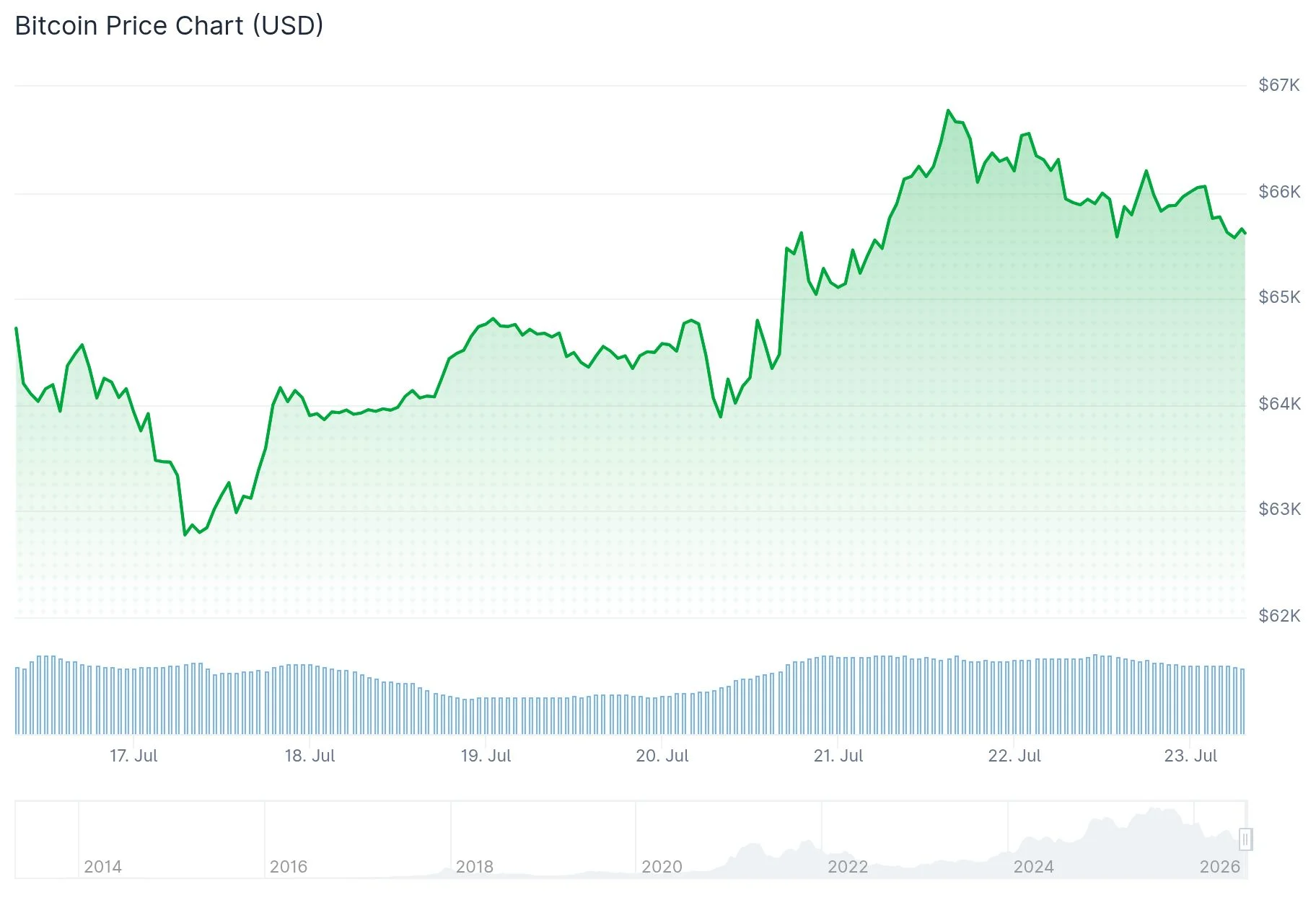
- BTC declined to approximately $65,500 amid surging crude oil prices and elevated Treasury yields creating downward pressure
- Polymarket betting odds for the Digital Asset Market Clarity Act decreased from 46% to 38%
- Senior Democratic senators criticized the revised Clarity Act draft, citing inadequate ethics and key provisions
- Asian equity markets rallied following Alphabet’s announcement to increase annual capital expenditure by $15 billion
- South Korea’s KOSPI jumped 4.4%, with semiconductor giants SK Hynix and Samsung Electronics leading gains on AI investment optimism
Cryptocurrency markets faced headwinds on Thursday as Bitcoin retreated under pressure from multiple factors including elevated oil prices, rising bond yields, and growing uncertainty around digital asset regulation. Meanwhile, Asian equity markets received a boost from technology sector spending announcements.
BTC Retreats as Macroeconomic Headwinds Intensify
Bitcoin dropped to approximately $65,500 during early Thursday trading, representing a 0.7% decline from midnight UTC levels. The cryptocurrency pulled back from Wednesday’s peak near $66,700. Other major digital assets including Ether, Solana, and XRP experienced similar downward movement.
Crude oil played a significant role in the downturn. West Texas Intermediate futures surged to $88.60 per barrel, reaching the highest point since June 11. This represented a dramatic recovery from recent levels below $70 and reignited inflation worries.
Fixed-income markets reacted swiftly to the energy price spike. The two-year U.S. Treasury yield advanced to 4.31%, marking its peak since February 2025. The benchmark 10-year yield climbed to 4.66%, the highest reading since May. Rising yields typically diminish the appeal of non-yielding assets such as Bitcoin.
Geopolitical tensions added to market nervousness. The U.S. military conducted strikes using a B-1 long-range bomber against targets associated with Iran’s Islamic Revolutionary Guard Corps, suggesting potential escalation beyond the contained operations observed recently.

Digital Asset Regulatory Bill Faces Growing Opposition
Prospects for crypto regulation clarity diminished on Thursday. A coalition of influential Democratic senators issued a statement declaring the latest version of the Digital Asset Market Clarity Act insufficient regarding ethics requirements and other essential elements.
Prediction markets responded immediately. On Polymarket, the probability of the Clarity Act becoming law dropped sharply from 46% to 38%.
Senate Republicans had unveiled a revised draft earlier this week featuring an ethics provision negotiated with the White House. Senator Bernie Moreno characterized it as containing “the most powerful ethics language in U.S. history,” though this failed to win over Democratic lawmakers.
Asian Markets Climb on Tech Spending Optimism
Asian stock indices posted broad gains on Thursday, propelled by Alphabet’s decision to expand its annual capital spending plan by an extra $15 billion, signaling continued robust investment in artificial intelligence infrastructure.
South Korea’s KOSPI index topped regional performance with a 4.4% advance. Chipmakers SK Hynix and Samsung Electronics recorded substantial gains as investors anticipated increased demand for memory chips and AI hardware stemming from elevated technology spending.
South Korea reported second-quarter 2026 economic expansion of 3.7% year-over-year, surpassing analyst expectations of 3.5%. Robust semiconductor export performance drove much of the growth.
Japan’s Nikkei 225 index advanced 0.4%. Hong Kong’s Hang Seng climbed 1.1%. China’s Shanghai Composite edged 0.2% higher.
Energy market strength tempered broader gains. Houthi attacks targeting two Saudi oil tankers in the Red Sea pushed crude prices to six-week peaks for the fifth consecutive session, sustaining inflation concerns.
Australia reported 76,300 new jobs in June, significantly exceeding the 16,400 forecast. The strong employment data increased speculation of a potential interest rate increase from the Reserve Bank of Australia before year-end.
Alphabet shares declined in after-hours trading despite exceeding earnings expectations, as investors engaged in profit-taking following the positive results.
Get 3 Free Stock Ebooks
Discover top-performing stocks in AI, Crypto, and Technology with expert analysis.
- Top 10 AI Stocks - Leading AI companies
- Top 10 Crypto Stocks - Blockchain leaders
- Top 10 Tech Stocks - Tech giants


