



TLDR
- BTC plummeted beneath $71,000 on June 1, 2026, marking its weakest position in seven weeks.
- Strategy liquidated 32 BTC worth $2.5 million — the company’s first divestment since late 2022.
- Bitcoin spot ETFs in the United States recorded $2.97 billion in withdrawals across 10 straight trading days.
- Escalating military conflict between the U.S. and Iran intensified market anxiety, with Tehran temporarily halting diplomatic discussions.
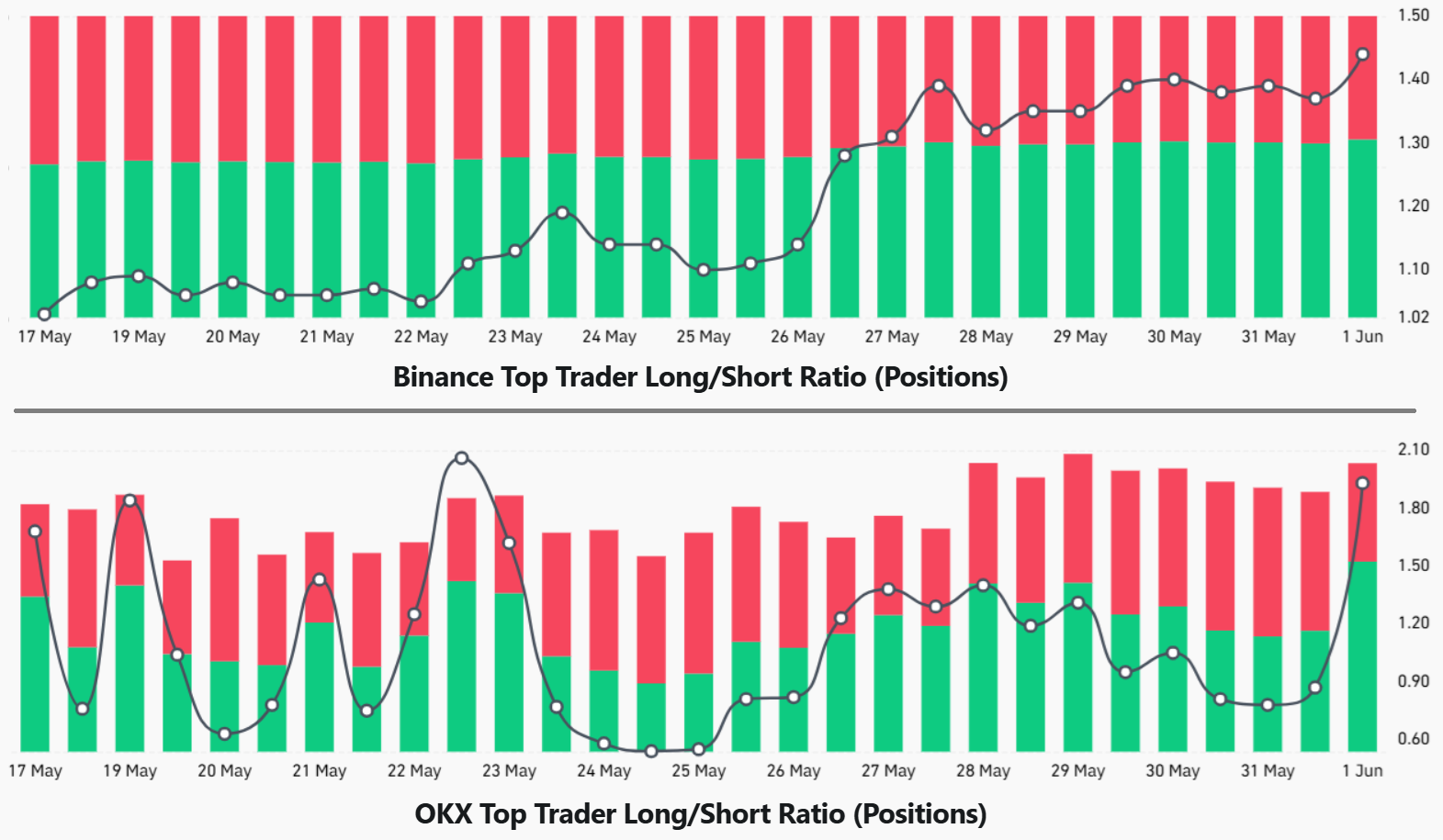
- Major traders on Binance and OKX platforms ramped up long bets despite downward price movement.
Bitcoin experienced a significant downturn on June 1, 2026, breaking below the $71,000 threshold for the first time in nearly two months. The decline stemmed from multiple factors: institutional selling pressure, an unexpected BTC liquidation by Strategy, and escalating Middle Eastern geopolitical conflicts.
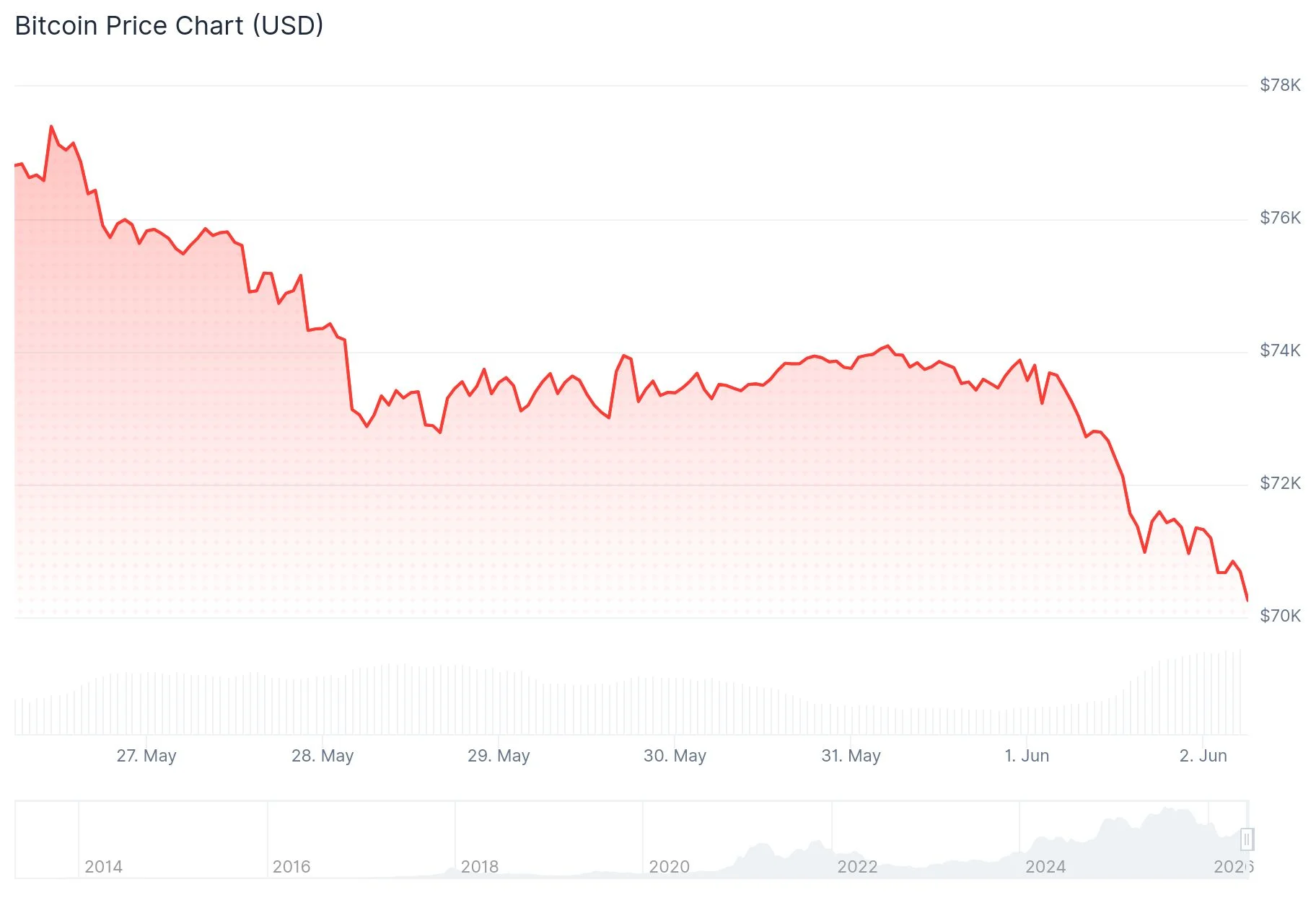
As Monday evening approached, BTC hovered around $71,192, representing a 3.6% intraday decline. The cryptocurrency briefly plunged even lower, triggering $276 million in liquidations of leveraged long positions across exchanges.
Strategy, the Michael Saylor-led corporation that ranks as the world’s largest corporate Bitcoin holder, divested 32 BTC during the period spanning May 26 through May 31. The coins were sold at an average price of $77,135 each, generating $2.5 million in proceeds. This marked the first instance of the company reducing its holdings since late 2022.
According to Strategy’s disclosure, the funds will be allocated toward preferred stock distributions. The firm maintains ownership of 843,706 BTC, acquired at an average cost basis of $75,699 per coin.
Dessislava Ianeva, an analyst at Nexo Dispatch, highlighted that U.S. spot Bitcoin ETFs experienced an unprecedented 10-day consecutive outflow streak from May 15 through May 29, totaling $2.97 billion in capital flight — establishing a new record. May appears poised to become the third-worst month for Bitcoin ETF flows since their inception, with approximately $2.4 billion in net withdrawals.

Institutional Exodus From Bitcoin ETFs
The previous week witnessed $1.4 billion departing from U.S. Bitcoin ETFs, representing the most substantial weekly exodus since late January. Crypto investment firm NYDIG identified a $1.26 billion block sale from BlackRock’s IBIT fund, characterizing it as the probable swift departure of a single institutional investor.
From May 13 onward, U.S.-listed spot Bitcoin ETFs have registered $3.46 billion in net capital outflows. Additionally, Tether’s USDT stablecoin briefly traded at a 0.10% discount to its dollar peg, suggesting investors were converting cryptocurrency holdings back to traditional currency.
Crypto analyst Ted (@TedPillows) observed on X that Bitcoin couldn’t maintain support above $74,500 before collapsing below $73,000. He identified the $71,000–$72,000 range as critical: “As long as Bitcoin holds above the $71,000–$72,000 zone, there’s still a chance of rally. Below that, things could get ugly.”
Whale Traders Bet on Recovery
Contrary to the prevailing bearish sentiment, several large traders adopted contrarian positions. On Binance, the long-to-short ratio among top-tier traders climbed from 1.1x the previous week to 1.4x. Meanwhile, at OKX, this ratio surged to 1.9x Monday as traders reversed previously established short positions.
The annualized funding rate for Bitcoin perpetual futures exceeded 12% for the first time in more than half a year, signaling heightened bullish conviction among derivatives market participants. Total open interest remained stable at $43.5 billion.
Geopolitical developments compounded market pressure. Iran halted diplomatic negotiations with the United States and issued threats to blockade the Strait of Hormuz following weekend U.S. military operations targeting Iranian radar installations and drone facilities. While President Trump stated discussions were “continuing at a rapid pace,” market participants maintained a risk-off stance.
As of June 1, Bitcoin was trading near $70,357, reflecting a 3.78% daily loss.
Get 3 Free Stock Ebooks
Discover top-performing stocks in AI, Crypto, and Technology with expert analysis.
- Top 10 AI Stocks - Leading AI companies
- Top 10 Crypto Stocks - Blockchain leaders
- Top 10 Tech Stocks - Tech giants


