



Key Highlights
- Bitcoin declined to approximately $78,400 on Tuesday, registering a daily loss exceeding 1% while maintaining weekly gains
- Robust U.S. employment data showing 162,000 August job additions elevated Federal Reserve rate increase probability to approximately 60%
- Zcash experienced the steepest decline among major cryptocurrencies, falling close to 5%, whereas Dogecoin and BNB demonstrated resilience
- Brent crude oil advanced to roughly $97.50 per barrel, marking a six-week peak amid heightened U.S.-Iran geopolitical tensions
- American spot Bitcoin ETFs attracted approximately $1 billion in capital inflows during the previous week, continuing a three-week positive trend
Bitcoin retreated to approximately $78,400 on Tuesday, experiencing a daily decline of more than 1%. The leading digital currency by market capitalization has struggled for two consecutive weeks to secure a close above the $80,000 threshold.
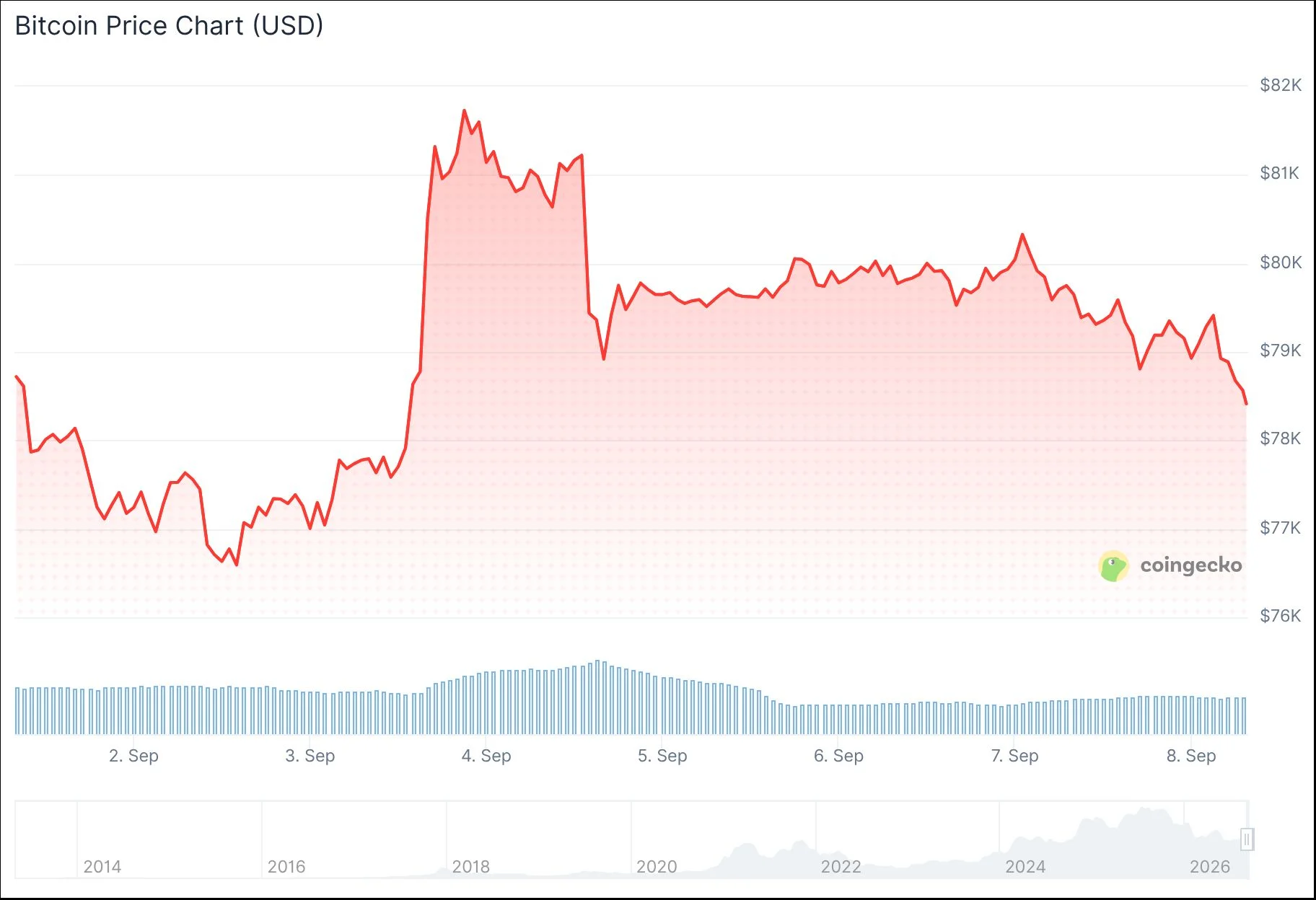
The cryptocurrency momentarily surpassed $82,000 during the previous week before retreating following Friday’s U.S. employment statistics. Notwithstanding the recent decline, Bitcoin maintains approximately 25% gains since August and preserves modest weekly appreciation.
The broader cryptocurrency market experienced downward pressure on Tuesday. Zcash suffered the most significant losses, declining nearly 5% to approximately $1,125. Despite this setback, it retains a 33% weekly increase, leading among large-cap digital assets.
Solana decreased more than 2% to slightly above $103, eliminating its entire weekly appreciation. Hyperliquid’s HYPE token fell over 3% to approximately $84, similarly erasing its weekly gains.
Ether experienced a decline of about 1% to just below $2,482. XRP softened to around $1.38 while Tron remained relatively stable at roughly 33 cents.

Dogecoin and BNB demonstrated the strongest performance, each declining by only a minimal percentage. Both preserved robust seven-day gains approaching 9% and exceeding 7% respectively.
Federal Reserve Tightening Expectations Weigh on Markets
The primary catalyst for Tuesday’s cryptocurrency market weakness was the August employment report. U.S. businesses added 162,000 positions, substantially exceeding economist projections by nearly threefold. The unemployment rate remained steady at 4.1%.
This employment data elevated the market-derived likelihood of a 25-basis-point Federal Reserve interest rate increase at the September 16 policy meeting to approximately 60%, based on CME FedWatch indicators.
Elevated interest rates typically exert downward pressure on Bitcoin and comparable risk assets. They enhance the attractiveness of yield-generating investments and restrict overall financial conditions. The 10-year Treasury yield maintained levels near 4.8%.
Market participants are now focused on Thursday’s producer price index release and Friday’s consumer price index data. An elevated inflation reading could push Federal Reserve rate increase probabilities toward two-thirds, potentially testing Bitcoin’s $77,000 support threshold.
Energy Prices Compound Inflation Concerns
Brent crude oil advanced to approximately $97.50 per barrel, achieving a six-week high. Escalating U.S.-Iran geopolitical tensions are propelling the rally, with mounting concerns regarding potential shipping disruptions through the strategically vital Strait of Hormuz.
Rising oil prices sustain inflation anxieties ahead of Friday’s CPI release, creating additional resistance for cryptocurrency markets.
In more encouraging developments, U.S. spot Bitcoin ETFs recorded approximately $1 billion in net inflows during the previous week, maintaining a three-week sequence of positive capital flows. This institutional buying activity has provided price support throughout the recent correction.
One market strategist observed that long-term Bitcoin holders transitioned to net accumulation in late August for the first time during this price movement, representing a behavioral shift that numerous traders are monitoring with interest.
Get 3 Free Stock Ebooks
Discover top-performing stocks in AI, Crypto, and Technology with expert analysis.
- Top 10 AI Stocks - Leading AI companies
- Top 10 Crypto Stocks - Blockchain leaders
- Top 10 Tech Stocks - Tech giants


