


Key Takeaways
- Carvana shares declined approximately 6% on Wednesday following a 7% plunge in CarMax stock after its quarterly earnings release
- CarMax exceeded EPS projections ($1.31 versus $0.96 expected) and revenue forecasts ($8B versus $7.39B consensus) while highlighting margin concerns
- Used retail gross profit per vehicle at CarMax decreased $230 compared to the prior year, landing at $2,177
- Styrax Capital LP reduced its Carvana position by 26.6%, divesting 81,729 shares; company insiders offloaded $29M in stock during the previous quarter
- Wall Street maintains a Moderate Buy consensus on CVNA with a mean price target of $93.14
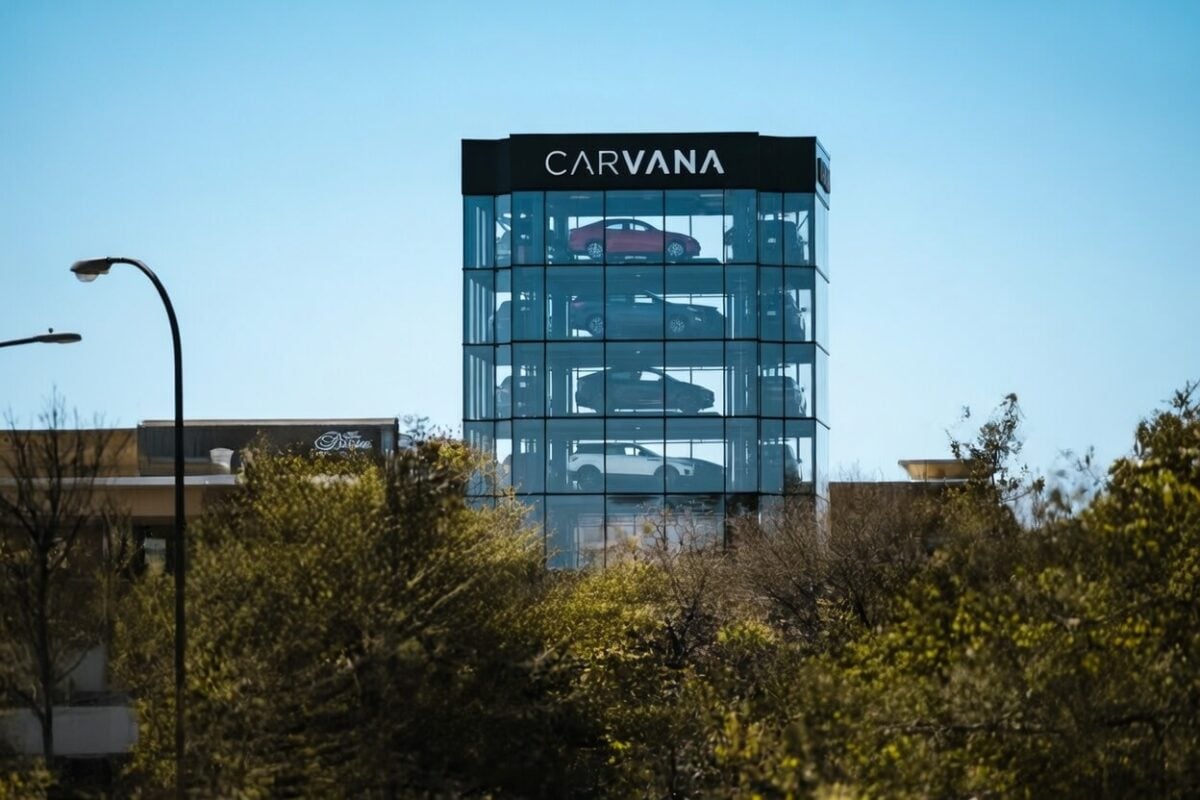
Shares of Carvana began Wednesday’s session at $69.96 before declining approximately 6%, caught in the downdraft created by CarMax’s steep decline following the competitor’s first-quarter financial disclosure.
CarMax delivered better-than-anticipated results on both the top and bottom lines. The company reported earnings per share of $1.31, surpassing the $0.96 analyst estimate, while revenue reached $8 billion compared to expectations of $7.39 billion. At first glance, these figures appeared robust — but deeper analysis revealed troubling trends.
The primary concern centered on profitability metrics. CarMax’s gross profit per used retail vehicle contracted to $2,177, representing a $230 year-over-year decline. CFO Enrique Mayor acknowledged the situation candidly, explaining that the company’s current growth strategy “requires some margin concession to support sales growth.”
Average transaction values increased $1,168 per vehicle to reach $27,288, primarily attributable to elevated acquisition expenses. Comparable store sales for used units decreased 0.8% during the reporting period.

CEO Keith Barr also highlighted execution challenges, noting that while CarMax facilitates over 2 million vehicle transfers annually, the operation currently suffers from “too many unproductive transfers.”
Credit Market Deterioration Compounds Worries
Regarding financing operations, CarMax Auto Finance SVP Jon Daniels acknowledged that consumers remain “continuing to be pressured by overall inflation.” He emphasized that delinquency metrics for both credit cards and automotive loans are elevated across the broader industry.
CarMax increased its Tier 2 credit exposure from 10% to 25% of total volume and recorded a $96 million provision for loan losses during the quarter — a figure that drew considerable scrutiny from market participants.
This convergence of compressed profitability, escalating acquisition expenses, and deteriorating credit metrics triggered the selloff that engulfed Carvana. Market participants are assessing the likelihood that comparable headwinds may emerge in CVNA’s upcoming financial disclosures.
Notable Institutional and Insider Transactions
Beyond Wednesday’s price action, recent trading activity by major stakeholders warrants examination. Styrax Capital LP decreased its Carvana holdings by 26.6% during the fourth quarter, disposing of 81,729 shares while retaining 225,272 shares valued at approximately $95.1 million.
Company executives have also been active sellers. VP Stephen R. Palmer divested 5,000 shares at $70.42 on June 1st. Director J. Danforth Quayle sold 14,525 shares at $70.00 on June 10th. Collectively, corporate insiders sold 415,812 shares valued at approximately $29.1 million during the last quarter. Both dispositions occurred through pre-established Rule 10b5-1 trading arrangements.
Notwithstanding the recent selling, Carvana’s most recent quarterly report demonstrated solid performance. The company delivered EPS of $1.69 versus expectations of $0.32, while revenue of $6.43 billion exceeded the $6.12 billion consensus estimate.
Wall Street sentiment toward the stock remains predominantly constructive. Needham reaffirmed its Buy recommendation with a $120 price objective on June 5th. JPMorgan elevated its target from $91 to $93 while maintaining an Overweight stance.
The consensus analyst price target stands at $93.14, with the stock carrying 17 Buy recommendations, 2 Strong Buy ratings, and 5 Hold opinions.
CVNA’s 52-week trading range extends from $54.46 to $97.38, with shares currently positioned below both the 50-day moving average of $71.47 and the 200-day moving average of $75.25.
Get 3 Free Stock Ebooks
Discover top-performing stocks in AI, Crypto, and Technology with expert analysis.
- Top 10 AI Stocks - Leading AI companies
- Top 10 Crypto Stocks - Blockchain leaders
- Top 10 Tech Stocks - Tech giants


