


Key Highlights
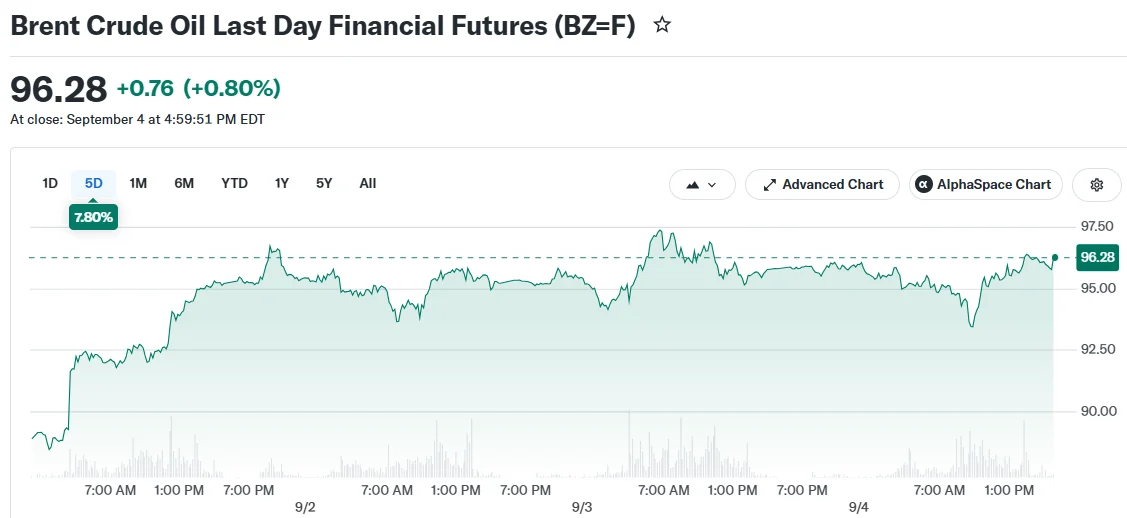
- Brent crude jumped 8.8% over the week to reach $95.85 per barrel, with WTI climbing 9.4% to $91.22
- Military confrontation between the United States and Iran resumed for the first time since July, focusing on Strait of Hormuz facilities
- European Union formally aligned with Washington’s economic sanctions campaign against Tehran
- Diesel fuel in the United States reached an unprecedented $5.85 per gallon, exceeding the 2022 high
- OPEC+ anticipated to maintain current production levels at upcoming Sunday meeting
Energy markets experienced a significant rally this week, with crude oil climbing to approximately three-month highs following renewed military confrontations between Washington and Tehran that raised concerns about supply disruptions through the strategically vital Strait of Hormuz.
Brent crude futures closed the week at $95.85 per barrel, marking an 8.8% weekly increase. Meanwhile, U.S. West Texas Intermediate futures ended at $91.22 per barrel, posting a 9.4% gain over the same period.
The dramatic price escalation followed renewed military exchanges between American and Iranian forces, marking the first such confrontation since July. President Donald Trump indicated the conflict wouldn’t extend “too long” and noted that U.S. military operations focused on infrastructure Tehran had been reconstructing around the strategic waterway.
Iranian government-controlled media verified that Tehran launched retaliatory strikes against American military installations throughout the region. Kuwait’s military also reported successfully intercepting inbound Iranian missiles and unmanned aerial vehicles, characterizing the incidents as “continuing Iranian aggression.”
European Union Aligns with U.S. Sanctions Strategy
Treasury Secretary Scott Bessent announced that the European Union had “formally joined” America’s economic pressure initiative against Iran, which he referred to as “Operation Economic Outcast.”

Brussels confirmed implementation of comprehensive sanctions designed to prevent Tehran from accessing international financial networks. Bessent stated the objective was to eliminate every remaining financial connection to the Iranian government.
Energy Secretary Chris Wright informed CNBC that over 17 million barrels of crude oil passed through the Strait of Hormuz on Monday under American military escort. While this represents a wartime high, it falls short of the approximately 20 million barrels daily that transited the strait before hostilities commenced in February.
Market analysts from ING suggested the price rally might weaken if Hormuz shipping operations continue without significant interruptions.
Diesel Costs Reach Unprecedented Levels
Domestically, the international oil price surge delivered a substantial blow to American consumers. The nationwide average diesel price climbed to an all-time record of $5.85 per gallon, surpassing the previous peak of $5.82 established in June 2022.
Patrick De Haan from GasBuddy explained that unprecedented diesel costs increase expenses throughout supply chains, ultimately inflating prices for food products, shipping services, and consumer goods.
AAA data showed the nationwide average gasoline price at $4.1474 per gallon.
Vice President JD Vance attributed elevated fuel prices to Iranian attacks on commercial vessels. He suggested costs could have risen even higher without American military involvement, though he stopped short of guaranteeing a return to $3 per gallon pricing.
Commercial crude stockpiles in the United States decreased to 424.5 million barrels during the week concluded August 28, declining from 428.9 million barrels in the previous week.
OPEC+ members are widely expected to maintain their October production strategy unchanged during Sunday’s scheduled meeting.
Get 3 Free Stock Ebooks
Discover top-performing stocks in AI, Crypto, and Technology with expert analysis.
- Top 10 AI Stocks - Leading AI companies
- Top 10 Crypto Stocks - Blockchain leaders
- Top 10 Tech Stocks - Tech giants


