


Key Takeaways
- Brent crude declined to approximately $74 while WTI dropped to around $70.77, both registering about 7% weekly declines
- Shipping activity through the Strait of Hormuz reached peak levels since hostilities commenced
- The majority of increased traffic consists of departing vessels that were previously stuck, rather than incoming tankers
- Iranian forces attacked a commercial ship near Hormuz, leading the IMO to halt its evacuation operations
- Venezuelan seismic activity threatens oil production through electrical grid failures, providing minor upward pressure
Crude oil markets experienced nearly a 2% decline on Friday, marking the third consecutive week of downward momentum. Both major benchmarks—Brent crude and West Texas Intermediate—were poised to record approximately 7% losses over the five-day trading period.
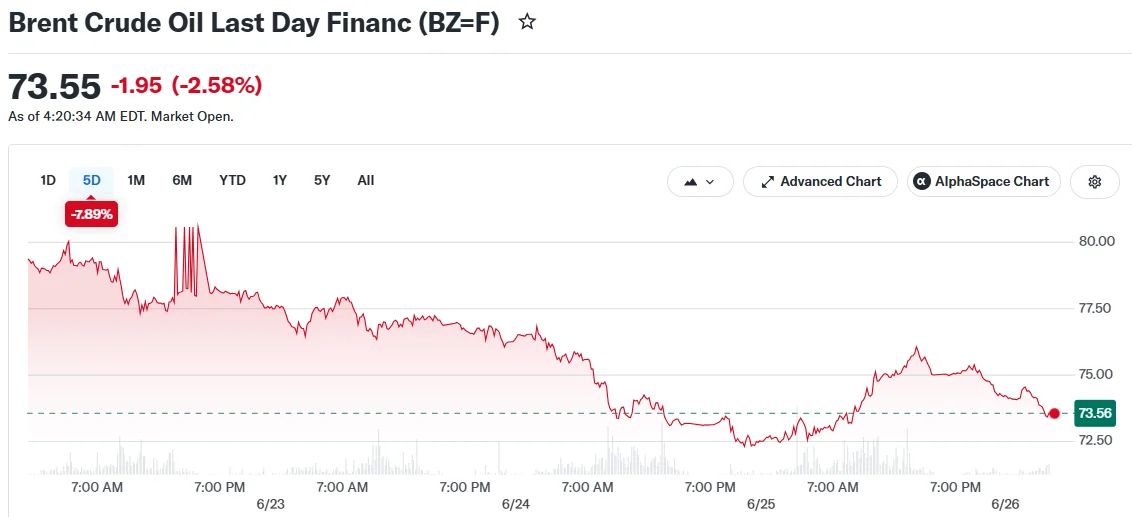
As of the latest trading session, Brent was positioned around the $74 per barrel mark. WTI was exchanging near $70.77. The recent selloff has eliminated the majority of gains accumulated during the Iranian crisis, when prices briefly exceeded $120 per barrel during peak tensions.
Shipping Activity Increases at Hormuz, Though Experts Remain Skeptical
The primary catalyst behind falling petroleum prices is the resumption of vessel movement through the Strait of Hormuz. Oil tanker transit through this critical waterway has reached its strongest level since hostilities erupted earlier this year.
Nevertheless, market strategists at ING issued a cautionary note regarding the apparent recovery. Their analysis revealed that virtually all increased activity involves outbound traffic—specifically, vessels that had been trapped in the strait since March and are now departing.
Incoming tanker arrivals to the Persian Gulf for new crude loading operations remain significantly depressed. ING analysts suggested that once the backlog of stranded ships clears, throughput volumes could experience a sharp contraction.

Reuters further emphasized that total vessel movements remain substantially below pre-conflict benchmarks. Prior to the outbreak of hostilities, approximately 125 ships transited the waterway daily.
Iranian Military Action and Diplomatic Uncertainty
A commercial freighter came under fire near Omani waters earlier this week. American intelligence confirmed Iranian military forces were responsible for the assault. The incident temporarily elevated prices by over 2% before markets reverted to their declining trajectory.
The International Maritime Organization halted its coordination efforts to evacuate stranded vessels and personnel in response to the attack. This development introduced renewed skepticism regarding the stability of the tentative US-Iran diplomatic agreement.
The preliminary accord, finalized last week, had facilitated the partial reopening of the strait and served as the principal driver behind oil’s retreat from levels above $90 per barrel earlier this month.
Venezuelan Seismic Events Introduce Supply Concerns
Major earthquakes struck Venezuela earlier in the week. Although the nation’s oil infrastructure was not situated within the primary impact zone, electrical system failures resulting from the tremors are anticipated to hamper production operations.
Market observers identified this development as a potential supply constraint, although it has proven insufficient to counteract the prevailing bearish price momentum.
Trader focus continues to center on developments at Hormuz and the trajectory of US-Iranian diplomatic discussions. Until greater clarity emerges on these fronts, market participants appear hesitant to establish bullish positions.
Get 3 Free Stock Ebooks
Discover top-performing stocks in AI, Crypto, and Technology with expert analysis.
- Top 10 AI Stocks - Leading AI companies
- Top 10 Crypto Stocks - Blockchain leaders
- Top 10 Tech Stocks - Tech giants


