



Key Takeaways
- Crude prices declined Thursday following Wednesday’s dramatic surge in trading.
- Trump announced the end of the Iran ceasefire and signaled additional military operations ahead.
- American forces conducted strikes against approximately 90 Iranian military installations Thursday morning.
- Iranian forces responded with attacks on American military facilities in Kuwait and Bahrain.
- Maritime security officials elevated the Strait of Hormuz threat assessment to severe status.
Crude oil markets reversed course Thursday, retreating from the previous session’s substantial gains.
Brent crude declined 0.7% to reach $77.54 per barrel during early Thursday trading. Meanwhile, U.S. West Texas Intermediate crude decreased 0.6% to settle at $73.09 per barrel.
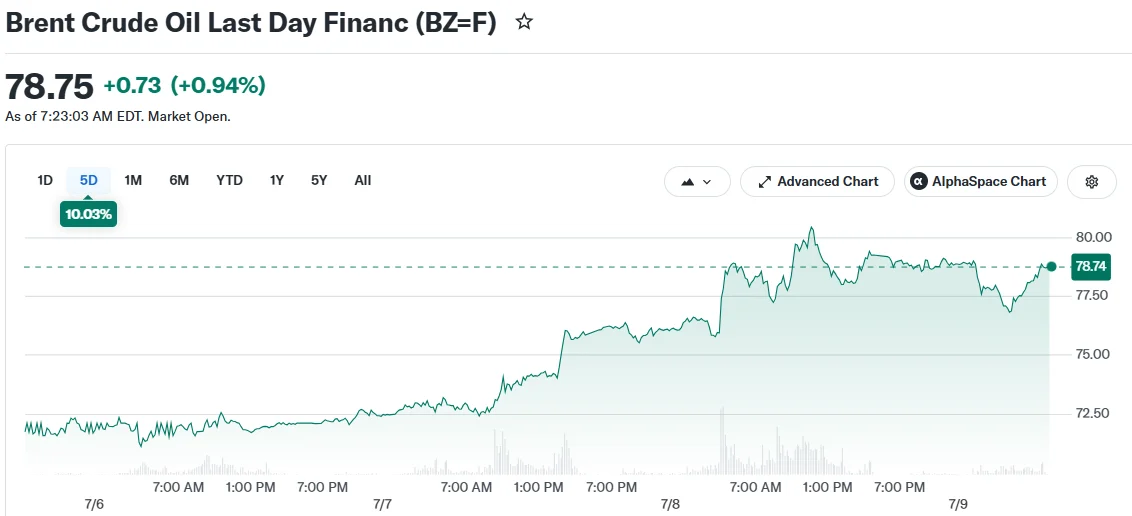
Despite Thursday’s pullback, both benchmarks remain significantly elevated compared to earlier weekly levels. Wednesday witnessed Brent and WTI each surging more than 8%.
The Wednesday rally materialized following President Donald Trump’s declaration that the Iranian ceasefire had ended. He simultaneously issued warnings about forthcoming military actions targeting Iran.
Fresh Military Operations in Persian Gulf
American military forces executed fresh strikes against Iranian positions Thursday morning. U.S. Central Command reported hitting nearly 90 military installations.

The targeted infrastructure encompassed air defense batteries and coastal monitoring systems. Unmanned aerial vehicle storage facilities also sustained damage.
Central Command stated the operation aimed to degrade Tehran’s capability to attack vessels transiting the Strait of Hormuz. Military officials characterized the offensive as retaliation for Iranian assaults on three petroleum tankers within the strait.
Tehran launched counterstrikes. Iranian military forces targeted what they identified as U.S. military installations in Kuwait and Bahrain.
Iran’s Revolutionary Guards Corps issued warnings of escalated attacks against American positions throughout the Gulf region. Such actions would follow any additional U.S. military strikes.
Multiple commercial vessels have already sustained attacks near the Strait of Hormuz during recent days. The Joint Maritime Information Center, operating under U.S. leadership, has classified the maritime threat as severe.
The International Maritime Organization issued advisories instructing vessels to exercise maximum caution while navigating through the strait. This waterway represents one of the planet’s most critical petroleum shipping corridors.
Market Outlook and Analysis
Oil exports originating from Gulf nations had been gradually recovering following last month’s ceasefire agreement. Market analysts now suggest renewed hostilities could halt that recovery trajectory.
ANZ analysts noted the recent military escalation has reintroduced a geopolitical risk premium into petroleum pricing. They cautioned that complete collapse of U.S.-Iranian diplomatic understanding could again disrupt Gulf oil shipments.
ANZ additionally highlighted tightening refined product markets. Moscow extended diesel export restrictions through July’s conclusion.
U.S. governmental statistics revealed another substantial decline in diesel and gasoline inventories. Simultaneously, American fuel exports achieved record volumes.
Commercial crude inventories across the U.S. increased last week. However, authorities also authorized additional releases from strategic emergency stockpiles.
Technically, WTI crude is challenging its 200-day moving average positioned near $74. That threshold experienced brief penetration before prices retreated.
Market analysts indicate oil would require a sustained break above $85 for the advance to appear more substantial than temporary relief. Should WTI breach $67 on the downside, prices could potentially decline toward mid-$50 levels.
Currently, petroleum prices reflect elevated geopolitical risk premiums stemming from Gulf region conflicts rather than fundamental supply shortages.
Get 3 Free Stock Ebooks
Discover top-performing stocks in AI, Crypto, and Technology with expert analysis.
- Top 10 AI Stocks - Leading AI companies
- Top 10 Crypto Stocks - Blockchain leaders
- Top 10 Tech Stocks - Tech giants


