


TLDR
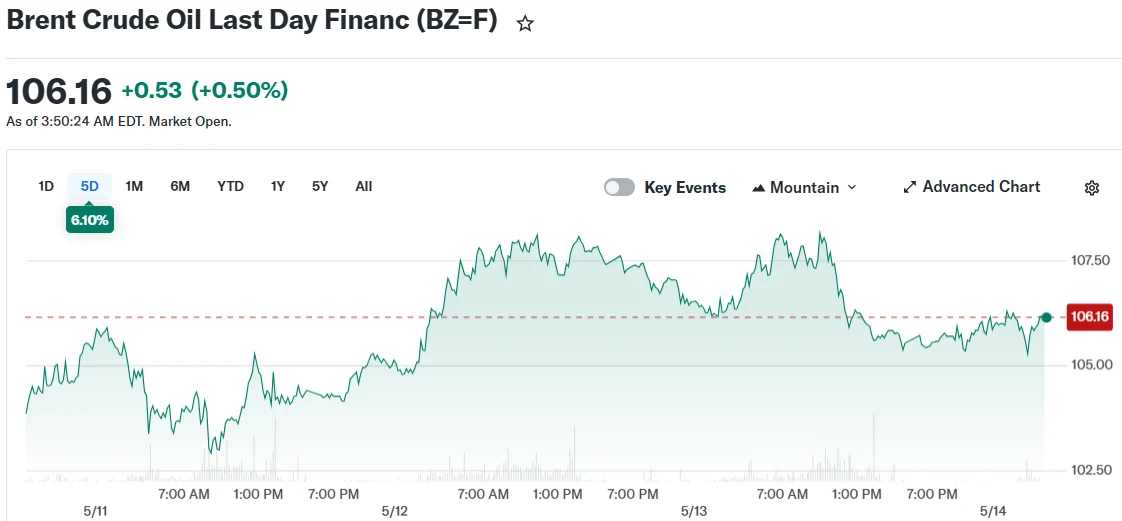
- Brent futures maintained levels between $105 and $106 per barrel following a decline exceeding 1% during the prior trading session
- A high-stakes meeting between Trump and Xi in Beijing lasted more than two hours, with both leaders expressing positive sentiments about bilateral relations
- Ongoing Middle East hostilities have effectively shut down the Strait of Hormuz, eliminating approximately 6 million barrels daily from global supply chains
- International Energy Agency projects persistent supply deficits in world oil markets extending well into 2026 regardless of conflict resolution timing
- American petroleum inventories decreased by 4.3 million barrels in the latest reporting period, surpassing market expectations
Crude oil valuations maintained their position above the $100 threshold Thursday as global energy markets closely monitored the inaugural session of high-stakes diplomatic talks between U.S. President Donald Trump and Chinese President Xi Jinping taking place in the Chinese capital.
Brent futures fluctuated within a narrow band between $105 and $106 per barrel, while West Texas Intermediate maintained positioning near the $100 to $102 range. Although both benchmark contracts experienced pullbacks exceeding 1% during Wednesday’s trading, they continued tracking toward substantial weekly advances.
The two world leaders engaged in discussions lasting over two hours Thursday afternoon. Speaking to the press afterward, Trump characterized the bilateral relationship as poised to become “better than ever before” and suggested the nations could enjoy a “fantastic future together.” Official Chinese media reported that Xi emphasized to Trump that maintaining stability in U.S.-China relations remains essential for worldwide equilibrium.
Notwithstanding the constructive rhetoric, energy traders maintained a measured stance. Market participants continued scrutinizing developments regarding the Iranian situation, which has served as the primary catalyst behind elevated oil prices since military operations commenced in late February.
Middle East Conflict Constrains Oil Supply
The ongoing military confrontation has dramatically curtailed petroleum transit through the Strait of Hormuz, a critical maritime passage handling approximately one-fifth of worldwide crude output. According to Energy Information Administration data, combined shipments of crude oil and refined products through this strategic waterway plummeted by nearly 6 million barrels daily during the opening quarter.
Although a temporary cessation of hostilities took effect in early April, sporadic incidents have persisted and negotiators have failed to forge a lasting peace settlement. Washington and Tehran have achieved minimal headway in bridging their fundamental disagreements.

Satellite monitoring indicates Iran’s primary export facility at Kharg Island has recorded zero tanker movements across four successive observation windows, Bloomberg News reports. A United States naval embargo targeting Iranian ports has compounded reductions in the nation’s crude exports.
The International Energy Agency issued a warning earlier this week projecting that worldwide petroleum markets will experience “severe undersupply” extending through the majority of 2026, even under scenarios where hostilities cease as soon as next month.
OPEC reduced its 2026 worldwide oil demand growth projections, citing economic ramifications stemming from the military conflict and elevated fuel costs, though the organization maintained its broader economic expansion forecasts.
Inventory Declines and Sanctions Intensify Market Pressures
United States crude reserves contracted by 4.3 million barrels during the most recent week, exceeding the 2 million barrel reduction anticipated by market analysts. Gasoline inventories similarly declined by 4.1 million barrels, suggesting robust fuel consumption despite elevated price levels.
Prior to the Beijing diplomatic engagement, Washington imposed additional sanctions targeting entities involved in facilitating Iranian petroleum sales to China, Tehran’s primary customer. Administration officials indicated trade negotiations would receive emphasis over Middle Eastern matters during the summit, according to Trump.
A sanctions exemption permitting Russian oil acquisitions is scheduled to lapse this weekend. This development places Indian refineries, ranking among the largest consumers of Russian crude, in a precarious situation. India has secured substantial volumes of Russian petroleum throughout the current month.
ING analysts noted that market participants were monitoring the Trump-Xi discussions intently for indications of advancement regarding the Iranian conflict. Rebecca Babin, a trader with CIBC Private Wealth Group, observed that markets remain fixated on determining when normal oil flows will recommence, despite repeatedly delayed projections.
Trump characterized the ceasefire earlier this week as hanging on by “massive life support,” diminishing expectations for an expedient settlement.
Get 3 Free Stock Ebooks
Discover top-performing stocks in AI, Crypto, and Technology with expert analysis.
- Top 10 AI Stocks - Leading AI companies
- Top 10 Crypto Stocks - Blockchain leaders
- Top 10 Tech Stocks - Tech giants


