



TLDR
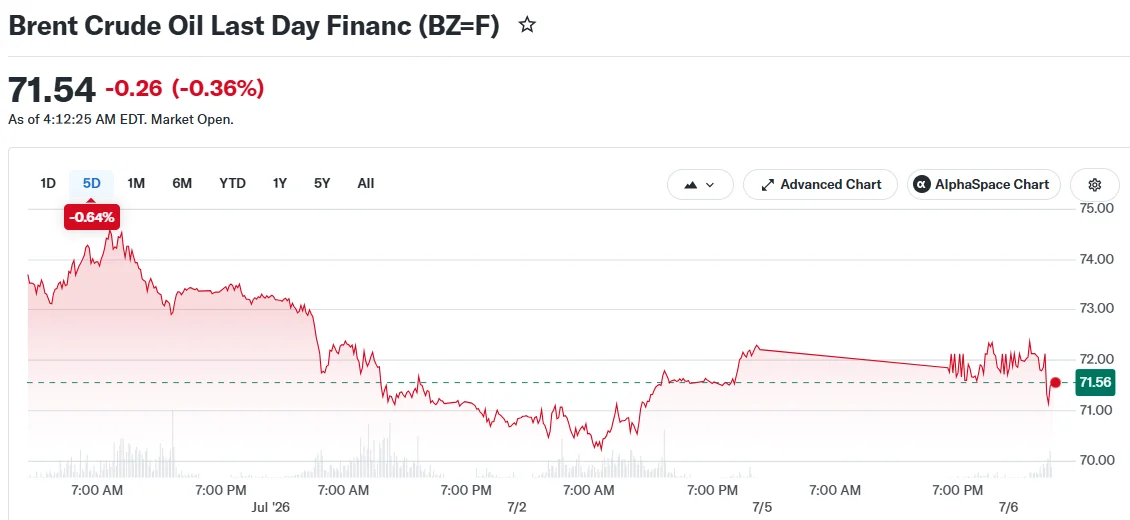
- Brent crude benchmark declined more than 1% to settle at $71.10 per barrel
- OPEC+ members approved a collective production increase of 188,000 barrels daily starting August
- Tanker traffic through the Strait of Hormuz shows continued improvement following US-Iran diplomatic progress
- Analysts project global oil demand could decline by 1.5 million barrels per day in 2026
- Citi analysts warn Brent could drop to $60 per barrel before year-end
Crude oil markets experienced significant downward pressure Monday following OPEC+ confirmation of additional production increases and ongoing normalization of critical Middle Eastern shipping channels.
Brent crude benchmark decreased by $1.02, representing a 1.41% decline, to settle at $71.10 per barrel. Meanwhile, US West Texas Intermediate shed 80 cents to reach $67.89. Both major oil benchmarks have faced sustained downward momentum over recent weeks.
The OPEC+ alliance, which includes major producers Saudi Arabia and Russia, confirmed Sunday their decision to elevate combined production quotas by 188,000 barrels daily beginning in August. This adjustment represents a continuation of similar production expansions already scheduled for June and July implementation.
The cartel has been systematically reversing production restrictions implemented during earlier periods. Seven prominent member states endorsed the most recent production enhancement.
Hormuz Shipping Slowly Coming Back Online
The strategically vital Strait of Hormuz had experienced significant tanker traffic disruptions during military tensions between the US-Israel alliance and Iran. These disruptions effectively limited actual crude shipments from major regional producers including Saudi Arabia, Kuwait, and Iraq, rendering portions of the OPEC+ production increases theoretical rather than practical.

Petroleum and natural gas shipments through a US-secured maritime corridor in the waterway demonstrated recovery signs Sunday. Previously, several vessels had executed unexplained directional reversals within the protected corridor before ultimately resuming their intended routes.
Persian Gulf oil exports surged by over 3 million barrels in June compared to May figures, surpassing the 10 million barrels daily threshold. Despite this improvement, current volumes remain approximately 40% beneath pre-conflict export levels.
Brent crude experienced a dramatic 30% collapse during the second quarter following the announcement of an interim diplomatic agreement between Washington and Tehran, which facilitated the gradual restoration of Hormuz shipping operations.
Supply Climbing as Demand Falls
ANZ Bank has revised its forecast for worldwide oil demand, projecting a contraction of 1.5 million barrels daily throughout 2026. Early indicators suggest year-over-year decreases could reach 4 million barrels per day during the second quarter.
Analysts at PVM observed that producers are currently “selling into a falling market, offering little hope of an imminent price recovery.”
Abu Dhabi National Oil Company has liquidated approximately 16 million barrels of crude through spot market tenders since June, accepting significantly wider discounts that signal abundant available supply.
Russian crude shipments through western ports reached unprecedented volumes in June and are anticipated to maintain elevated levels throughout July. Ukrainian drone operations targeting Russian refining facilities have compelled Moscow to increase raw crude exports rather than domestic processing.
Market structural indicators are also signaling bearish sentiment. Timespreads for both Brent and Dubai benchmarks have transitioned into contango formations, where near-term delivery contracts trade at discounts relative to deferred delivery contracts. Numerous physical crude varieties are currently trading beneath their respective benchmark valuations.
Citigroup analysts have identified the realistic possibility of Brent declining to $60 per barrel by December if present supply expansion and demand deterioration trends persist.
Get 3 Free Stock Ebooks
Discover top-performing stocks in AI, Crypto, and Technology with expert analysis.
- Top 10 AI Stocks - Leading AI companies
- Top 10 Crypto Stocks - Blockchain leaders
- Top 10 Tech Stocks - Tech giants


