



TLDR
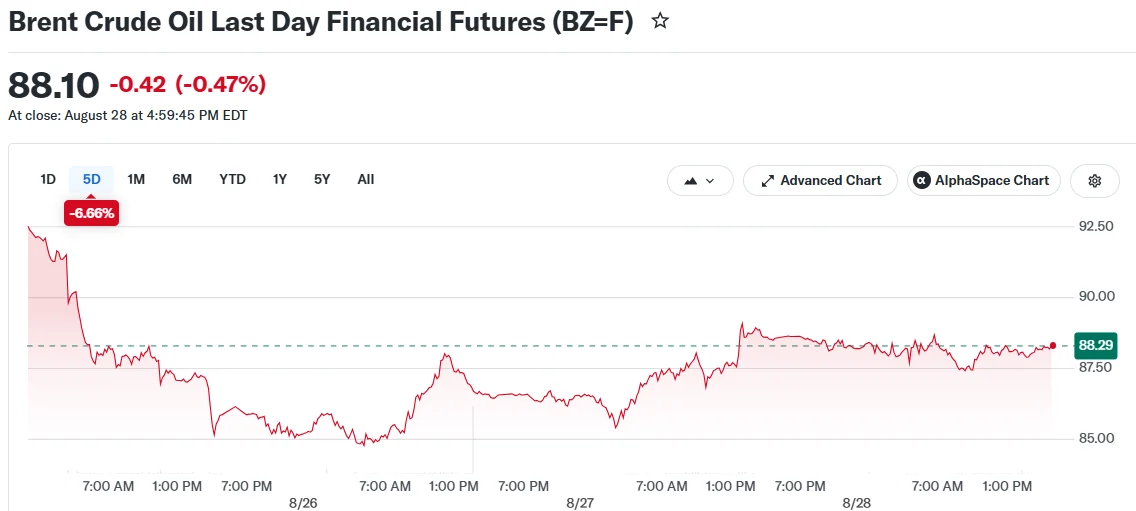
- Brent crude closed at $89.31 per barrel with a 0.43% decline, while WTI ended at $83.40, slipping 0.16%
- Weekly losses exceeded 4-5% for both major benchmarks
- Federal Reserve Chair Kevin Warsh suggested potential interest rate increases to combat inflation
- Speculation surrounding a possible agreement to restore Strait of Hormuz shipping applied downward market pressure
- Vessel traffic through the strait showed volatility, dropping from 17 ships on Wednesday to just seven on Thursday
Crude oil markets closed Friday’s session in negative territory, concluding one of the worst weeks for energy commodities in months as market participants digested Federal Reserve policy signals and increasing speculation about diplomatic progress on the Strait of Hormuz situation.
Brent crude concluded trading at $89.31 per barrel, sliding 39 cents or 0.43%. West Texas Intermediate closed at $83.40 per barrel, declining 13 cents or 0.16%. Looking at the broader weekly performance, Brent experienced losses exceeding 5% while WTI tumbled more than 4%.
Fed Rate Hike Fears Add Pressure
Federal Reserve Chairman Kevin Warsh indicated the possibility of raising interest rates before year-end to tackle persistent inflation concerns. This development contributed to downward momentum in oil markets, according to Phil Flynn, a senior market analyst at the Price Futures Group.
Elevated interest rates typically dampen economic activity, subsequently curtailing petroleum demand.
Flynn observed that refined product markets globally showed resilience following Ukrainian military operations targeting Russian refining infrastructure. However, he emphasized that whispers of an imminent weekend agreement to normalize Strait of Hormuz operations were creating selling pressure.

The confrontation between the U.S.-Israel alliance and Iran entered its sixth month on Friday. Prior to hostilities, approximately 20% of the world’s oil supplies passed through the Strait of Hormuz.
Oil flows through this critical waterway have experienced an uneven rebound. Thursday witnessed only seven cargo vessels making the passage, a sharp decrease from 17 vessels the previous day and falling short of the 10-day rolling average of 15 transits.
Goldman Sachs analysts calculated total Persian Gulf exports at approximately 15 to 16 million barrels daily. This figure represents a shortfall of 7 to 8 million barrels compared to pre-conflict volumes but shows improvement of 5 to 6 million barrels from the March nadir.
Hormuz Deal Talks Pick Up
International mediators have intensified efforts to restore full shipping operations through the strait. Tehran committed to preparing a detailed list of requirements for normalizing maritime traffic following diplomatic pressure from a Qatari representative emphasizing navigation freedom.
Washington unveiled what officials characterized as unprecedented sanctions targeting Iran this week. Iranian authorities dismissed the measures as both cruel and ineffective.
Growing U.S. petroleum stockpiles contributed additional bearish sentiment. The Energy Information Administration documented a 95,000 barrel expansion in crude inventories. This represented the fourth consecutive week of inventory accumulation.
Venezuela Talks Add New Variable
The Trump administration is pursuing negotiations aimed at securing sustained access to a segment of Venezuela’s petroleum reserves. Success in these discussions could reduce import expenses for U.S. refiners.
Venezuela is also weighing potential withdrawal from OPEC, the oil production alliance, according to Bloomberg reporting.
In other developments, Ukraine conducted overnight strikes against a Russian refining facility located in the Yaroslavl region. Moscow issued warnings about potential retaliation against British military installations in response to Ukrainian operations employing British-provided weaponry.
President Trump stated his belief that Russian President Vladimir Putin would refrain from attacking NATO member states.
Rystad Energy analyst Janiv Shah noted that markets have been caught off guard by increased petroleum movement through an alternative Iran-Oman shipping route and American mine clearance operations. He suggested that the speed of supply recovery will dictate absorption capacity among Asian refineries.
Get 3 Free Stock Ebooks
Discover top-performing stocks in AI, Crypto, and Technology with expert analysis.
- Top 10 AI Stocks - Leading AI companies
- Top 10 Crypto Stocks - Blockchain leaders
- Top 10 Tech Stocks - Tech giants


