



Key Takeaways
- Brent crude declined 2.2% to $77.82 per barrel; WTI slid 2.5% to $74.88 per barrel on Thursday
- President Trump signed historic peace accord with Iran, ending hostilities and reopening Strait of Hormuz
- Crude benchmarks have plunged approximately 15% over six consecutive trading sessions
- IEA projects global oil market surplus exceeding 5 million barrels daily by 2027
- Federal Reserve maintained current rates while hinting at potential increase later this year, weighing on demand outlook
Crude oil markets experienced a dramatic selloff Thursday following the signing of a landmark peace agreement between Washington and Tehran that ends their military conflict and reopens the strategic Strait of Hormuz.
Brent crude declined 2.2% to settle at $77.82 per barrel. U.S. West Texas Intermediate slid 2.5% to close at $74.88 per barrel.
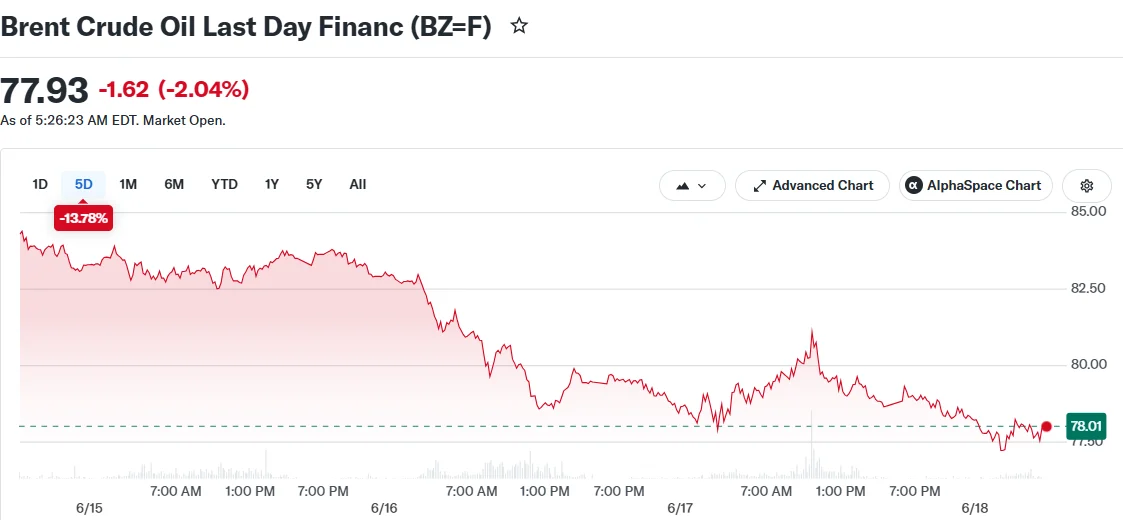
Both major oil benchmarks reached their weakest levels since early March. Over the current week, prices have collapsed roughly 15%.
The agreement was formalized between President Trump and Iranian President Masoud Pezeshkian. The deal establishes a permanent cessation of military operations and outlines a phased removal of U.S. sanctions targeting Iranian petroleum exports.
The Strait of Hormuz—a critical chokepoint handling approximately one-fifth of global oil and liquefied natural gas shipments—had been largely shut during the three-month military engagement. The disruption had elevated oil prices significantly and sparked widespread inflation worries.

Shipping activity through the waterway has already begun resuming. Major exporters including Iraq are making preparations to boost their export volumes.
Impact on Global Oil Supply Dynamics
Traders had incorporated a significant geopolitical risk premium into crude valuations throughout the conflict. Following the agreement’s announcement, that premium has largely dissipated.
ING analysts observed that Tehran anticipates rapid removal of American petroleum sanctions. However, they cautioned that the actual timeline for normalizing crude flows faces uncertainty given operational challenges, logistical constraints, and sanctions implementation details.
Worldwide petroleum inventories continue to show tightness. U.S. crude reserves decreased by 8.3 million barrels in the previous week, providing some support against steeper price declines.
The International Energy Agency anticipates global oil supply expansion of approximately 8 million barrels daily from 2026 through 2027. This significantly exceeds projected demand growth of around 2 million barrels per day.
The IEA estimates a market surplus surpassing 5 million barrels daily by 2027. ING analysts characterized the agency’s outlook as decidedly “bearish.”
MUFG analysts indicated that industry participants remain cautious regarding normalization speed, despite emerging positive indicators.
Federal Reserve Policy Compounds Pressure
The Federal Reserve maintained its benchmark interest rate unchanged Wednesday, meeting market expectations. Policymakers, however, indicated a possible rate increase later in the year.
Elevated interest rates typically dampen economic growth and curtail petroleum consumption. This outlook contributed additional downward pressure on crude valuations Thursday.
Prior to the military engagement, the Strait of Hormuz disruption had propelled prices upward. The pathway’s anticipated reopening is now reversing those previous gains.
The market situation continues to evolve. The speed at which Iranian crude reenters international markets will hinge on sanctions relief implementation and infrastructure rehabilitation timelines.
Get 3 Free Stock Ebooks
Discover top-performing stocks in AI, Crypto, and Technology with expert analysis.
- Top 10 AI Stocks - Leading AI companies
- Top 10 Crypto Stocks - Blockchain leaders
- Top 10 Tech Stocks - Tech giants


