



TLDR
- Brent benchmark declined to $72.42 while WTI settled at $69.27, marking the weakest levels since the U.S.-Iran conflict erupted
- Crude has declined across four consecutive trading sessions, eliminating the majority of war-related risk premium accumulated during the hostilities
- Shipping operations through the Strait of Hormuz are normalizing, with approximately 20 million barrels passing through daily under naval escort
- Goldman Sachs reports markets are factoring in anticipated oversupply as Persian Gulf crude shipments recover to 63% of typical volumes
- American crude stockpiles decreased by 6.1 million barrels, reaching the weakest position since January 2025
Crude oil benchmarks have retreated to pre-conflict pricing levels as shipping activity resumes through the Strait of Hormuz and concerns over supply disruptions diminish.
Brent benchmark crude declined 1.8% to settle at $72.42 per barrel during Thursday’s session. West Texas Intermediate decreased 1.5% to close at $69.27. Both contracts touched their weakest points since February 27, one day prior to hostilities commencing.
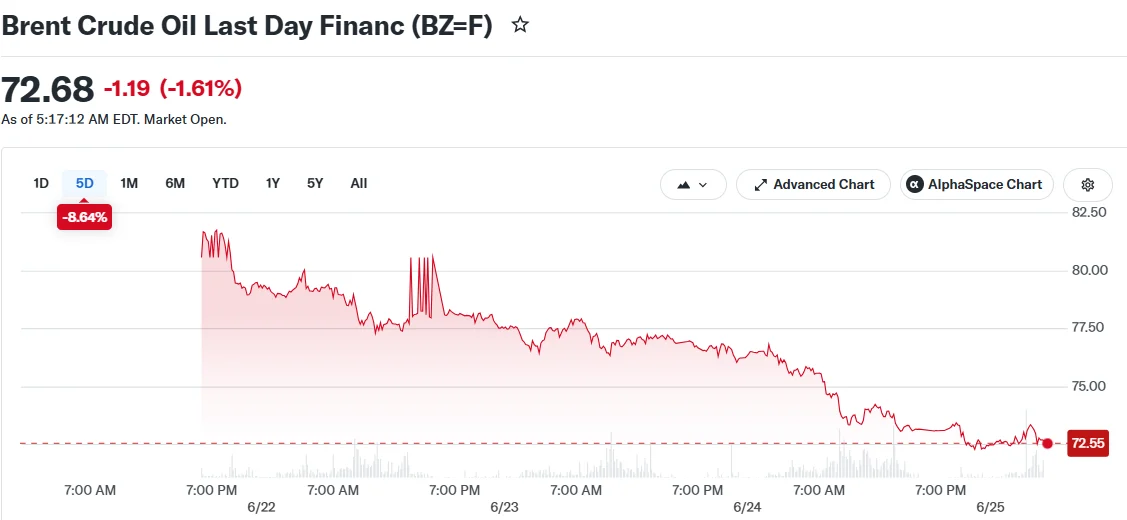
Pricing dropped almost 4% during the prior trading session by itself. The vast majority of the security premium that accumulated throughout the conflict has been eliminated.
Strait of Hormuz Operations Approach Normalcy
The Strait of Hormuz represents one of the planet’s most critical oil transportation corridors. Roughly one-fifth of worldwide petroleum consumption transits through this waterway daily.
Chris Wright, U.S. Energy Secretary, indicated that throughput via the strait had approached standard levels. Approximately 20 million barrels of crude exited the passage within the previous day, transported under armed forces protection.

Maritime tracking information revealed increasing numbers of tankers recommencing passage through the strait. Multiple vessels previously detained in the Persian Gulf have restarted their journeys.
Anticipations regarding Iranian crude shipments also contributed to downward price pressure. Provisional U.S. sanctions relaxation and declining regional hostilities sparked optimism that Iranian production could reenter markets earlier than previously anticipated.
This represents a dramatic shift from earlier in the year. During the crisis peak, Brent crude surged beyond $120 per barrel as Hormuz interruptions triggered concerns about extended supply shortages.
Goldman Sachs market strategists noted the market is “extrapolating the swift recovery of Mideast supply and already pricing expected future surpluses.” The investment bank indicated aggregate Persian Gulf petroleum shipments have climbed back to 63% of standard volumes.
Goldman additionally stated markets are abandoning the notion that forward-dated oil contracts require a permanent security risk premium.
American Storage Data Provides Conflicting Indicators
U.S. petroleum inventory figures published Wednesday introduced additional complexity to market dynamics.
Commercial crude reserves declined by 6.1 million barrels during the week concluded June 19, reducing aggregate stockpiles to 412.1 million barrels. This marks the lowest inventory position since January 2025 and exceeded analyst projections for drawdowns.
Reserves at the Cushing, Oklahoma distribution center likewise fell by 1.1 million barrels, descending to the weakest level recorded since 2014.
Conversely, gasoline reserves expanded by 2.1 million barrels. Distillate inventories, encompassing diesel fuel and heating oil, grew by 3.1 million barrels.
Market observers warned the circumstances remain delicate. Any resurgence of friction between Washington and Tehran could rapidly resurrect supply anxieties.
As of the most recent trading session, petroleum pricing continues mirroring a marketplace convinced the severest supply interruption may have concluded.
Get 3 Free Stock Ebooks
Discover top-performing stocks in AI, Crypto, and Technology with expert analysis.
- Top 10 AI Stocks - Leading AI companies
- Top 10 Crypto Stocks - Blockchain leaders
- Top 10 Tech Stocks - Tech giants


