


TLDR
- Brent futures climbed to $92.82 while WTI reached $86.75, marking three-week peaks
- Crude benchmarks extended their rally to a fifth consecutive trading session
- Commercial traffic through the Strait of Hormuz continues at significantly reduced levels
- Trump announced plans for unprecedented economic sanctions targeting Tehran
- The UAE halted all economic and financial dealings with Iran indefinitely
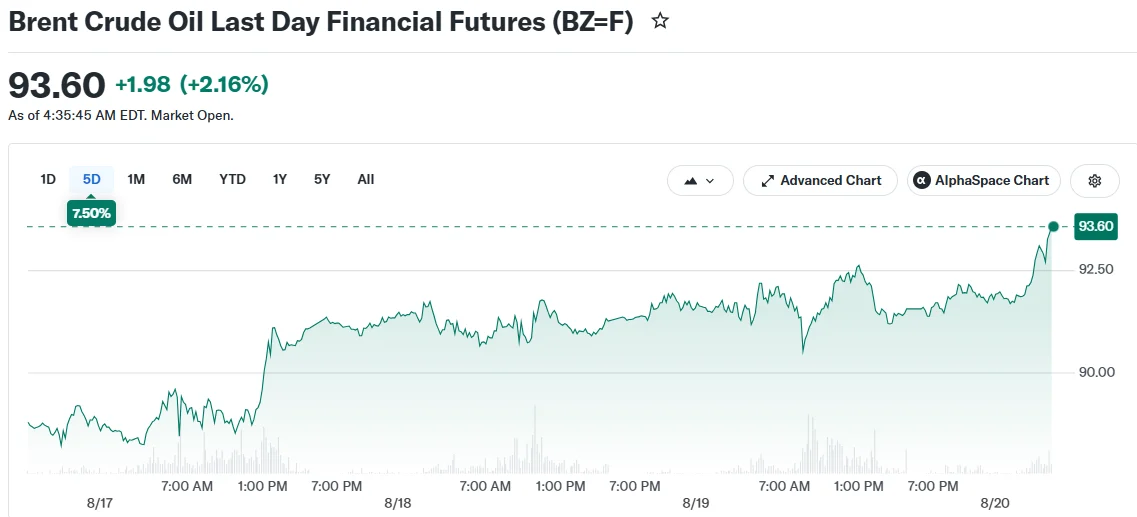
Crude oil markets surged to three-week highs during Thursday trading, with Brent futures advancing 1.3% to reach $92.82 per barrel while West Texas Intermediate climbed to $86.75. The gains represented the fifth consecutive session of upward momentum for both major benchmarks.
The sustained price increase stems from the escalating conflict between Washington and Tehran, which erupted following joint U.S.-Israeli military operations against Iran on February 28. In response, Iranian forces have severely restricted passage through the Strait of Hormuz, effectively choking off a critical maritime corridor that historically transported approximately 20% of global crude supplies.
Current maritime tracking data indicates vessel traffic navigating through Hormuz continues to operate well below historical norms, contradicting Washington’s assertions that the strategic waterway remains accessible. Iranian officials dispute American claims, with both nations showing little indication of moving toward diplomatic resolution.
“Middle Eastern tensions continue to escalate, creating conditions ripe for additional supply chain interruptions,” observed Giovanni Staunovo, a commodity analyst at UBS. “Reduced petroleum exports from the region are creating fresh tightness in global oil markets.”
The United Arab Emirates intensified regional pressures by announcing a complete freeze on all commercial and financial interactions with Iran effective immediately. This development highlights the deteriorating relationship between two major Gulf region economic powers.
Trump Threatens “Economic D-Day” for Iran
President Donald Trump amplified his confrontational stance Wednesday, unveiling plans for what he characterized as “the most crushing economic operation ever taken against any country.” Trump portrayed the forthcoming measures as economic combat of historic proportions while cautioning international partners against maintaining commercial ties with Tehran.

Trump refrained from specifying the exact nature of the planned economic restrictions. The president simultaneously asserted American dominance over the Strait of Hormuz while suggesting diplomatic channels with Iran might reopen “at some point.”
Iranian leadership has rejected these characterizations, maintaining that substantive negotiations have not occurred. Tehran insists Washington must honor commitments outlined in a June memorandum of understanding before meaningful progress becomes possible. That preliminary agreement expired this week without extension or renewal.
Hiroyuki Kikukawa, who serves as chief strategist at Nissan Securities Investment, indicated markets will probably sustain their upward trajectory given persistent uncertainty surrounding potential peace negotiations and mounting friction involving the UAE, Oman, and Iran.
From a supply perspective, American distillate reserves—encompassing diesel fuel and heating oil—declined for a third consecutive week. Conversely, crude stockpiles unexpectedly expanded by 4.4 million barrels.
Strategic petroleum reserve releases by leading economies, including the United States, have provided partial compensation for the supply disruptions. Nevertheless, market analysts anticipate the ongoing Middle Eastern hostilities will continue providing upward pressure on crude valuations throughout coming months.
Thursday marked expiration for the September WTI futures contract, while the October contract—which now serves as the primary active benchmark—traded at $85.52, reflecting a 1.3% daily increase.
Get 3 Free Stock Ebooks
Discover top-performing stocks in AI, Crypto, and Technology with expert analysis.
- Top 10 AI Stocks - Leading AI companies
- Top 10 Crypto Stocks - Blockchain leaders
- Top 10 Tech Stocks - Tech giants


